



















Tender submission checklist
A tender submission checklist for B2B product sellers: bid or no bid, documents, pricing, samples, compliance, sign-off and what to do after.
 By the PromptLab team29 October 20266 min read
A tender is won or lost on details. The lowest price can be thrown out for a missing certificate, a form signed in the wrong place or a late upload. Buyers who run tenders often score every bid against the same list, so an incomplete bid scores low however good the product is.
Use this checklist from the day the tender arrives to the day after you submit. It suits manufacturers and distributors who bid on supply contracts for products such as chemicals, packaging or building materials. For the wider process, read how to manage tenders and bids. If the request is less formal, see how to respond to an RFQ.
Check you can bid
Bidding costs time. The tenders guide has the full bid or no-bid test. This is the quick check that you are allowed to bid and able to deliver, before anyone starts writing.
Eligibility
Read the documents and set the plan
Many disqualifications start in the instructions. Read them once end to end, then break the work into tasks with owners.
Documents and plan
Build the commercial offer
Price is only part of it, but a wrong price is the mistake you can't undo. Build it from the current numbers, then have someone else check it.
Pricing and terms
Gather the technical and compliance material
Buyers want proof. Have documents ready before the deadline pressure starts, and check each one is current.
Technical and compliance
Review and submit
Plan to be ready a day early. Portals fail, files are too large and passwords expire on the last afternoon.
Review and submission
After you submit
The work isn't over. Many tenders have a clarification round, an award date and a debrief.
After submission
The items people skip
- Clarification questions. Teams guess at an unclear requirement instead of asking before the cut-off.
- Certificate expiry dates. A certificate that expires before the award can count against you.
- The second read. The author sees what they meant to write. A fresh reader sees what is on the page.
- The debrief. Losing bids teach you the price gap and the score gap, but only if you ask.
How PromptLab helps
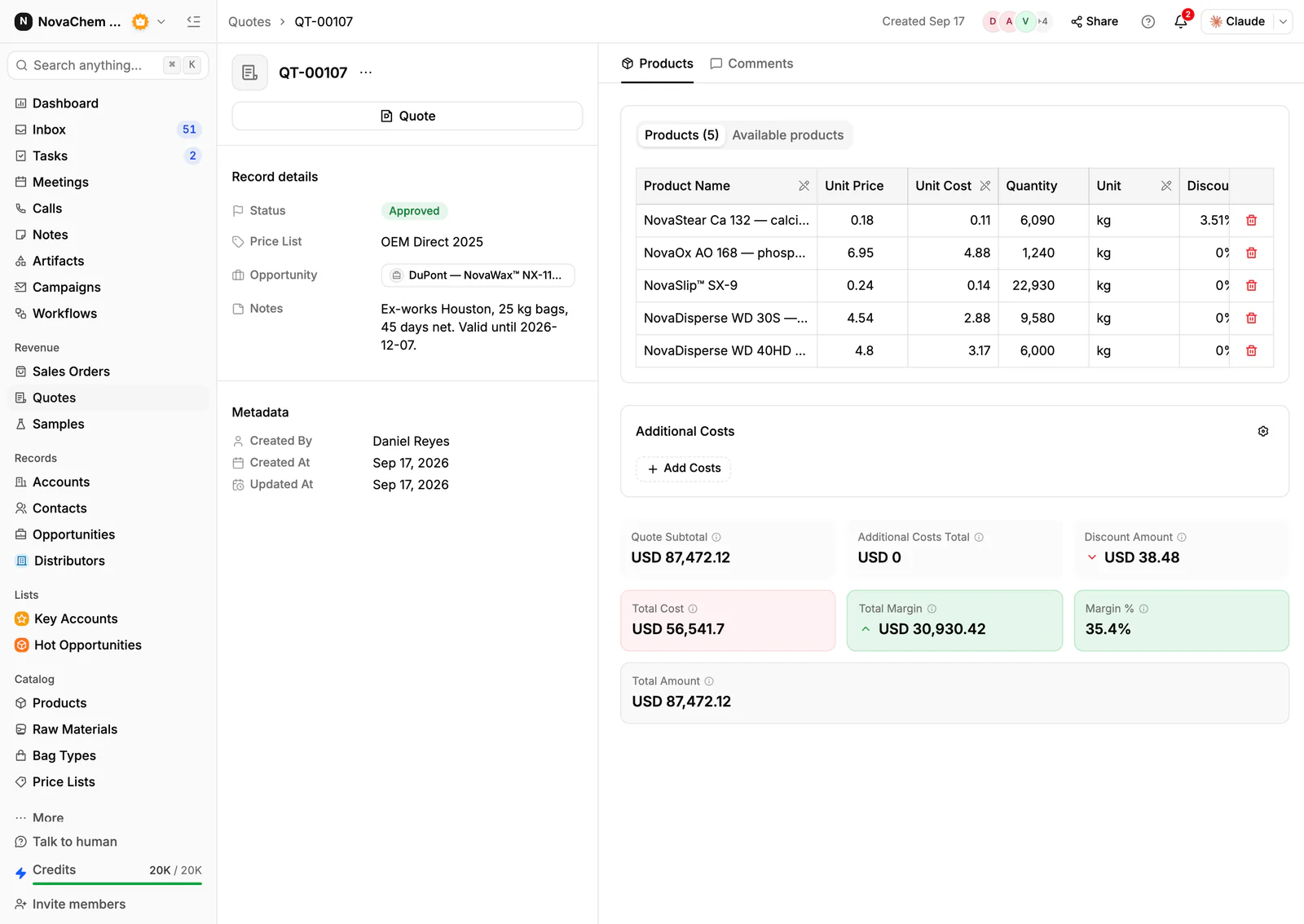
Track each tender as a deal in your one pipeline, with its stage, owner and close date. Put the tender documents in the Files tab on the account, and keep the people involved as contacts on that account. Build the offer as a quote from the right customer price list, with the margin on each line, and share it as a PDF or a public link. When a lost deal is closed, PromptLab asks for a loss reason from its list (Price, Competitor, Timing, No budget, Product fit or Other). A workflow can create a task when the deal changes stage, so the next step has an owner. See the quotes and samples page.
Frequently asked questions
What should be in a tender submission?
Whatever the tender documents list: the completed forms, your priced offer, technical and safety data, certificates, company documents and any references. Each tender is different, so build your own list from its instructions.
Who should check a tender before it goes in?
Someone who did not write it. They read the bid against the tender's own list, line by line, check every form and signature, and compare the prices in the forms with the covering documents. A senior person then approves the final version.
How do I check the pricing in a tender bid?
Check the unit of measure, the currency and the lot for every price, confirm the cost inputs are current and look at the margin on each line, not just the total. Make sure the delivery term names its place and that freight and surcharges are shown the way the tender asks.
What are the most common reasons a tender bid is rejected?
Missing documents, expired certificates, forms not signed or filled in as asked, and late submission are common. Prices on the wrong unit of measure can also sink a bid. A second reader catches most of these.
What happens after a tender is submitted?
Many tenders have a clarification round, then an award date and a debrief. Log the submission and the confirmation, put tasks on the award date and the clarification window, and answer questions the same day. Win or lose, ask for feedback on price and score.