



















How to respond to an RFQ
Respond to an RFQ by qualifying it, clarifying specs, pricing from your cost and margin floor, and replying fast with a complete quote. Steps and examples.
 By the PromptLab team16 October 20266 min read
To respond to an RFQ, decide quickly whether it is worth your time, ask the buyer for anything the request leaves open, price each line from your real cost and margin floor, and send a complete quote while the buyer is still comparing. A reply that is fast, specific and has nothing missing beats a slightly cheaper one that arrives late.
An RFQ (request for quotation) is a buyer asking several suppliers for a price on the same product list. You are being compared line by line, often by someone who will not call you. This guide walks through each step, from the first read to the follow-up. If the term is new, start with what an RFQ is.
Step by step: respond to an RFQ
- 1
Log it the minute it arrives
RFQs come by email, WhatsApp, Telegram and through buyer portals. Put every one on the right account and on a deal straight away, with the deadline in a task. An RFQ that lives in one rep's inbox is an RFQ nobody else can chase.
- 2
Decide whether to bid
Not every RFQ deserves a full answer. Ask three questions. Do we make or stock what is asked? Do we know this buyer, or can we reach a person there? Can we win at a margin we can live with? If the answer to all three is no, a short polite decline saves the whole team's afternoon.
- 3
Read it twice and list what is missing
Check the product code or grade, quantity and unit, pack size, delivery place, incoterm, required certificates and the deadline. Anything vague becomes a question. "Quote 5 tonnes of resin" could be bags, drums or bulk.
- 4
Send your clarifying questions in one message
One tidy list of questions shows you know the trade and avoids three rounds of back and forth. Offer a default you will quote against if they do not reply, so you can still meet the deadline.
- 5
Price every line from cost and your floor
Start from the customer's agreed prices if they have a list. Otherwise start from your cost, add freight and handling as their own lines, and check the margin on each line against the lowest price you can accept. See how to manage customer price lists.
- 6
Build a complete quote
Include the incoterm and place, validity date, minimum order quantity, lead time and payment terms. Everything the buyer would otherwise email you about goes on the page. The sales quote guide covers each term.
- 7
Add what makes you easy to choose
Attach the spec sheet or certificate they asked for. Offer one alternative if it helps them, such as a larger pack at a lower unit price. Do not pad the reply with a company brochure.
- 8
Send it early and follow up on a date
Reply before the deadline, not on it. Then set a task to check in two days later. The RFQ response email templates give you wording for the reply, the clarifying questions and the follow-up.
Qualify before you quote
Quoting costs time, and a loose RFQ can eat an hour of it. A buyer who sends the same request to ten suppliers and never replies is a poor bet. A buyer who names a project, a date and a person you can call is a good one.
Say a coatings distributor gets an RFQ for 20 tonnes of a pigment from a company it has never heard of. Before pricing, the rep replies with two questions: what is the application, and when does the first delivery need to land? The answers decide whether the quote is a serious offer or a courtesy price.
What a strong RFQ response contains
Before you press send
How to price without giving away margin
The temptation in an RFQ is to cut price to be safe. Resist it until you know your floor.
Say you quote 2,000 kg at $1.85 a kg against a cost of $1.52 a kg. The margin is $0.33 a kg, or $660 on the order. If you drop to $1.75 to look sharp, the margin falls to $0.23 a kg, or $460. You gave away $200 without being asked. Decide the floor in advance, and offer a trade instead of a discount: a lower price for a bigger quantity, or a longer commitment.
If price is the only thing the buyer raises, see how to handle price objections.
Speed matters more than you think
Buyers often shortlist from the first complete replies. A quote that arrives the same day for a standard product, or within two days when a spec check is needed, gets read while the buyer's attention is still on the request. If you cannot meet the full quote deadline, send a holding note with a date. Silence reads as a no.
Follow up and learn from the result
After you send, ask a simple question: is there anything in the quote that does not fit what you need? Keep the tone of a helpful supplier, not a chaser. Record the outcome on the deal, including the reason if you lose. After a few months, "lost on lead time" or "lost on pack size" tells you what to change more reliably than any guess.
Track the RFQs you answer against the ones that become orders. Say you answered 25 RFQs in a quarter and won 5. That is a number to work on, and the quote to order guide shows where deals stall.
How PromptLab helps
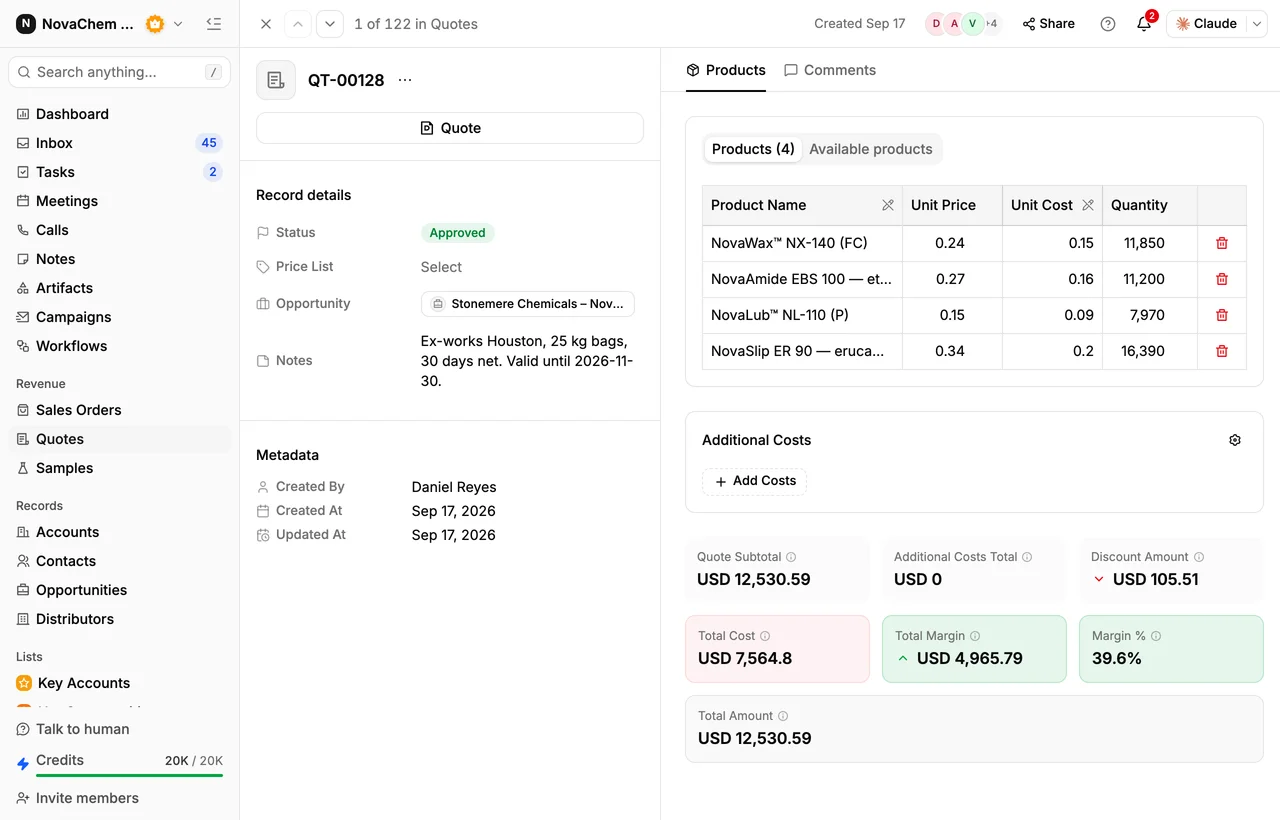
In PromptLab you create the quote from the RFQ, link it to the deal and to the customer's price list, and see unit price and unit cost side by side on every line. The summary shows total cost, total margin and margin percentage as you edit, so your floor is in front of you while you price.
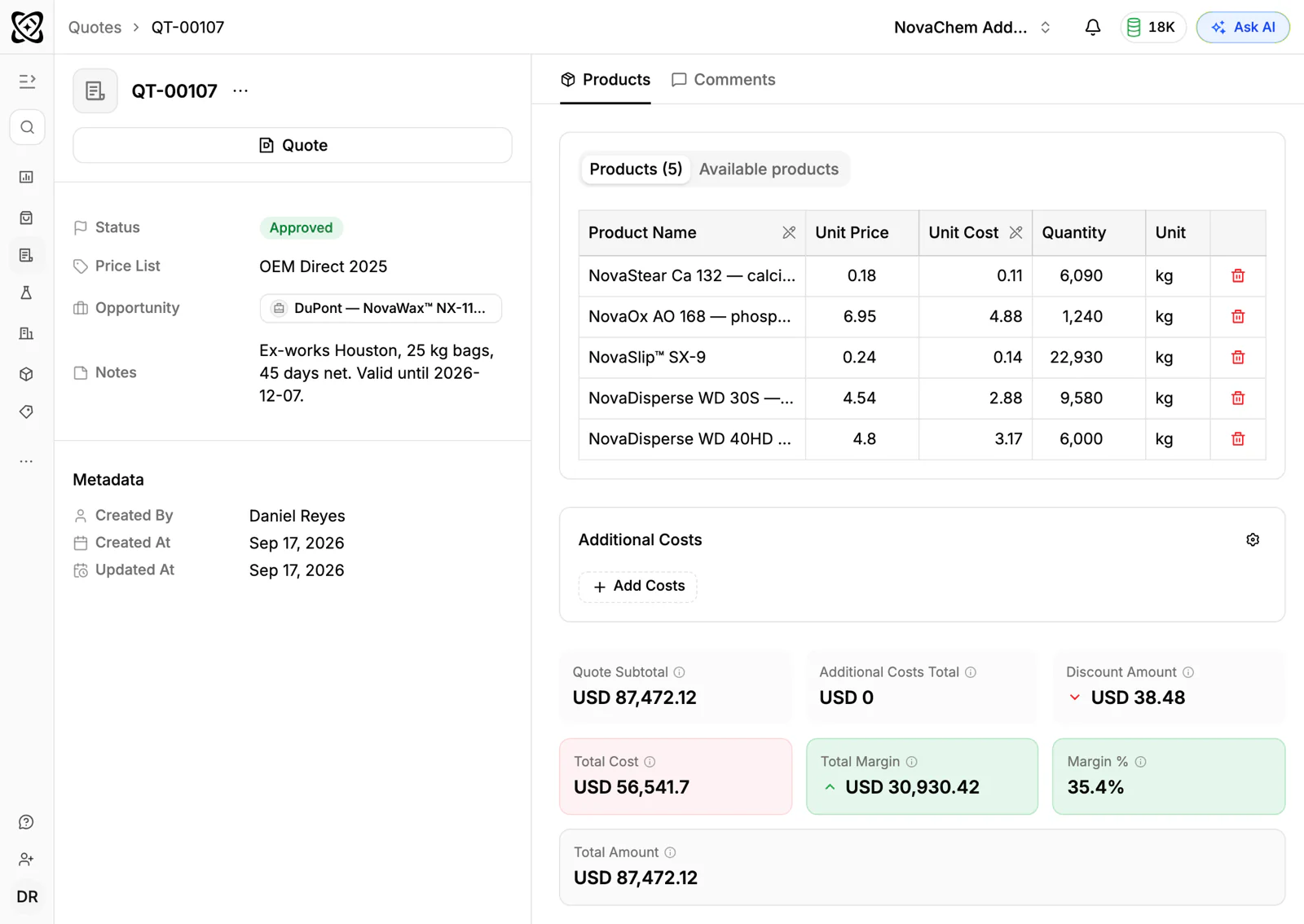
The quote moves through Draft, Pending and Approved and attaches to the deal automatically. RFQs that arrive by email, WhatsApp or Telegram land in the shared Inbox beside the account, so the whole team sees the request. A workflow can create a task when a quote changes status, which means the two-day follow-up does not depend on memory. When the buyer accepts, you raise the sales order from the same record. More on the quotes and samples page.
Frequently asked questions
How do you respond to an RFQ?
Check that you can supply what is asked, clarify anything vague, price each line from your cost and margin floor, and send a complete quote with incoterm, lead time, payment terms and validity. Reply before the deadline and follow up two days later.
How fast should I reply to an RFQ?
The same day for standard products, and within two days when a specification needs checking. If you need longer, send a short note with the date you will reply. A fast, complete answer is often read first.
Should I always respond to an RFQ?
No. If you cannot supply the product, cannot reach the buyer and cannot win at an acceptable margin, a short decline is better than a rushed quote. It keeps the door open for a better-fitting request.
What is the difference between an RFQ and an RFP?
An RFQ asks for a price on defined products or quantities. An RFP asks suppliers to propose a solution and explain how they would deliver it, so price is only one part. Product suppliers see far more RFQs than RFPs.
Can I negotiate after sending my RFQ response?
Yes, and buyers expect it. Decide your floor beforehand and trade price against quantity, terms or lead time rather than cutting the price alone.