



















How to manage tenders and bids
A practical process for managing tenders and bids in B2B product sales: decide whether to bid, split the work, track deadlines and learn from every result.
 By the PromptLab team29 October 20265 min read
To manage tenders and bids, treat each one as a small project with a go or no-go decision, a named owner, a deadline you work back from, and a record of the result. Many bids are lost on process rather than price: a missed document, a late technical answer, or a bid that should never have been started. A fixed routine fixes those.
This guide is for suppliers of chemicals, coatings, packaging, materials and industrial goods who answer tenders from public bodies and large buyers. It gives you a decision test, a timeline, a team split and a way to learn from the outcome. When the bid is written, run the tender submission checklist before you upload it.
Decide whether to bid at all
Writing a bid costs days of sales, technical and finance time. Before you commit, answer five questions in writing:
- Fit: can we supply the exact spec, or a compliant equivalent?
- Access: do we already know the buyer, or is this a cold bid?
- Margin: at the likely winning price, do we still earn enough?
- Capacity: can we deliver the volume and the dates?
- Effort: how many hours will it take, and what else do we drop?
If two answers are no, decline. A no-bid sent politely keeps the door open for the next tender. Say a team has eight tenders on its desk and time for five. Ranking them on these questions is better than answering all eight badly. See also how to respond to an RFQ, which is a lighter version of the same task.
Build the timeline backwards
Start from the submission deadline and work back. Leave a buffer, because portals fail and documents are rejected on technicalities.
- 1
Read the whole pack on day one
Read the instructions, the specification, the evaluation criteria and the contract terms. Note every required document and every question deadline. Send clarifying questions early; buyers often share answers with all bidders.
- 2
Make a compliance list
List every requirement as a line: certificates, data sheets, samples, references, forms, price format. Give each a name and a date. A certificate of analysis and a technical data sheet are often on the list.
- 3
Price it from the current list
Build the price from your customer price list and the quantities in the tender, and check the margin on each line. Agree the lowest price you will accept before you write the cover letter, not after.
- 4
Write and review
Answer every question directly, in the buyer's order. Have someone who has not written the bid read it against the criteria, as a scorer would.
- 5
Submit early
Submit a day before the deadline. Keep the confirmation. If the portal allows a revision, you can still improve it.
- 6
Follow up and record the result
Ask for feedback, win or lose. Record the reason in the deal, and file the documents for reuse.
Split the work and name one owner
A tender needs sales, technical, quality, finance and often legal. Name one owner who runs the timeline, and give each contributor a task with a date. Without an owner, each department waits for another.
A simple split:
| Part | Usually owned by |
|---|---|
| Timeline and submission | Bid owner (sales) |
| Specs, data sheets, samples | Technical or lab |
| Certificates and compliance | Quality |
| Price and payment terms | Sales lead and finance |
| Contract terms | Legal or management |
Meet for ten minutes at the start and at the halfway point. Everything else can go through tasks and comments.
Protect the margin
Tender prices are visible and compared line by line, so the pull to cut is strong. Set a floor per product before you start, and let only a named person approve anything under it. If you have to bid below your normal margin to win a strategic account, make that a decision written down, with the reason.
A win that loses money on every delivery is worse than a loss. For the arithmetic, see what gross margin is.
Learn from every result
After each tender, record four facts: the outcome, the winning price if you learn it, the buyer's feedback and your own view of what went wrong. After ten tenders you have a pattern. Perhaps you lose on delivery terms and not on price, or you win when you have met the buyer beforehand.
Use the loss reasons your team already records: Price, Competitor, Timing, No budget, Product fit or Other. Add the detail in a note. How to analyse lost deals shows what to do with the list.
How PromptLab helps
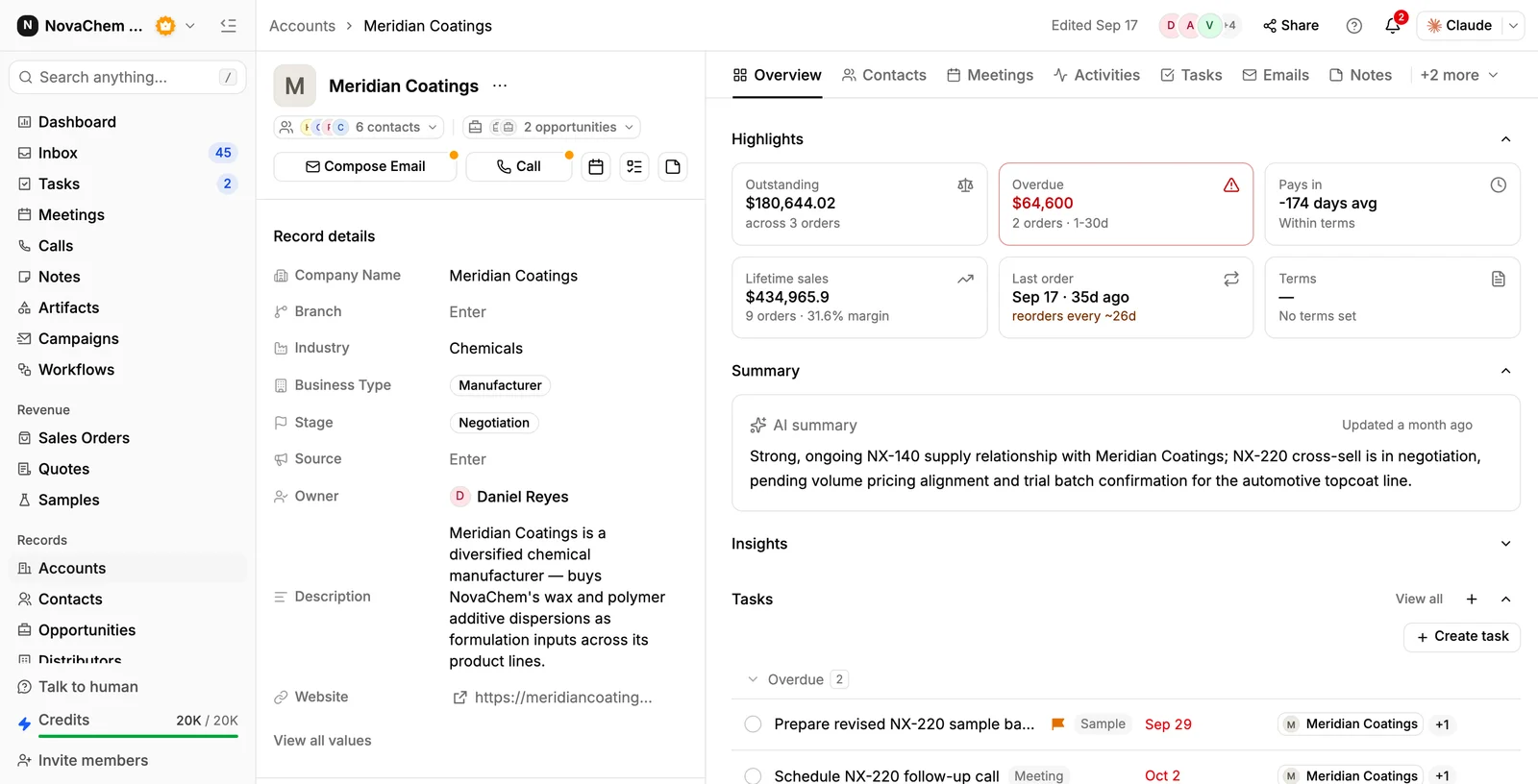
Set up each tender as a deal on your single pipeline, with a stage for the bid, and use a custom field for the tender reference and the submission date. The account holds the files, such as the pack, certificates and the submitted bid, in its Files tab. Emails, meetings, notes and messages about the tender collect on the same account.
Build the price as a quote from products and a customer price list, with line discounts and the margin visible on each line, then export it as a PDF or share it by a public link. Tasks with owners and due dates carry the timeline, and a workflow can create a task when a deal changes stage, so the compliance work starts the moment you move the tender into your bid stage.
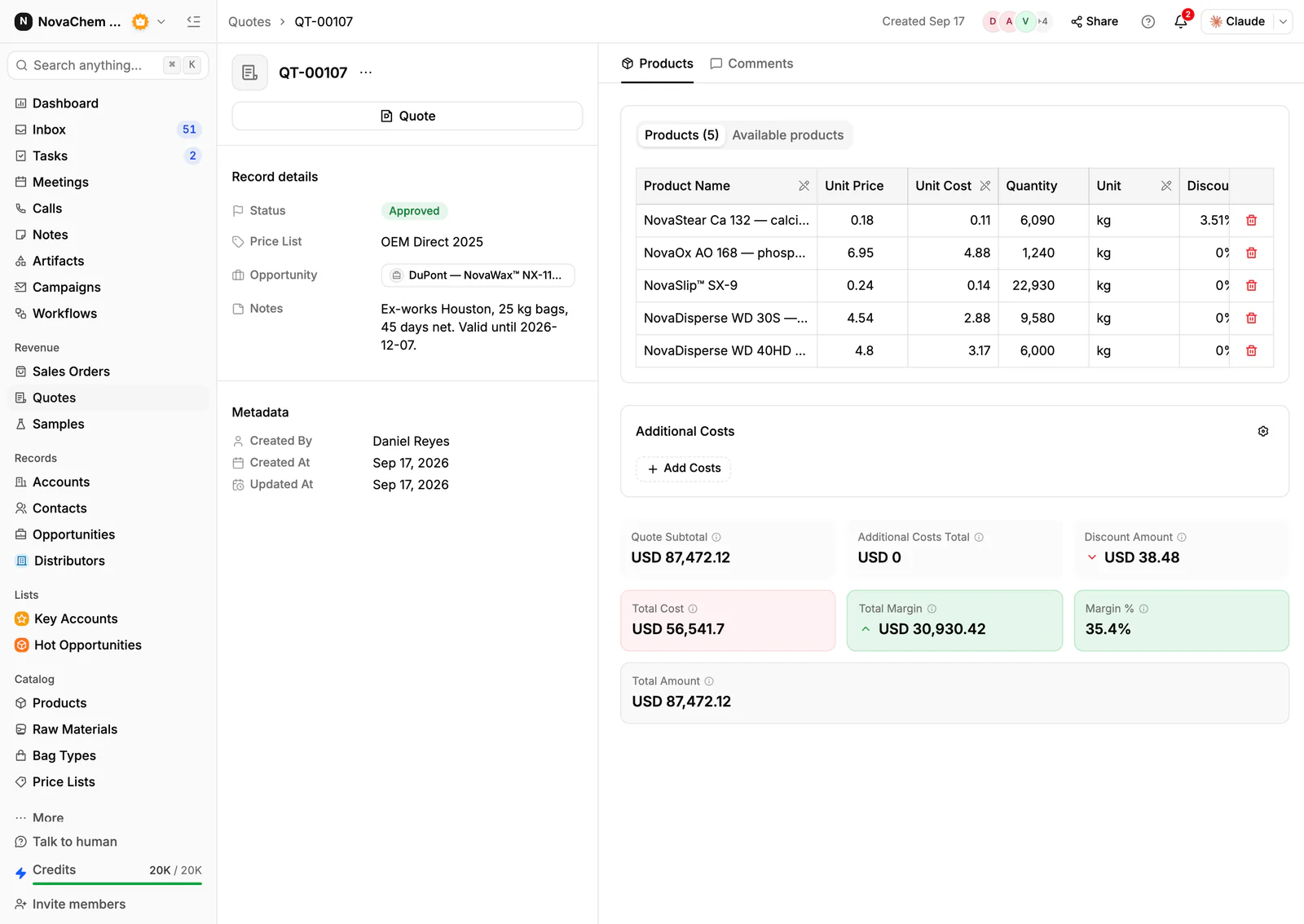
See the Quotes reference for the screens.
Frequently asked questions
What is the difference between a tender and an RFQ?
A tender is usually a formal process with fixed rules, evaluation criteria and a deadline, often run by a public body or a large buyer. An RFQ is a simpler request for a price, though the lines blur in practice.
How do I decide whether to bid?
Check fit, access to the buyer, margin at a likely winning price, capacity and effort. If two or more are a clear no, decline politely and keep the relationship for the next tender.
How early should I submit a bid?
Aim for the day before the deadline. Portals fail, files are rejected and someone always spots an error late. An early submission also leaves room to revise if the buyer allows it.
Should I ask the buyer questions during a tender?
Yes, if something is unclear and the rules permit it. Send questions before the stated cut-off, in writing. Answers are often shared with every bidder, so ask only what you need.
What should I do after losing a tender?
Ask for feedback, record the outcome and the reason, and thank the buyer. Look at the loss list every quarter, because patterns in price, terms or timing tell you which bids to skip.