



















Discovery call checklist for B2B product sales
A discovery call checklist for B2B product sellers: prep, opening, questions on need, specs, volumes, buyers and budget, then the notes and next step.
 By the PromptLab team29 October 20266 min read
A discovery call decides whether you have a deal or a polite conversation. The buyer tells you what they buy, how much, from whom and what would make them switch. If you leave without those answers, the quote that follows is a guess.
This checklist covers the whole call: the prep before it, the opening, the questions that matter when you sell physical products, and the notes afterwards. It suits a rep at a coatings maker, a packaging supplier or an ingredient distributor. For the questions that sort good leads from poor ones, see how to qualify B2B leads.
Prepare before the call
Ten minutes of prep changes the tone of the call. You ask sharper questions and the buyer doesn't have to explain what you could have read.
Prep
Open the call well
The first two minutes set the agenda. Say what you plan to cover and ask if that works. Buyers relax when they know the call has a shape.
Opening
Ask about the need and the product
Start with what they buy today and why. In product sales the detail is in the spec, the volume and the way the material is used, so ask until you could write the spec yourself.
Need and specification
Ask about volume, timing and the buying process
This group tells you how big the deal is and when money could move. Buyers often know their yearly volume but not how it splits over the months, so ask for both.
Volume, timing and process
Ask about price, competitors and risk
These questions feel awkward, so reps skip them. Asked calmly, they save you from quoting into a deal you can't win.
Price and competition
Close the call with a next step
Don't end on "I'll send you some information". End on a dated action for each side.
Close and notes
The items people skip
- Who approves it. The person on the call is often not the one who signs off the new material.
- What started the search. A supplier problem is a reason to buy now. A vague interest isn't.
- The date. "Sometime this year" is not a decision date. Ask what the date depends on.
- Competitors. Reps avoid the question and then quote blind.
- Writing it up. Notes typed two days later lose the spec and the numbers.
How PromptLab helps
Record the call in Google Meet, Zoom or Microsoft Teams and PromptLab writes the transcript and an AI summary. Action items become CRM tasks, and an AI follow-up email draft is ready to edit. Run CRM autofill and it fills in fields such as expected volume from the call (standard fields on Basic, unlimited fields on Professional), so the write-up isn't a second job. Read more in the call intelligence guide.
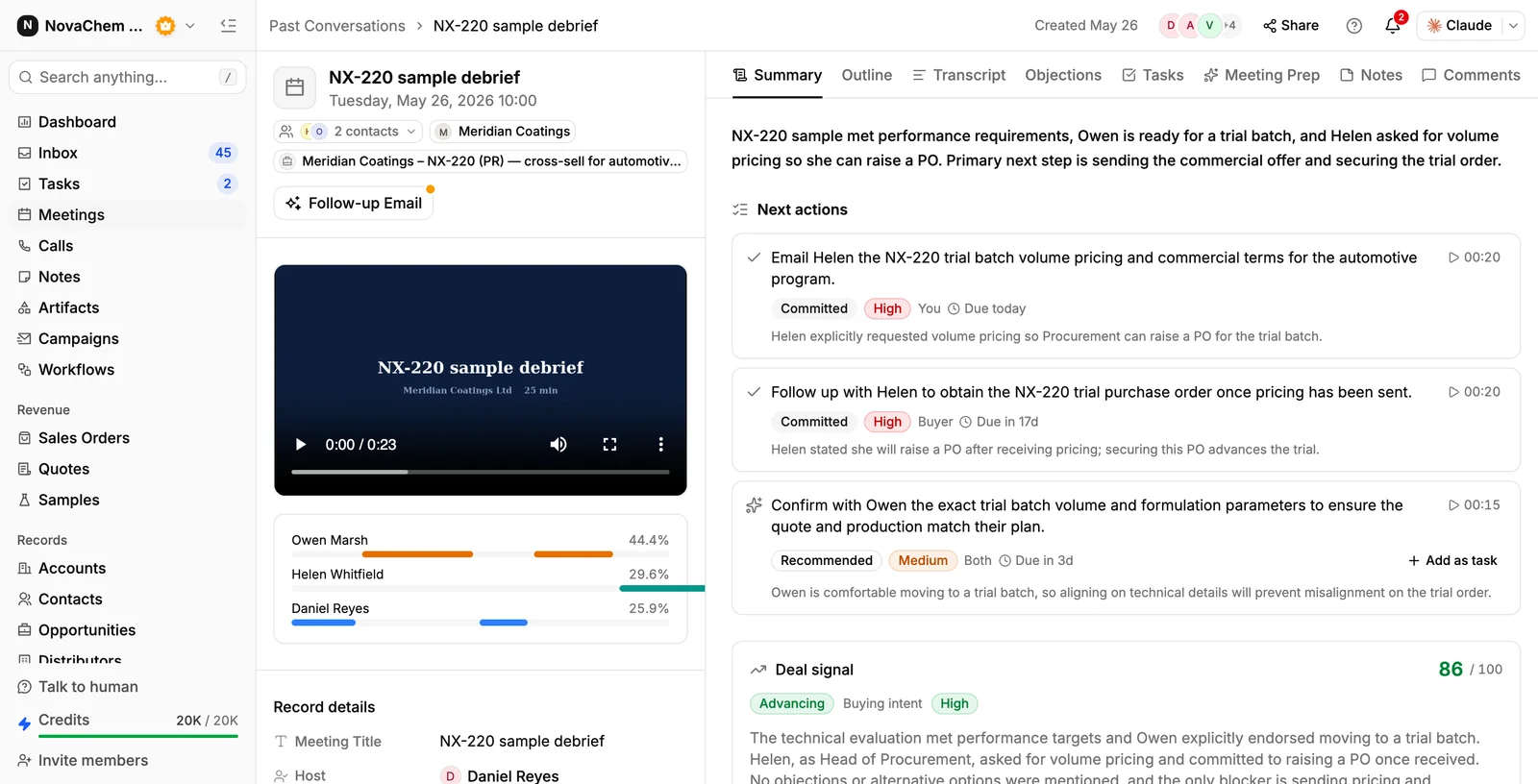
Once the call is logged, the next job is the sample or quote. Our sample shipment checklist covers the sample.
Frequently asked questions
How long should a discovery call be?
Thirty to forty-five minutes is enough for most product sales. Shorter and you skip the spec and volume questions. Longer and the buyer starts to tire. If the technical detail runs on, book a second call with their technical lead.
What questions should I ask on a discovery call?
Ask what they buy now and why they are looking, the exact specification, the volume and timing, who approves the purchase, what they pay and which suppliers they are comparing. The checklist above groups these so you can work through them in order.
Should I record a discovery call?
Yes, if you ask permission and say what the recording is for. It lets you listen instead of typing, and the transcript keeps the exact spec and numbers the buyer gave. Check any rules that apply where you and the buyer are based.
What should I do right after a discovery call?
Log it the same day, create tasks for each follow-up and send a short email with what you agreed. A sample or quote should follow quickly while the buyer's need is fresh.
How is a discovery call different from a demo?
A discovery call is for learning about the buyer's need. A demo or product presentation comes after, once you know what to show. Reps who demo first often show features the buyer doesn't care about.