











How to qualify B2B leads (BANT, MEDDIC and a simpler way)
How to qualify B2B leads for a product business: BANT, MEDDIC and a four-question checklist covering application fit, volume, timeline and decision process.
 By the PromptLab team6 October 20266 min read
To qualify a B2B lead for a product business, answer four questions: does our product fit their application, is the volume worth supplying, when do they need it and who decides? If you can answer all four after one real conversation, the lead is qualified. If you cannot, it is a lead worth a second call, not yet a deal.
BANT and MEDDIC are the two frameworks most teams are told to use. They work, but both grew up in large technology sales. This guide explains both, then gives a lighter checklist built for companies that ship chemicals, coatings, packaging, metals and similar goods.
What qualification is for
Qualification protects your time and your samples. A sample costs money to make, pack and ship, and a quote costs a rep's afternoon. Qualification is the habit of spending both only where an order is plausible.
It is also a two-way test. Some leads are wrong for you: the volume is too small for your minimum order, the specification is outside your range or the delivery region is not served. Finding that out in the first call is a good result. For where qualification sits in the sale, see what a sales pipeline is and how to build a B2B sales pipeline.
BANT
BANT stands for Budget, Authority, Need and Timeline. It is one of the oldest frameworks and the easiest to teach.
| Letter | Question | Product-sales version |
|---|---|---|
| Budget | Can they pay for it? | Is there a purchasing budget or an approved supplier line for this product? |
| Authority | Are you talking to the decider? | Who signs the purchase order? |
| Need | Is there a real problem? | What are they using now and what is wrong with it? |
| Timeline | When will they buy? | When is the next production run or contract renewal? |
Where BANT works: quick screening of inbound enquiries. Where it falls short: buyers in product businesses rarely have a "budget" for a raw material. They have a cost target per kilo and a current supplier. Asking "what is your budget?" can sound odd, and the answer is often "whatever the current price is".
MEDDIC
MEDDIC stands for Metrics, Economic buyer, Decision criteria, Decision process, Identify pain and Champion. It suits larger, longer deals with several people involved.
- Metrics: the measurable gain, such as lower scrap, faster cure time or a lower landed cost.
- Economic buyer: the person with authority over the spend.
- Decision criteria: what the buyer will compare. In products, this is often specification, price, lead time, minimum order and supplier approval.
- Decision process: the steps from sample to purchase order, including lab tests and approvals.
- Identify pain: what is not working today.
- Champion: someone inside the customer who wants you to win and will push for you.
Where MEDDIC works: large accounts, tender-style buying and anything with a formal approval chain. Where it falls short: it is heavy for a $5,000 first order, and reps skip fields they find tedious. If you adopt it, use it only for deals above a size you choose.
A simpler checklist for product sales
Most product deals hinge on four things. We call them fit, volume, timeline and decision process, and a rep can cover them in a 15-minute call.
- 1
Application fit
What will they make or do with the product? Is it something you supply today? Do you meet the spec, the certification or the regulation they need? A "no" here ends the conversation quickly and politely.
- 2
Volume
How much, how often and for how long? One 25 kg trial and 20 tonnes a month are different deals. Compare the answer with your minimum order and your margin.
- 3
Timeline
When is the first order? Is there a trial window, a production start or a contract renewal that sets the date? A lead with no date usually has no urgency.
- 4
Decision process
Who tests it, who approves it and who buys it? Do they need a sample, a data sheet, a supplier audit or a price from three vendors?
A worked example
Say a lead from a trade show says they make wooden furniture and want a water-based lacquer. The rep asks the four questions.
- Fit: the lacquer meets their finish and VOC requirement, so yes.
- Volume: about 800 litres a month, which clears the minimum order.
- Timeline: the new range launches in March, so they need to approve a supplier by January.
- Decision process: the production manager tests samples, and the owner signs the order.
This lead is qualified. The next steps are a sample, a call with the production manager and a quote that lands before January. A lead that answered "not sure" to three of four questions would stay in an early stage and get a lighter touch.
Which framework should you use
- Use BANT to sort inbound enquiries in a few minutes.
- Use the four-question checklist for most product deals.
- Add MEDDIC elements (champion, economic buyer) for your largest accounts.
You can mix them. The point is that every rep asks the same questions, so the pipeline means the same thing for everybody.
Qualification record on every lead
Mistakes in qualifying
- Qualifying by company size alone. A small firm with a recurring need can be a better customer than a large one with a one-off.
- Shipping samples to everyone. Qualify before the sample leaves, and track the sample from request to feedback.
- Never writing the answers down. If the answer is in a rep's head, the manager cannot review it.
- Treating qualification as a one-off. Re-check the four answers when the deal stalls.
Looking for what to do with qualified leads? Lead scoring is the next topic, and how to prepare for a sales meeting covers the second call.
How PromptLab helps
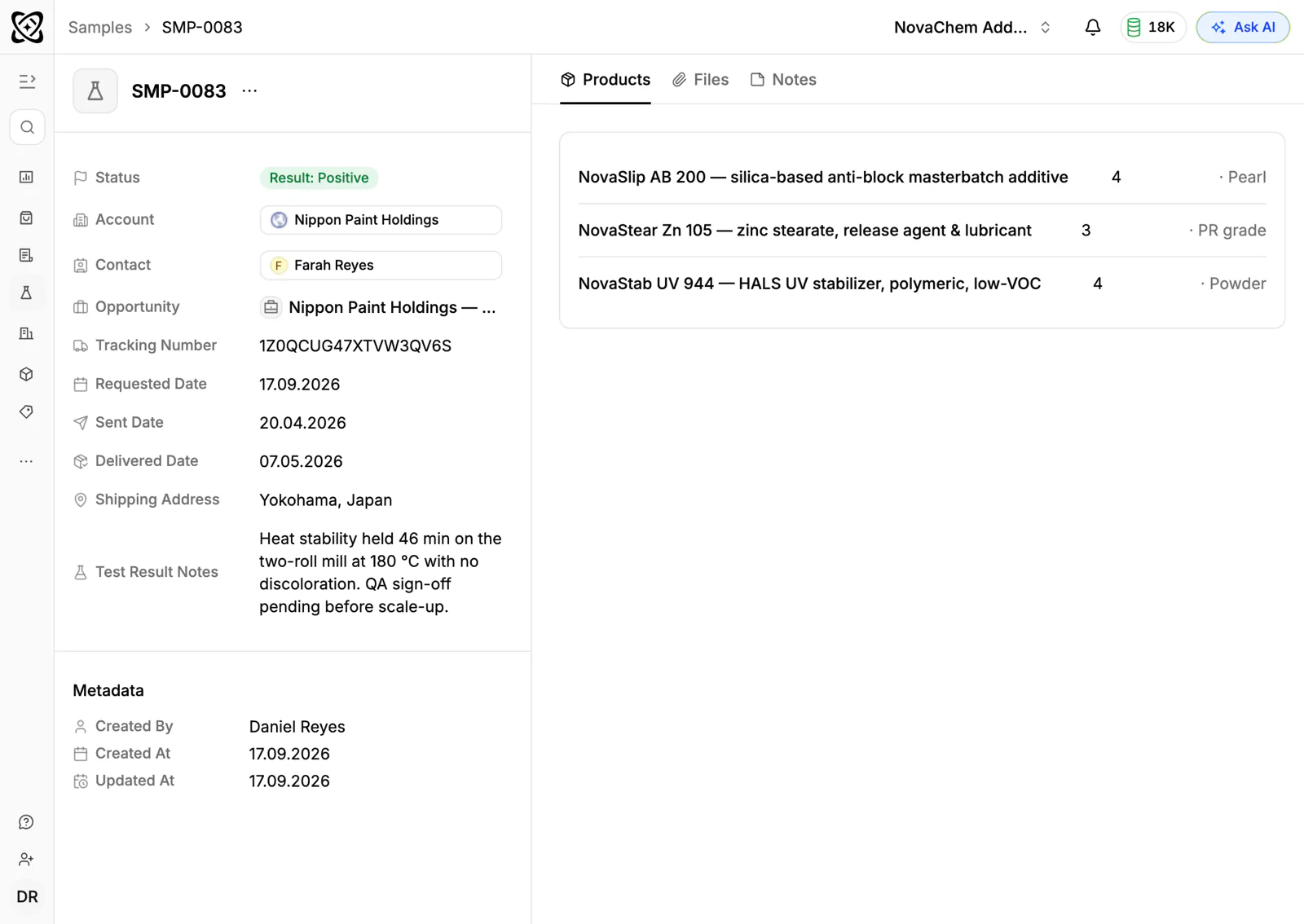
Qualification only works if the answers are saved where the team can see them. In PromptLab, CRM autofill fills fields in from a recorded call, so the rep talks instead of typing. Standard fields are filled on Basic and unlimited fields on Professional.
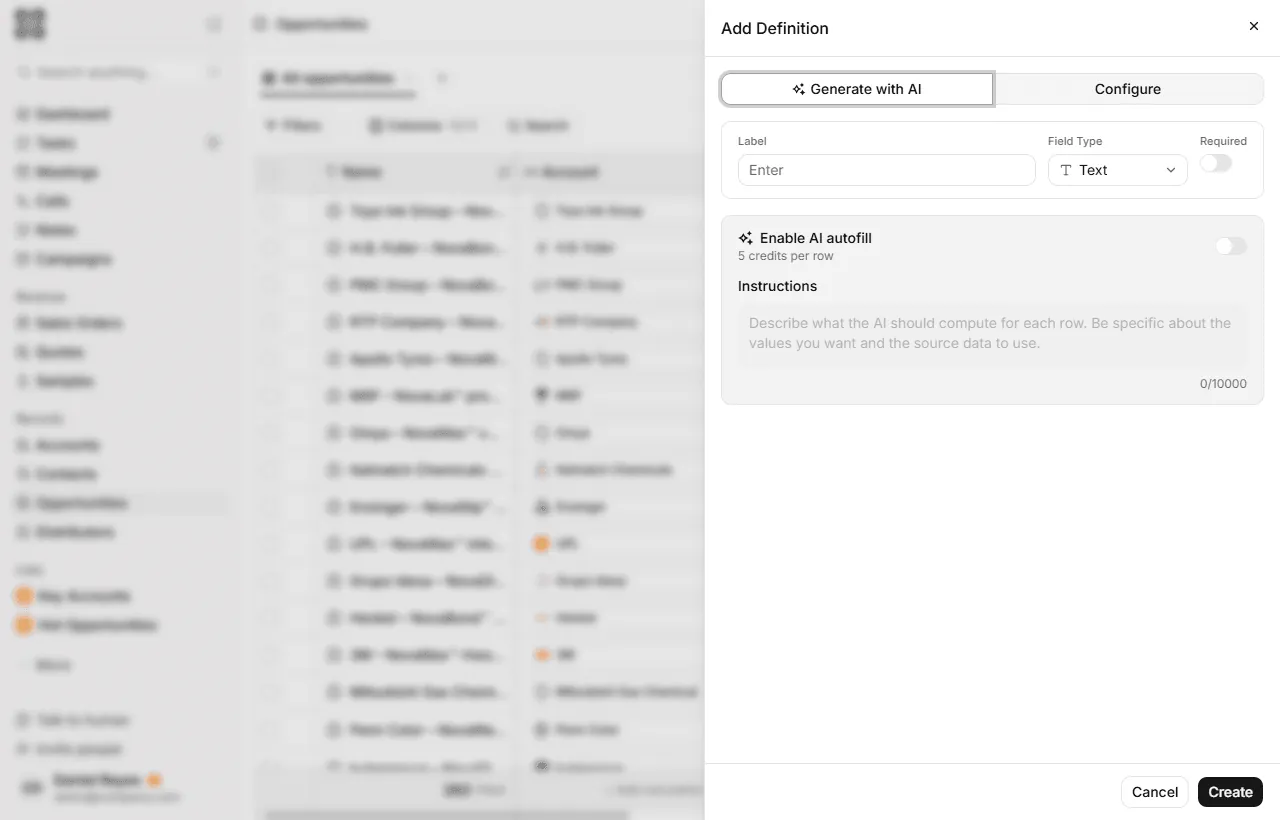
Sample tracking and quotes are on every plan, so you can see which qualified leads got a sample, what the feedback was and which quote followed. The Chrome extension saves a LinkedIn profile to the CRM and drafts an opening message, which helps you start a conversation, though it does not send messages for you. PromptLab does not supply lead lists or scoring. It gives you a clean place to record the answers.
Frequently asked questions
What is the difference between BANT and MEDDIC?
BANT is a four-question screen for budget, authority, need and timeline. MEDDIC is a deeper framework covering metrics, economic buyer, decision criteria, decision process, pain and champion. BANT suits quick screening, MEDDIC suits large, complex deals.
What questions should you ask to qualify a B2B lead?
Ask what they will use the product for, how much and how often they will buy, when they need it and how they decide. Add who tests it and who signs. Those questions work for most product sales.
When should you send a sample to a lead?
After the lead has passed fit and volume, and you know who will test it and by when. Sending samples before that costs you product and gives you feedback from nobody who can buy.
Is BANT still relevant?
Yes, as a quick screen. Its weak point is the budget question, which product buyers often cannot answer directly. Replace it with a question about the price they pay now.
How do you qualify a lead that will not answer questions?
Offer something useful first, such as a data sheet or a reference price, then ask again. If a lead will never share volume or timing, treat it as low priority and put it on a slower follow-up.