



















Sample shipment checklist
A sample shipment checklist for B2B product sellers: what to confirm before you send, how to pack and document it, how to log it and what to do once it lands.
 By the PromptLab team16 October 20265 min read
A sample is the cheapest way to win a product sale and one of the easiest to waste. A sample that arrives late, unlabelled or without paperwork tells the buyer how you will behave as a supplier. A sample nobody follows up becomes a cost with no result.
This checklist covers the whole trip: before you send, packing and papers, logging, and what happens after it arrives. It is written for people who send physical product to prospects and customers. For the wider process, read how to track product samples and what is sample management.
Before you send anything
Most wasted samples were never needed, or were sent to the wrong person. Settle that first.
Before you send
Packing, labelling and documents
The details depend on the product and the route, so check with your carrier or compliance contact. These are the points that apply in general.
Packing and papers
Log it the day it leaves
The shipment is only half the job. If it is not recorded, nobody follows up and nobody knows what was sent.
Logging the shipment
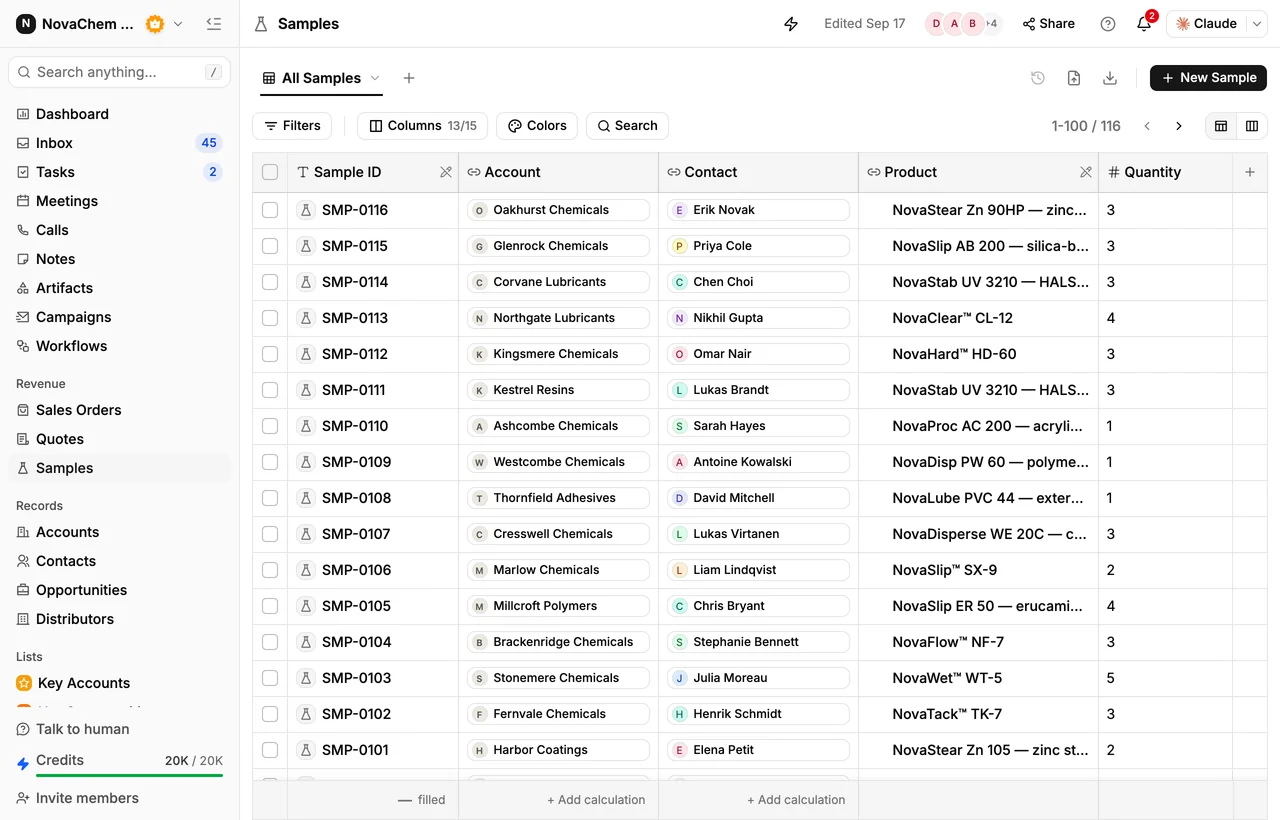
After it arrives
This is where samples turn into orders, or don't.
After delivery
For wording that gets a reply, use our sample follow-up email templates. For the step after approval, read how to turn samples into orders.
How PromptLab helps
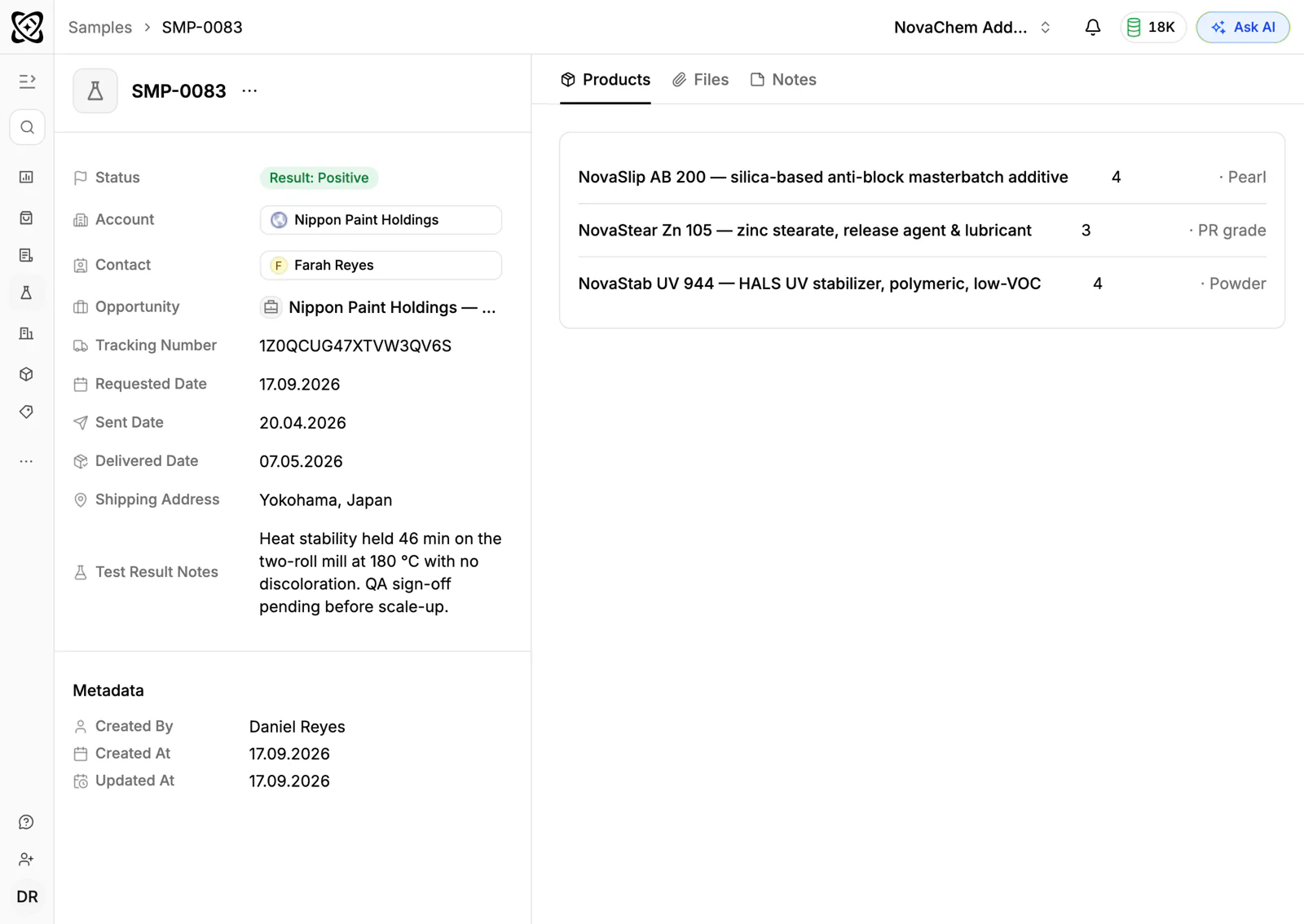
PromptLab keeps sample requests as their own records, linked to the account, contact and deal, with a status and a place for the buyer's feedback. You can see every open sample for an account in one place, and a workflow can create a task when something changes. Because the sample sits on the deal, the quote that follows can be created in the same place.
The items people skip
- The purpose. A sample with no test in mind produces no answer.
- The batch number. If the buyer reports a problem, you need to know which batch it was.
- The tester's name. The purchasing contact rarely runs the test.
- The feedback task. Set it when you ship, not when you remember.
- The cost. Without it you cannot tell whether your sample programme pays.
Frequently asked questions
What should go in a sample shipment?
The sample in suitable packaging, a clear label with product, grade and batch, the safety and technical data sheets, a certificate of analysis if you have one, and any customs or transport papers the route needs. Add a contact name for questions.
Should I charge for samples?
It depends on your product and market. Many sellers send small samples free and charge for large ones or for freight. Decide a rule, write it down and apply it the same way to everyone.
How long should I wait before following up on a sample?
Confirm delivery within a day or two of the tracking date, then ask for feedback a few days after that. Agree the test date with the buyer when you send, so you are following up on something they said.
How do I track samples in a CRM?
Create a sample record for each shipment, linked to the account, contact and deal, with status, tracking number and feedback. Our guide on how to track product samples shows the fields to use.
What do I do when a sample is rejected?
Ask why, record the answer on the sample, and decide whether a different grade could work. A clear rejection reason is useful information for the next deal.