



















Lead qualification checklist
A lead qualification checklist for B2B product sellers: fit, need, volume, buyer, budget and timing, with a go, park or drop decision before you spend a sample.
 By the PromptLab team31 October 20265 min read
Every lead costs something. A sample has to be made and shipped, a quote has to be priced and a rep has to chase. Qualifying a lead means checking, before you spend any of that, whether the buyer can and will buy what you sell.
Use this checklist the first time a new lead gets in touch, and again before you send a sample or a quote. It suits manufacturers, distributors and wholesalers. For the thinking behind it, read how to qualify B2B leads, and for ranking leads with points, see what is lead scoring.
Check the lead is a real fit
Start with the facts you can check without a call. A lead that fails here rarely recovers later.
Company fit
Confirm there is a real need
A lead who says "send me a price list" may be browsing. Ask what they are trying to make or fix.
Need and product match
Size the opportunity
You do not need an exact figure. You need to know whether the order is worth the effort.
Volume and value
Say a buyer wants 200 kg a month of a resin and your minimum order is 1,000 kg. That is one order every five months, which may be fine if the margin is good and may not be if it needs a custom grade. Writing the arithmetic down stops optimism doing the sums.
Find who decides and how
Many deals die because the person you talk to cannot say yes. Find out who can.
Buyer and process
Check budget and timing
Timing is easy to miss. A buyer with a contract running for nine months will not move this quarter.
Budget and timing
Make the call: go, park or drop
End the checklist with a decision, not a feeling. Give each lead one of three outcomes.
Decision
The items people skip
- The decision maker. Reps fall for a friendly contact and find out three weeks later that someone else decides.
- The minimum order check. It takes ten seconds and saves a sample that was never going to turn into an order.
- The park decision. Without it, good leads get forced into a deal stage they are not ready for, or silently dropped.
- Writing down why a lead was dropped. The reason is useful the next time the same company comes back.
How PromptLab helps
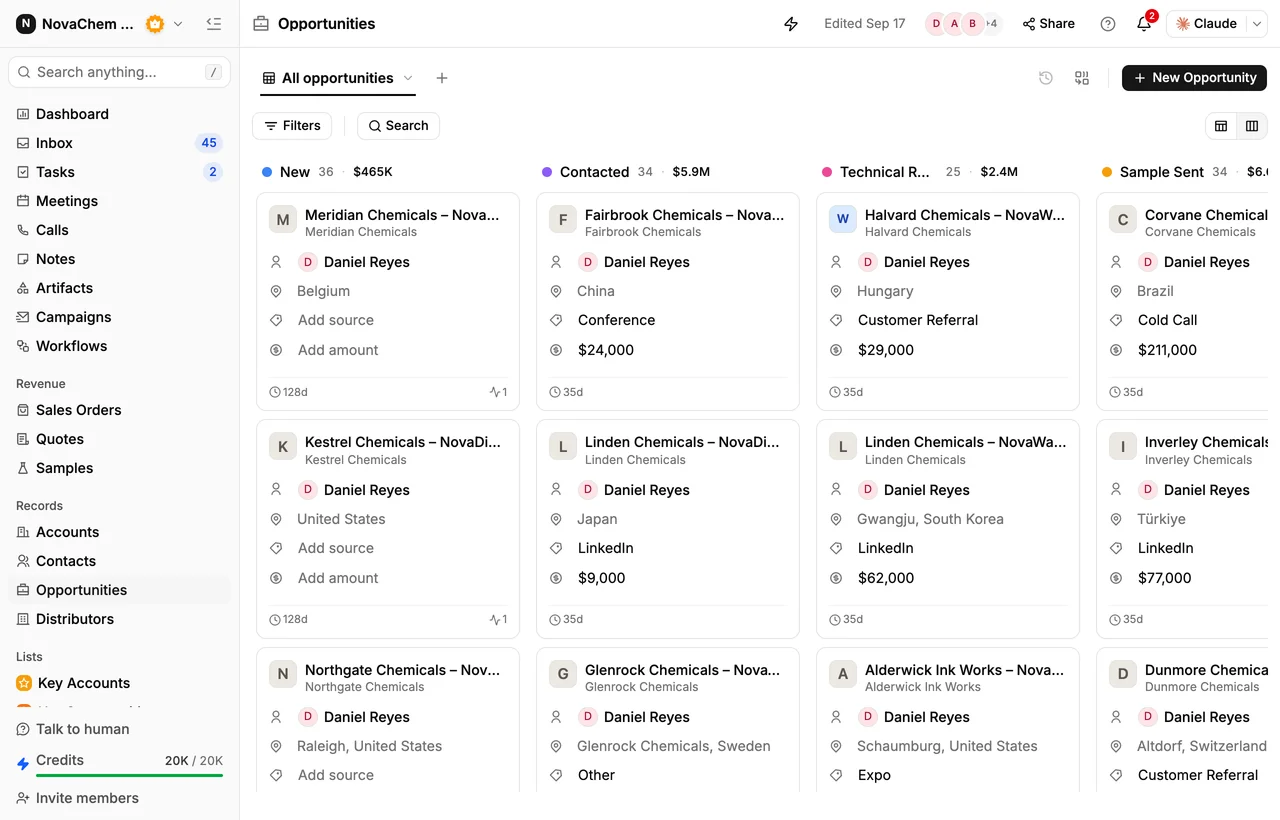
Create the lead as an account and contact, and open a deal in your one pipeline once the lead passes. Fill in the deal's estimated value and expected volume, add custom fields for anything else you always check, such as the target start date or the buyer type, and use saved views to see which new leads still need qualifying. Write the answers as a note on the account, and set a task with a date for any lead you park. Email, WhatsApp and Telegram messages from the buyer come into the shared Inbox, so the answers to your questions end up next to the lead. See the opportunities reference for how deals work.
Frequently asked questions
What questions should I ask to qualify a lead?
Ask what they buy today and from whom, what they need it to do, how much they use and how often, who decides, when they want to buy and how they test or approve a new supplier. Six questions are usually enough to decide whether to go, park or drop.
When should I qualify a lead?
Qualify at first contact, and check again before you spend on a sample or a quote. The first pass catches poor fits. The second catches leads whose situation has changed or whose answers were vague.
What is the difference between a qualified lead and an opportunity?
A qualified lead has passed your checks: it fits, has a need and has a route to a decision. An opportunity is a lead you are now actively working as a deal, with a stage, an owner and a next step.
Should I send a sample before qualifying the lead?
Rarely. A sample costs product, packaging and freight, and an unqualified lead may never test it. Confirm the product match, the volume and who will test the sample first, then send it and agree a date for the feedback.
What do I do with leads that are not ready to buy?
Park them. Note why the timing is off, set a task for the date they gave you and add anything useful to their record. A lead parked with a date is much easier to pick up again than one left in the pipeline to go stale.