












What is lead scoring?
Lead scoring gives each lead a number based on fit and behaviour so reps know whom to call first. Here is how it works and a simpler way to start.
 By the PromptLab team6 October 20263 min read
Definition
Lead scoring
Lead scoring is the practice of giving each lead a number based on how well they fit your customer profile and how they have behaved, so reps contact the most promising ones first.
It answers a simple question: with limited time, whom should I call today?
Why lead scoring matters
A busy team gets more enquiries than it can chase. Without a way to rank them, reps pick by gut feel or by who emailed last. A score makes the choice consistent.
It is most useful when you have many leads. If you get ten a month, you do not need a score. You need to call all ten.
How lead scoring works
You add points for signs of a good lead and take them away for bad signs. There are two kinds:
- Fit: who the lead is. A coatings manufacturer in your region that buys the right volume scores high. A student scores low.
- Behaviour: what they did. Asking for a sample or a quote scores higher than opening a newsletter.
Add the points, and set a line, say 50, above which a lead goes to a rep. You set the points yourself, and you adjust them as you learn who actually buys.
Rules or a model
Rule-based scoring uses points you choose. Model-based scoring trains software on past deals to guess who will buy. That needs a lot of data and is often a black box. For most B2B product teams, simple rules you can explain are better.
An example from product sales
A plastics distributor scores new leads like this: 20 points for a target industry, 20 for the right company size, 30 for asking for a sample, 10 for a reply within a day. A packaging converter of the right size, in a target industry, asks for a sample: 20 + 20 + 30 = 70, which clears the line of 50, so it gets a call today. A student asking for a brochure scores 0. Our guide to qualifying B2B leads shows a simpler way to do the same job.
Related terms
- Sales pipeline: where a qualified lead goes next.
- CRM: where lead data is kept.
- AI-native CRM: software that captures the behaviour a score depends on.
How PromptLab handles it
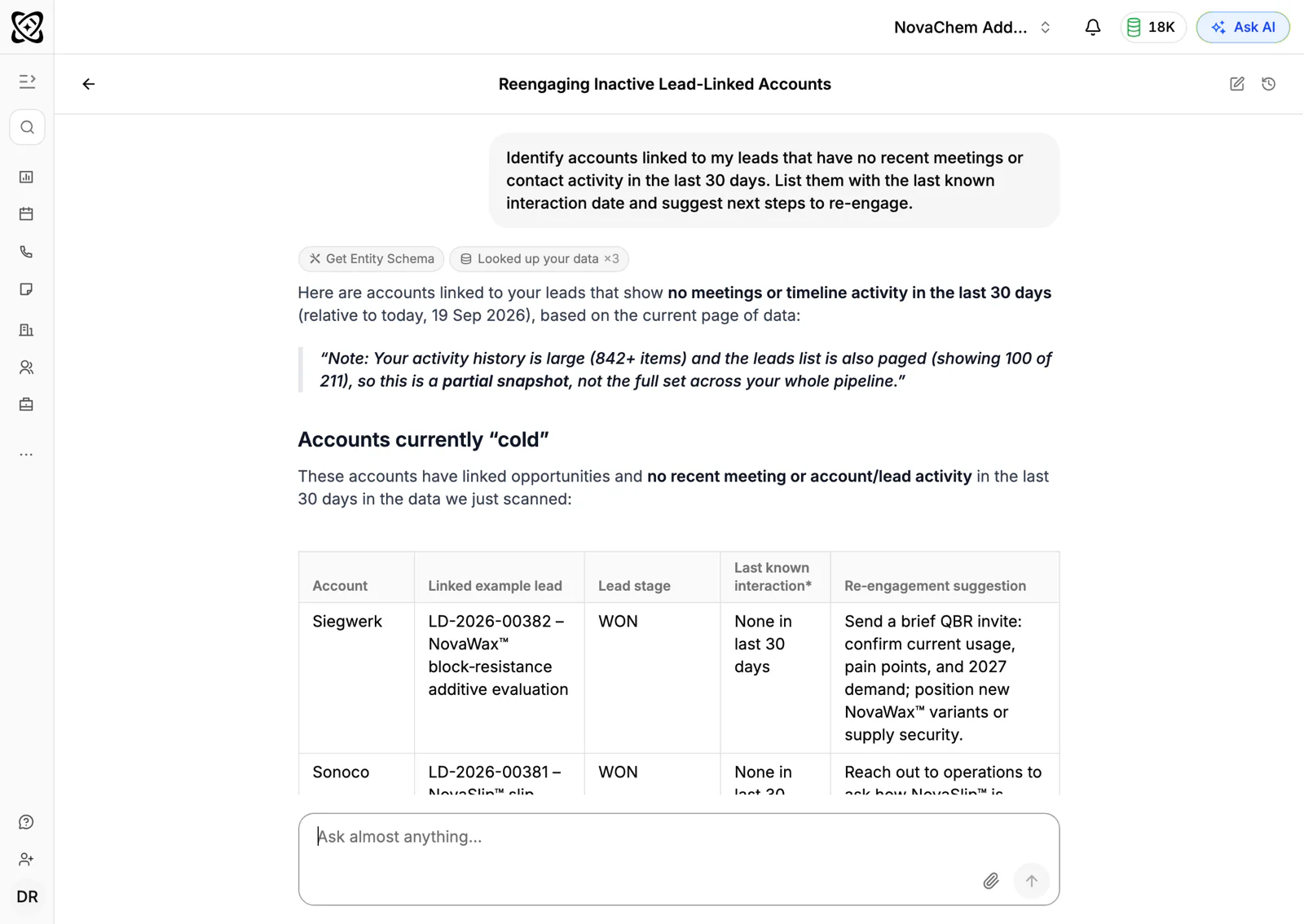
PromptLab does not score leads for you, and we would rather say so than overpromise. What it does is capture the facts a good score depends on: meetings, email, WhatsApp and Telegram land on the account, and autofill fills in fields from calls. It also flags accounts with no recent engagement, so quiet ones don't slip. Your reps then rank leads with the full history in front of them.
Frequently asked questions
Is lead scoring worth it for a small team?
Often not at first. With few leads, you can call all of them. Add scoring when you have more leads than time.
What is a good lead score?
There is no standard number. You pick the line based on how many leads your reps can handle and review it as results come in.
What is the difference between lead scoring and qualification?
Scoring ranks leads by points. Qualification checks them against criteria, such as budget and need, in a conversation.
Does PromptLab score leads automatically?
No. It captures the data a score depends on, but it does not rank leads for you.