



















Lost deal email templates
Nine lost deal emails and messages for product sellers: graceful exit, asking why you lost, price-driven losses, a door left open and a re-engage note later.
 By the PromptLab team24 October 20265 min read
You lose deals. Everyone does. What you do in the next ten minutes decides whether that buyer ever returns. A gracious reply keeps you in their mind for the next project, the next tender or the day their current supplier lets them down.
These templates cover the moments around a loss: accepting the news, asking why, answering a price loss, and coming back months later. Each one is short and calm. They also feed your loss records: ask the question honestly, write the reason down, and your team learns something from every lost deal. For the analysis side, read how to analyse lost deals.
Accepting the news
Subject: Re: [Product] quote
Hi [First name],

Thank you for letting me know, and for considering us for [Project or product]. I'm sorry we won't be working together this time.

If it's useful, I'd be glad to understand what made the difference. Either way, I'll leave the door open. If your plans change, you know where I am.

[Your name]
Send it within a day of hearing the news. Do not argue or reopen the price.
Hi [First name], thanks for telling me directly. I'm sorry we didn't win this one, but I appreciate you considering us. If your needs change, I'm here. Could I ask what tipped the decision? It really helps us.
Use it when the buyer told you on WhatsApp. Match their tone and keep it short.
Thanks for letting me know, [First name]. Understood. If it's okay, could I ask what decided it for you: price, lead time or something else? It helps us do better next time.
Use it as a reply when the buyer has messaged your company bot. Telegram needs the buyer to write first.
Asking why
Subject: One question about [Project]
Hi [First name],

Could I ask one question? What was the main reason you chose [Another supplier or Another option]? Was it price, lead time, specification, minimum order or something else?

A line is enough. We use the answers to improve, and I won't try to change your mind.

[Your name]
Use it a few days after the loss. Offer a list of reasons so the buyer can answer in one line.
Subject: Ten minutes for feedback?
Hi [First name],

I'd value ten minutes of your honest feedback on the [Project] decision. No sales pitch. What did we do well, and where did we fall short?

If you're willing, I can call you on [Day] at [Time]. If you'd prefer email, send me a few lines.

[Your name]
Use it for large or long deals where the detail is worth a conversation.
Common reasons for a loss
Subject: Re: [Product], price
Hi [First name],

Thanks for being straight with me. I understand price decided it this time.

If your needs change, for example a larger volume, a longer commitment or a different pack, I may be able to improve the numbers. I'd also be glad to quote again for your next order, so we can compare like for like.

[Your name]
Use it when the buyer says a competitor was cheaper. Do not discount after the fact.
Subject: Re: [Product], delivery
Hi [First name],

Thanks for the explanation. I understand that the [Number]-day lead time didn't fit your plan.

We're reviewing our stock levels for [Product]. May I let you know when we can offer shorter delivery? It might make sense for your next order.

[Your name]
Use it when timing, not price, was the reason. Only promise to update if you will.
Subject: Re: [Product] supply
Hi [First name],

I understand you're staying with your current supplier, which is a reasonable decision. Many of our customers also keep a second source for supply security.

If you'd like a backup option for [Product], I can keep a quote on file and send a small sample. No commitment, just something ready if you ever need it.

[Your name]
Use it when the buyer stayed with a supplier they trust. Position yourself as the second source.
Coming back later
Subject: Checking in on [Product]
Hi [First name],

It's been a few months since we talked about [Product]. I'm writing because [Reason, for example we've changed the pack sizes / our lead time is now shorter / we launched a new grade].

If that's relevant, I'd be happy to send an updated quote. If not, no worries. I'll note your preferences and stay out of your way.

[Your name]
Use it three to six months after the loss, and only with something new to say. Set a task to remember it.
Record the loss properly
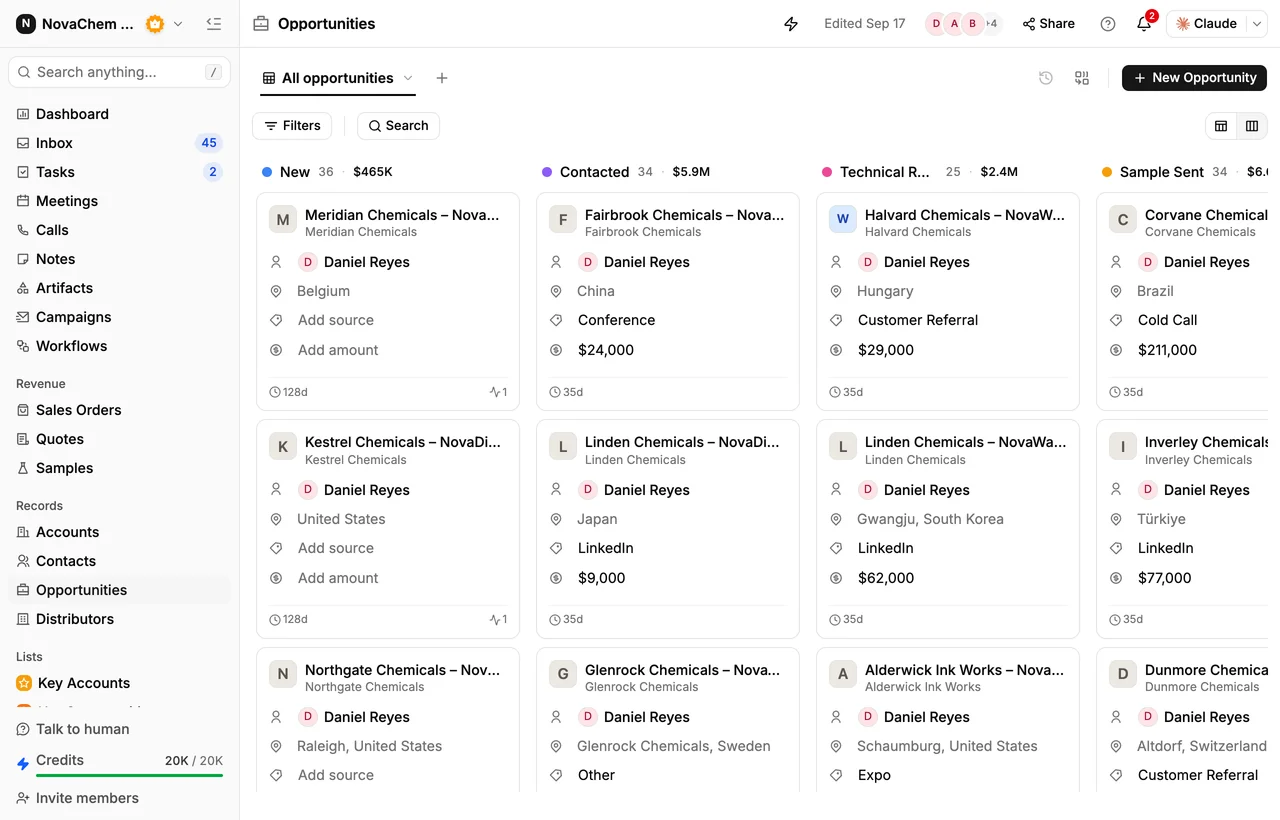
Every lost deal in PromptLab needs a loss reason. That is useful: pick the reason the buyer gave, not the one you would have liked. After a quarter, you can see whether you lose on price, to a competitor, on timing or on product fit, and fix the right problem.
- Pick the reason the buyer gave. If they did not say, choose Other and say so in a note, rather than guessing.
- Add a note on the deal. One line of detail, such as lead time or minimum order, is worth more than a category alone.
- Set the comeback task. If you promised to check back in March, create the task now.
Send them from your CRM
Frequently asked questions
Should I reply when a buyer tells me I lost the deal?
Yes, briefly and politely, within a day. Thank them, do not argue, and leave the door open. How you lose is remembered.
How do I ask a customer why they chose another supplier?
Ask one simple question and give them a short list of likely reasons, such as price, lead time or specification. Say you are not trying to change their mind. That makes a straight answer easier.
Should I offer a discount after losing on price?
Not as a reaction. A late discount tells the buyer your first price was padded. Offer to quote again when their volume or terms change.
When should I contact a lost deal again?
After three to six months, and only with something new: a new pack, a shorter lead time, a new grade. Set a task so the date is not forgotten.
How do I learn from lost deals in a CRM?
Record a loss reason on every lost deal and add a note with the buyer's own words. In PromptLab the reason is required, and it feeds the Win / Loss dashboard template, which shows why deals are lost and at which stage.