



















How to analyse lost deals
How to record loss reasons, review lost deals every month and turn the patterns into changes to price, samples, lead time and follow-up.
 By the PromptLab team16 October 20266 min read
To analyse lost deals, record a reason every time a deal is lost, choose the reasons from a short fixed list, review the pattern each month, and change one thing in response. The list matters more than the analysis. If every loss is logged as "other", there is nothing to learn from.
This guide is for teams that sell physical products. Losing a deal there usually means a sample failed, a competitor quoted a lower price, a lead time was too long, or the buyer went quiet. Each has a different fix, so you need to tell them apart.
Why lost deals are worth the time
Most teams study wins. Losses tell you more, because they show where the process breaks.
A lost deal is also a customer you may win later. A buyer who said no on price in March may have a problem with their current supplier in September. If you recorded the reason, you know when to go back.
Start with a short list of loss reasons
Free-text reasons are easy to type and impossible to count. Give reps a short list and require one choice. Six to ten reasons is enough. For a product business, a good starting list looks like this:
| Reason | What it usually means |
|---|---|
| Price | A competitor was cheaper, or the budget was lower than the quote |
| Sample failed | The product did not meet the specification |
| Lead time | You could not deliver when they needed it |
| Minimum order | Your MOQ was higher than they wanted to buy |
| Specification or fit | The product was not what they needed |
| Chose current supplier | They stayed where they were |
| No response | The buyer stopped answering |
| Project cancelled | The customer dropped the plan |
| Terms | Payment terms, packaging or incoterms did not work |
Keep a place for a short note beside the reason. The reason is for counting. The note is for context.
Step by step: analyse your lost deals
- 1
Record the reason at the moment of loss
The rep who lost the deal knows the real reason that day. A month later it becomes "price". Ask for the reason when the deal is closed, not at the end of the quarter.
- 2
Check the reason against the evidence
Reps often say "price" when the real story is slower. Look at the deal: was the quote late, did the sample fail, did the buyer stop replying after the quote? A lost deal with a failed sample and the reason "price" needs a second look.
- 3
Count the reasons each month
List the lost deals for the month and count by reason. Do it on a screen with the team, not in a private spreadsheet. You are looking for the top two or three reasons.
- 4
Cut by what matters
Split the losses by product, by stage the deal was lost at, by rep and by customer type. A pattern often shows up in one cut and not another. For example, a high price loss rate on one grade only.
- 5
Pick one change and give it an owner
Choose the biggest cause and decide one action. Name an owner and a date. Do not fix five things at once, or you will not know which worked.
- 6
Check next month
Look at the same reason next month. Did it fall? If not, the change was wrong or too small.
What to do about each reason
Price. Check whether you lost on unit price or total cost. Review your price list and discounting rules, and read how to handle price objections. Sometimes the fix is a better quote, with lead time and quality in view, not a lower price.
Sample failed. Look at which product and what the customer found. Repeat failures on one grade tell you to fix the grade or stop sending it to that kind of customer. Read how to turn samples into orders.
Lead time. Talk to operations. If many deals are lost on lead time, the fix may be stock policy, not sales.
Minimum order. Consider whether a smaller first order, at a higher price per unit, would win the account. See what is MOQ.
No response. Look at how fast the quote went out and how many follow-ups you sent. Most no-response losses are follow-up problems. Use quote follow-up email templates.
Chose current supplier. The buyer saw no reason to switch. Ask what would have been enough, and find out earlier in the next deal.
A worked example
Say a chemicals distributor reviews 24 lost deals from the quarter. Nine are marked price, seven no response, four sample failed, and four lead time.
The manager checks the nine price losses. Six were on the same two products and all of them quoted above the customer's current price list. The seven no-response losses all had a quote sent more than a week before anyone followed up. The two changes are clear: review pricing on two products, and create a follow-up task three days after every quote.
Go back to the deals you lost
Lost deals are not dead. Add a review date when you close a deal, for example six months out, and reach out then. A buyer who left on price may have a new need. A buyer who left on lead time may be happier once your stock improves. Win-back email templates help with the wording.
Lost-deal review checklist
How PromptLab helps
In PromptLab you mark a deal as lost and a loss reason is required, so the reason is on the record the day it happens. The deal stays on the account, next to the emails, meetings, quotes and samples that led to it, so you can check the reason against what actually happened.
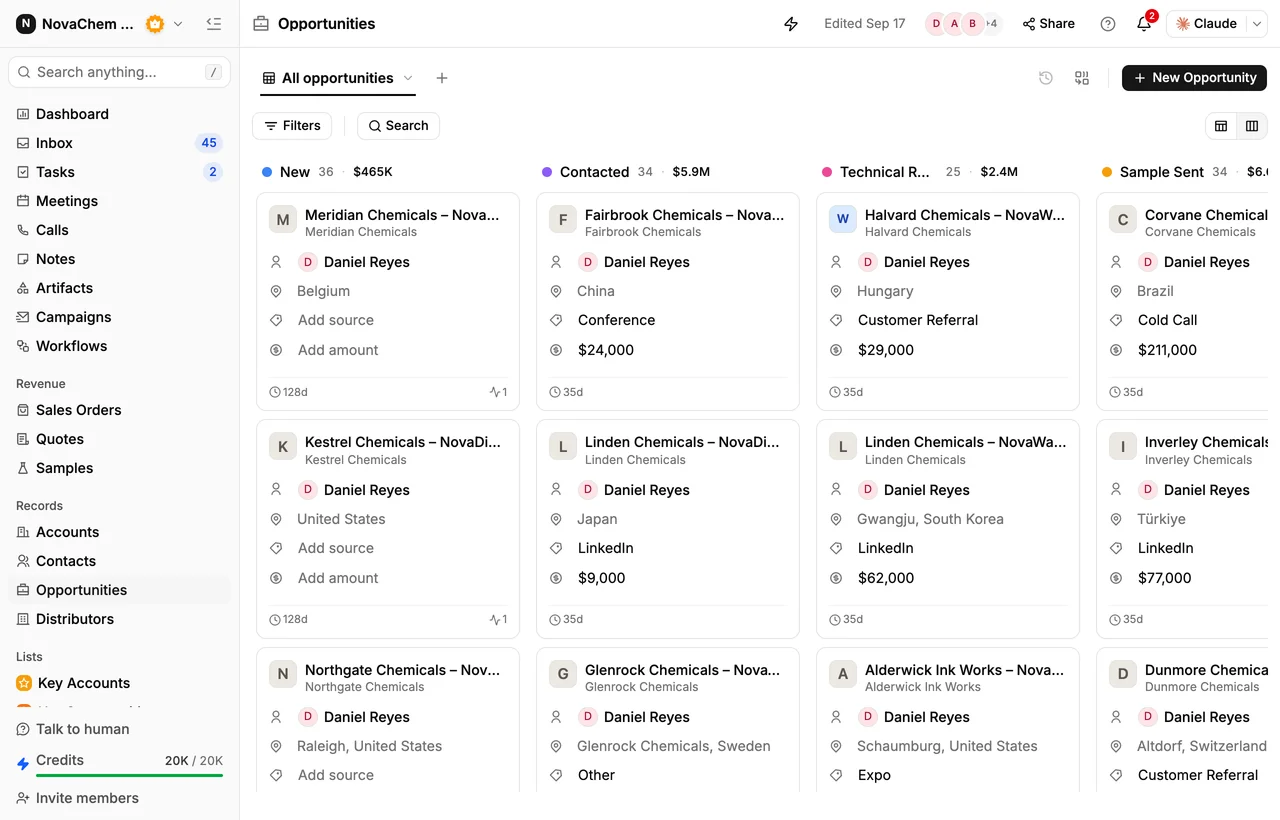
Reports and dashboards on pipeline and revenue show won against lost, and the report builder lets you build the cuts you need. Sample tracking records the customer's feedback, so a failed sample has its reason on file. Ask AI answers plain-language questions about your deals and accounts. A workflow can create a task when a deal changes stage, which you can use to schedule a follow-up.
Frequently asked questions
What are the most common reasons for losing a B2B deal?
For product sales they are usually price, a failed sample, lead time, a minimum order that was too high, and no response from the buyer. Your own list will differ, which is why you should record reasons and count them.
How do you record a loss reason?
Use a required field with a short list of choices when a deal is marked lost, and a free-text note beside it. The list lets you count. The note gives context.
How often should you review lost deals?
Monthly is enough for most teams, and quarterly for slow-moving ones. Review in a group, so patterns are seen by more than the manager.
Should you ask the customer why they said no?
Yes, when you can. A short, polite call or message often gets a more honest answer than the rep guessed. Keep the question simple: what decided it?
What is the difference between lost deals and win rate?
Win rate is the share of closed deals you won. Lost-deal analysis explains the rest. Read what is win rate for how to calculate it.