



















Price negotiation checklist
A price negotiation checklist for B2B product sellers: know your floor, plan the trade-offs, handle the call and confirm the agreed price in writing.
 By the PromptLab team31 October 20264 min read
Negotiations are easy to lose before the call. The rep who walks in without a floor price, a list of trades and a record of past orders gives away margin in the first five minutes. A short checklist before, during and after keeps the discount you give tied to something you get.
Use it for any price talk with an existing or new buyer. For the objections you will hear, read how to handle price objections, and for volume deals, how to negotiate volume discounts.
Know your numbers
You cannot negotiate well on a price you do not understand.
Before the call: numbers
Say a product sells at $4.00 a kilo and costs you $3.20. That is an 80 cent margin, or 20% of the price. A 5% discount takes the price to $3.80 and the margin to 60 cents, so you give up a quarter of the margin for a 5% cut. Run this sum before you offer a discount, not after.
Plan what you will trade
A discount with nothing in return is a gift. Decide in advance what you will ask for.
Before the call: trades
Run the conversation
Slow is good. Concessions tend to slip out when a rep rushes to fill a silence.
During the call
Close it down and confirm in writing
An agreement that is not written down changes in the buyer's memory.
After the call
The items people skip
- Checking what the buyer is comparing. A "cheaper" quote can turn out to be for a different product or on different terms.
- Writing down the trade. Next year the buyer remembers the discount and forgets the volume they promised.
- A review date. Price deals that never expire turn into permanent discounts.
- Approval above your floor. Reps give discounts they are not allowed to give because there was no process to ask.
How PromptLab helps
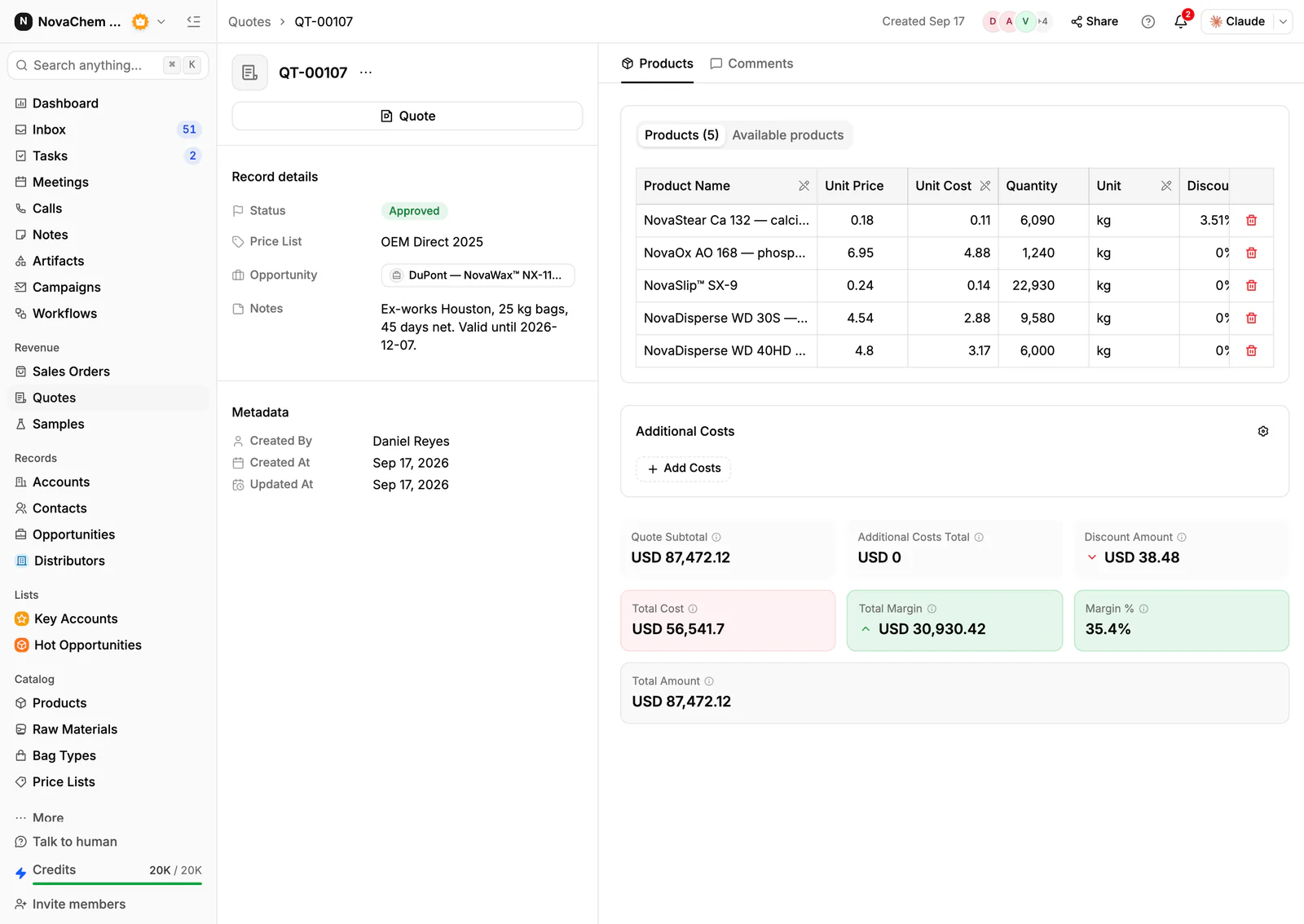
Customer price lists let you hold the agreed price per customer, and each quote picks a price list and shows the margin on every line, so a discount is visible before it goes out. Editing a list's prices reprices every quote linked to it, so a price change belongs in a new list. Keep notes of the negotiation on the account and a task for the review date. See the quotes and quotes and samples pages.
Frequently asked questions
What should I prepare before a price negotiation?
Prepare your cost and margin, the customer's last price and order history, your floor and who can approve below it, and the trades you can ask for. Know your opening price, target and walk-away point.
How do I avoid giving away margin?
Never give a discount without getting something back, such as volume, a longer commitment, faster payment or a standard pack. Work out what the discount costs in margin before you offer it, and make each concession smaller than the last.
Should I give the best price first?
No. Start from your opening price and move in steps, so you have room to trade. If you give your best price first, any further request leaves you with nothing to offer.
How do I respond when a buyer says a competitor is cheaper?
Ask what they are comparing: the same grade, pack, delivery term and payment terms. Ask to see the quote if they are willing. If the offers are the same, trade on volume or terms. If they are not, explain the difference.
How do I record an agreed price?
Confirm it in writing the same day with the price, volume, terms and how long it holds. Then put it in a customer price list, a new one if the price changed, and note it on their account, so the next quote uses it.