



















How to find export customers
How to find export customers for B2B products: pick target markets, use distributors, trade shows and your own enquiries, then qualify and track every lead.
 By the PromptLab team24 October 20266 min read
To find export customers, pick two or three target countries based on demand and ease of access, decide whether to sell direct or through a distributor, and then use the channels that already work for B2B product sellers: trade shows, local distributors, industry associations, your own enquiries and LinkedIn. Qualify every lead on volume, standards and payment terms before you send samples overseas.
This guide is for manufacturers and distributors that want to sell physical products abroad. It covers choosing markets, the main ways to find buyers, how to qualify them, and how to keep export leads from getting lost between time zones.
Start with the market, not the buyer
The most common export mistake is to chase any enquiry from anywhere. Choose markets first, then look for buyers inside them.
Ask these questions about each candidate country:
- Demand: do local buyers use your product, and in what volumes?
- Competition: who supplies them now, and from where?
- Rules: are there product standards, labelling, registration or import limits? Check with the authority or a customs broker, and do not guess.
- Logistics: how long does freight take, and what does it cost per tonne or pallet?
- Payment risk: can you get paid reliably, or do you need a letter of credit or payment in advance?
- Language and time zone: can your team answer within one business day?
Score three or four countries and choose two. A small team cannot serve ten markets. It is better to learn two well.
Step by step: find and win export customers
- 1
Check your product and paperwork are export-ready
Prepare the documents buyers will ask for: safety data sheets, certificates of analysis, specifications, product codes and pack sizes. Decide your minimum order and your export price list.
- 2
Choose direct sales or a distributor
Selling direct gives you the margin and the customer relationship, but you handle logistics, language and follow-up. A local distributor gives you reach, stock and local support, but takes a share of the margin. Many companies use distributors for the first years and sell direct to the largest accounts.
- 3
Build a target list in each market
List the types of company that buy your product: manufacturers, formulators, wholesalers or contractors. Search industry directories, association member lists, trade show exhibitor lists and your own enquiry history. Put each company into the CRM as an account, with its country and what it buys.
- 4
Reach out with a clear, short message
Write to the buyer or purchasing contact in plain English, or in their language if you can. Say what you make, one result a similar customer gets, and the next step, such as a data sheet or a call.
- 5
Qualify before you send a sample
Overseas samples are costly. Ask about yearly volume, the application, who decides and the target price. Confirm they can import the product. Then send a sample and track it.
- 6
Quote with the trade terms stated
Export quotes need more than a price. State the Incoterm, the port or place, the lead time, the currency, the payment terms and the minimum order. Read what Incoterms are before you quote.
- 7
Agree payment security
For a first order with a new buyer, many sellers ask for payment in advance, part payment or a letter of credit. See what a letter of credit is. Pick the level of risk you can accept, and record the terms on the deal.
Channels that work for product exporters
Trade shows and exhibitions
Industry shows put buyers from many countries in one hall. Go with a target list, book meetings before you travel and log every contact within a day. Do the follow-up while the show is fresh.
Local distributors and agents
A distributor already has customers, warehouses and local knowledge. Find them through trade associations, shows and your customers' recommendations. Check their other lines, their sales team and their stock-holding before you sign.
Industry associations and chambers of commerce
Many associations publish member lists and organise trade missions. Chambers of commerce can introduce you to importers. These introductions are slow but give you credibility.
Your own enquiries
Look at the enquiries you already get from abroad. A buyer who found you unprompted is a signal about demand. Reply fast, qualify properly and ask how they found you, so you can do more of what works.
LinkedIn and professional networks
Find buyers, purchasing managers and technical managers at target companies. PromptLab's Chrome extension saves a LinkedIn profile to the CRM and can draft an opening message for you to review and send. Keep the messages specific and short.
Qualify export leads with fixed questions
Ask these in the first conversation, and record the answers:
- Which product and grade, and for what application?
- What yearly volume, and what size per order?
- Who imports it: the buyer, a trader or a freight agent?
- What are the standards or approvals required?
- Which Incoterm and payment terms do they expect?
- What is their current supplier, and what do they dislike about them?
If a lead cannot answer volume or approval questions, put it on a slower track. Do not ship a sample on a hope.
Keep export leads from going cold
Time zones and long freight times make export follow-up easy to forget. Build routines:
- Reply to every enquiry within one business day, even to say you will send details.
- Log the sample, its tracking number and the expected arrival date.
- Set a task for the follow-up after the sample arrives.
- Review export deals as a group in your weekly sales meeting.
- When an order is agreed, use the export order checklist to avoid missing a document.
How PromptLab helps
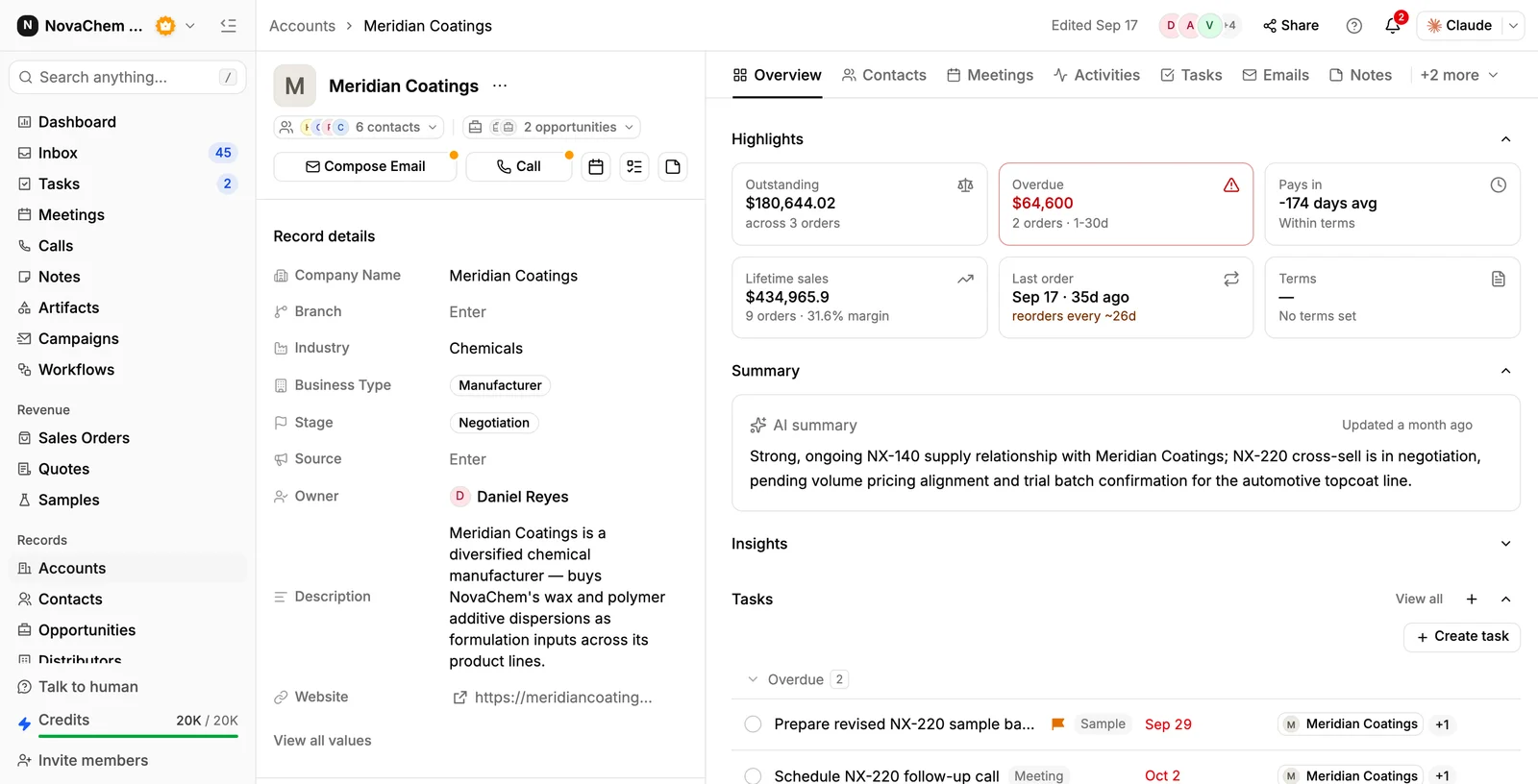
Create an account for each overseas company and add a custom field for the country or region, then use a list to group your export targets. Contacts, deals, tasks and notes sit on the account.
Buyers abroad often prefer WhatsApp or Telegram to email. The shared Inbox holds email, WhatsApp (through your WhatsApp Business number) and Telegram (through your company's own Telegram bot, where the buyer messages first) on the same account. See the WhatsApp CRM page.
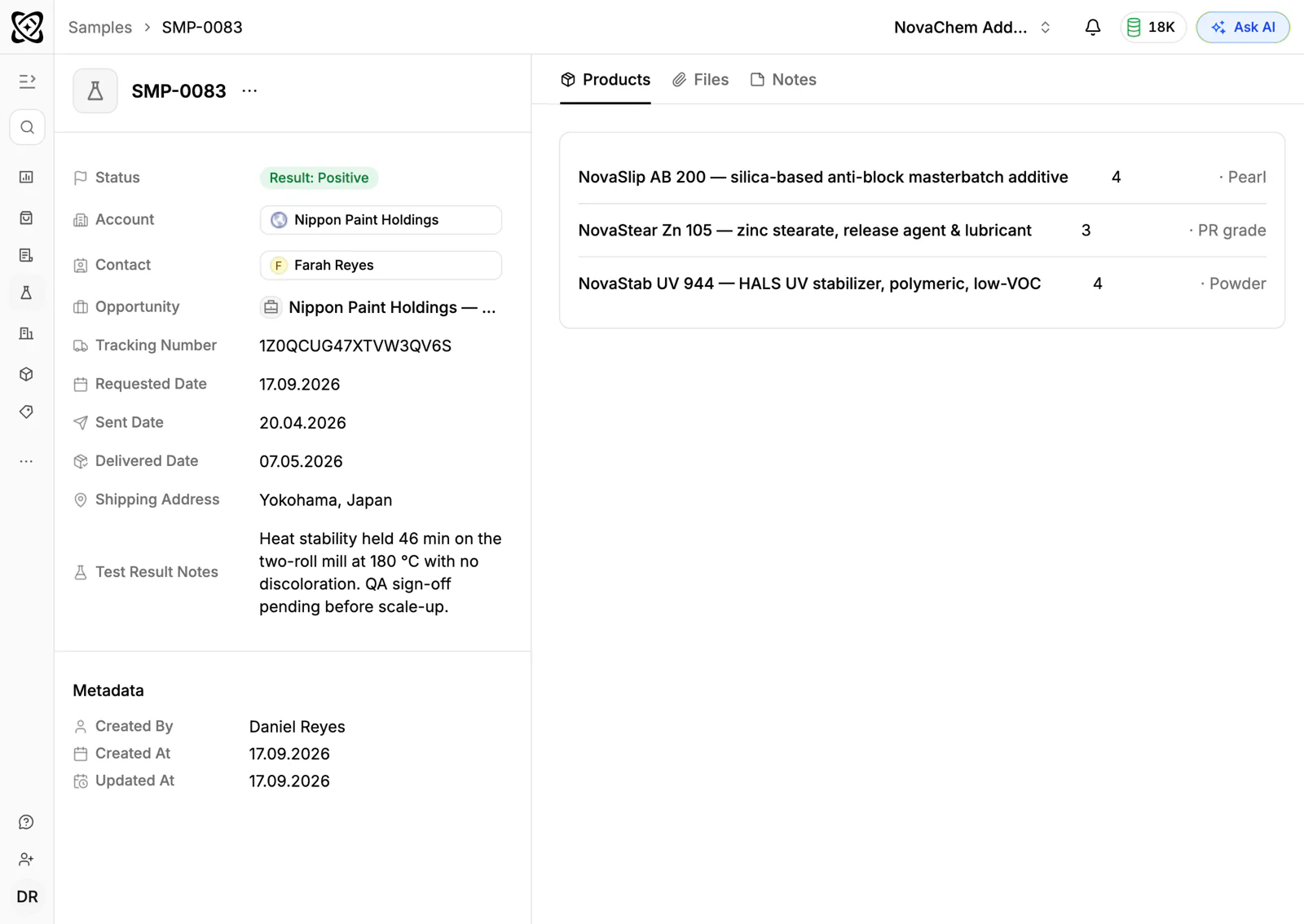
Samples are tracked with a status and linked to the account and deal. Quotes are built from your products and customer price lists, and the customer gets a PDF or a public link. Put the Incoterm and payment terms in the quote's Notes field. When the buyer agrees, create the sales order as its own record, then an invoice from the order.
For calls across time zones, PromptLab records meetings on Google Meet, Zoom or Microsoft Teams, with a transcript and AI summary, and action items become tasks. Transcription supports 30+ languages. Lost export deals need a loss reason, so you can see whether you lose on price, to a competitor or on timing.
Frequently asked questions
How do I find export customers for my products?
Choose two or three target markets, then use trade shows, local distributors, industry associations, your own enquiries and LinkedIn to find buyers. Put every company into a CRM and qualify them on volume, standards and payment terms before sending samples.
Should I sell direct or through a distributor?
Direct selling keeps more margin and gives you the customer relationship, but needs your own logistics and local follow-up. A distributor brings reach and local stock for a share of the margin. Many exporters start with distributors and sell direct to the biggest accounts later.
How do I reduce the risk of non-payment on export orders?
For a new buyer, many sellers ask for payment in advance, part payment or a letter of credit. Agree the terms in writing before production, and record them on the deal. Take advice from your bank or a trade adviser for your own situation.
Which documents do export buyers usually ask for?
Commonly a safety data sheet, a certificate of analysis, a specification, a commercial invoice and a packing list. Requirements differ by product and country, so check with your freight forwarder or the buyer's importer.
Should I send free samples abroad?
Only after the lead is qualified. Check volume, application and import eligibility first. Overseas samples cost freight and time, so track each one and follow up when it arrives.