



















How to sell through distributors
How manufacturers sell through distributors and dealers: pick partners, agree terms, support their reps, share the right data and track what sells through.
 By the PromptLab team16 October 20267 min read
To sell through distributors, choose partners who already reach your target buyers, agree clear terms on territory, pricing and stock, and then support their sales reps as if they were your own. The work does not end when the distributor signs. You still need to know who the end customers are, what is selling and where deals are stuck.
This guide is for manufacturers of chemicals, coatings, plastics, packaging, ingredients and similar goods who work with distributors and dealers. It covers choosing partners, setting terms, training their teams, sharing leads and tracking results, with examples from product sales.
When selling through distributors makes sense
A distributor gives you reach you cannot afford to build alone: local warehouses, local language, credit lines and relationships with hundreds of small buyers. For a manufacturer with a narrow range and a few large customers, direct sales may be enough. For a company with many small and mid-sized buyers across several regions, distributors are often the only practical route.
The trade-off is distance. The distributor owns the day-to-day relationship, and you may not know who your end customer is. Everything in this guide is about keeping enough visibility to grow, without taking the relationship away from your partner.
Step 1: Choose the right distributors
Do not sign everyone who asks. Check each candidate against a short list:
- Reach: do they already sell to the industries and regions you target?
- Product fit: do they carry products that sit next to yours without competing head on?
- Technical ability: can their reps discuss your product with a formulator or a plant manager?
- Logistics: warehouse space, handling for your product class and delivery times that suit your buyers.
- Financial health: can they pay you on time and hold stock?
- Attitude: will they give your line real attention, or will it sit in a catalogue?
Say you make industrial adhesives and you are entering a new country. You might choose two distributors: one with strong ties to packaging converters and one that serves woodworking. Splitting by application avoids two partners fighting over the same buyers.
Step 2: Agree the terms in writing
Most distributor conflicts come from terms that were never made clear. Agree and write down:
- 1
Territory and exclusivity
Which countries, regions or segments the distributor covers, and whether you can sell to others in the same area. If you grant exclusivity, tie it to a minimum performance level.
- 2
Pricing and discounts
The distributor price list, the discount tiers and the rule for special prices on big projects. Say who sets the end-customer price, and whether you recommend a resale price.
- 3
Minimums and stock
Minimum order quantities, how much stock they hold and who carries slow-moving stock.
- 4
Payment and logistics
Credit terms, delivery terms and who handles returns or claims.
- 5
Lead and customer rules
Who owns an enquiry that arrives on your website, and how the distributor registers a project so a rival partner does not claim it.
Ask a lawyer to review the agreement for the countries involved. This guide is about sales practice, not legal advice.
Step 3: Give distributors what they need to sell
A distributor rep may carry two hundred products. Yours wins attention if it is easy to sell. Make a starter kit:
- A one-page overview of each product family and its main applications
- Data sheets, safety data sheets and certificates, kept current in one place
- A short list of the questions buyers ask, with approved answers
- Sample kits and a simple way to request more
- A contact at your company for technical help, with a promise of a quick reply
Hold a training session for each new distributor team, ideally at their site and in person. Record it for later joiners. A distributor rep who has watched a buyer's problem solved with your product will recommend it again.
Step 4: Share leads and register projects
Distribution works when both sides trust the lead process. Set a few simple rules:
- Enquiries that reach you from a distributor's territory are passed to that distributor, with a note on what the buyer asked for.
- The distributor registers big projects with you early, so you can support with technical help and special pricing.
- You do not quote the end customer directly without telling the distributor.
Record each registered project with the distributor, the end customer, the product, the volume and the expected date. A lead log nobody can see is a source of arguments. A lead log in the CRM is a reference.
Step 5: Keep visibility of the end customer
This is the hard part. If the distributor sells and invoices, you may only see the distributor's orders. Ask for whatever sell-through information the agreement allows, and agree its format and timing:
- Which end customers are buying, and in which segments
- Which products and pack sizes sell
- Open projects and expected order dates
- Competitor products the distributor is up against
Some distributors share this freely. Others see it as their commercial secret. Build the habit through the relationship: visit end customers together, join the distributor's calls on big opportunities and offer something back, such as technical support and joint samples. Share what you learn so the exchange is fair.
Step 6: Review the numbers and the partner
Meet each distributor on a set rhythm. A monthly call and a quarterly business review work for most. Look at:
| Question | Why it matters |
|---|---|
| Are orders growing or flat versus last year? | Shows whether the partner is pushing your line |
| Which products sell, and which sit in the warehouse? | Points to training or range gaps |
| How many open quotes and samples are there? | Shows the pipeline behind the next orders |
| How fast do they respond to enquiries? | Slow replies lose deals |
| What are the complaints? | Finds quality and delivery problems early |
Say a distributor's orders for your coating are flat while the market is growing. A visit might show their reps have never seen a demo. The fix is a training day and a sample kit, not a stern email.
If a partner underperforms after real support, be ready to change. Territory clauses with a review date make that possible without a fight.
Common mistakes
- Signing too many partners in one region. They undercut each other and then lose interest.
- Leaving the distributor alone after the signing. Neglected lines are quietly dropped.
- No visibility of end customers. You cannot plan capacity or spot a switch to a rival.
- Different prices for similar partners without a rule. Word travels.
- Treating the distributor as a customer only. They are also your sales force, so sell to them and support them.
If a distributor is also a key customer, run it as one. How to manage key accounts covers the account plan and rhythm.
How PromptLab helps
We built PromptLab for manufacturers and distributors that sell physical products. Each distributor is an account with its contacts, deals, emails, meetings and a customer price list that holds their agreed prices. When a distributor asks for a quote, you build it in the CRM from that price list, and it attaches itself to the deal.
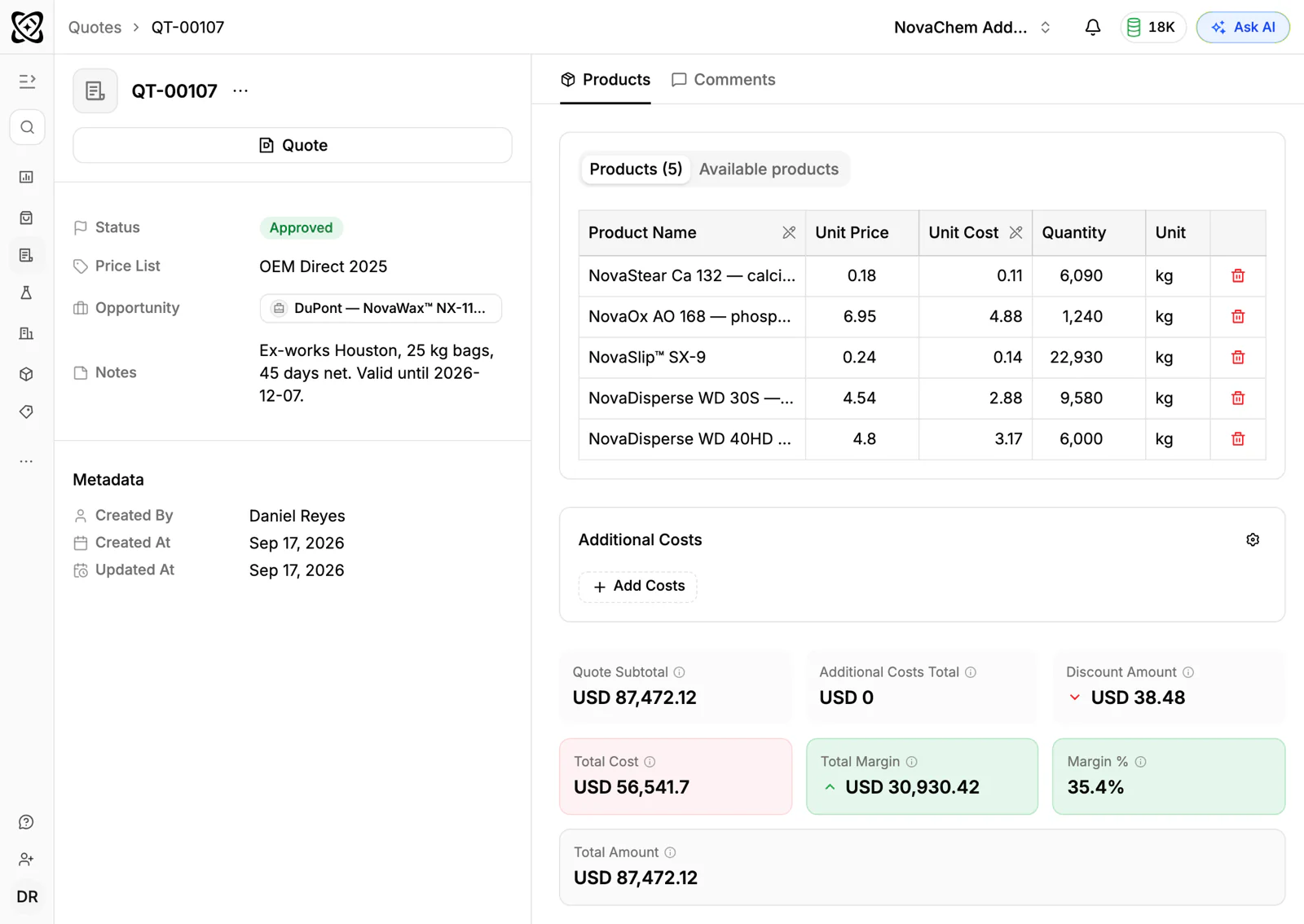
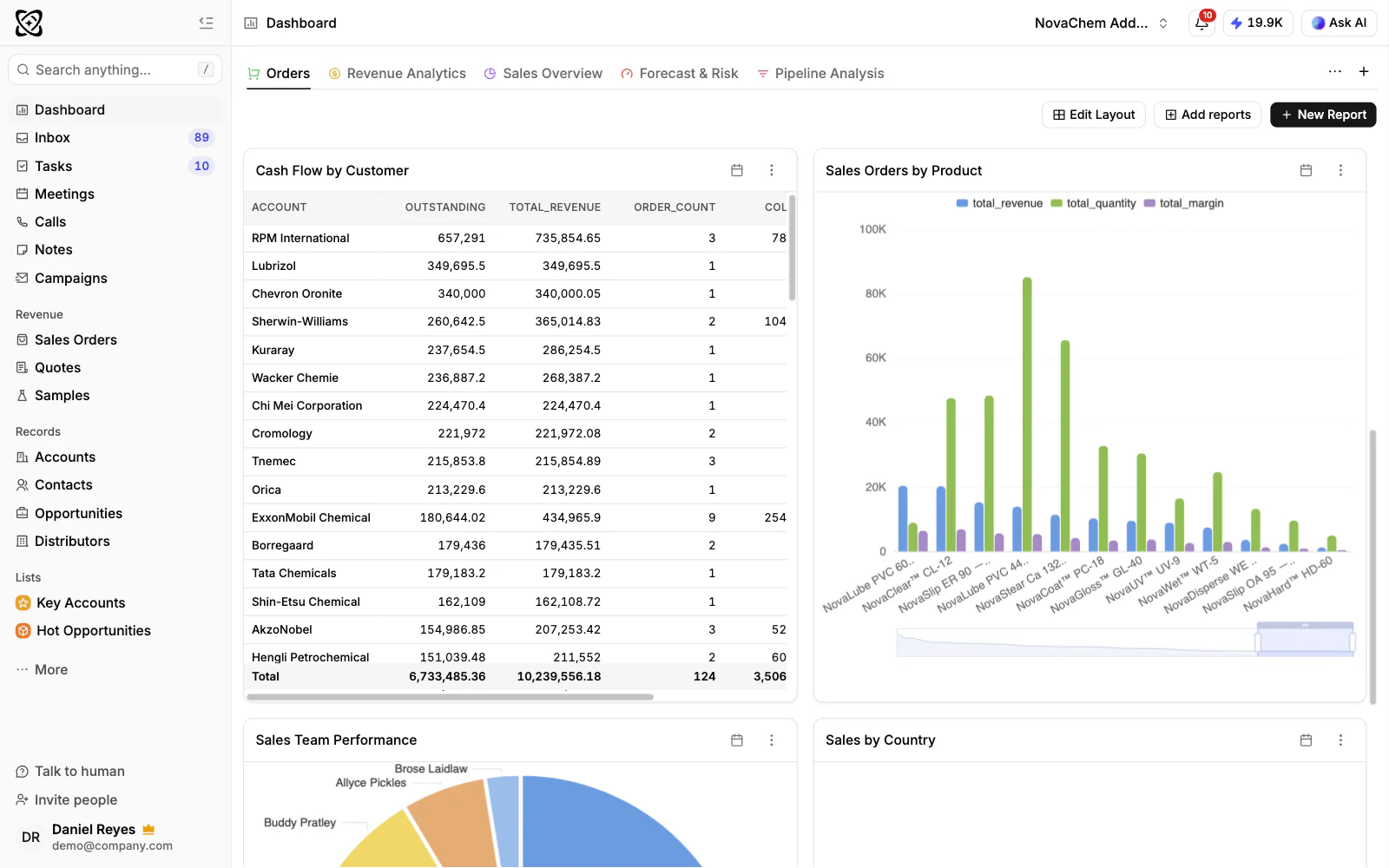
Sample tracking follows each request from Requested to the customer's feedback, which helps when a distributor asks for a sample on behalf of an end buyer. Sales orders and reports on pipeline and revenue show what each partner has bought. Many distributors prefer WhatsApp or Telegram to email, and the shared Inbox keeps those conversations beside email, linked to the account.
For the distributor side of the conversation, see our solutions for distributors and the manufacturers page.
Frequently asked questions
What is the difference between a distributor and a dealer?
A distributor usually buys in volume, holds stock and resells to dealers or end customers. A dealer typically sells closer to the end user, often in smaller quantities. The terms vary by industry, so define them in your agreement.
Should a manufacturer give distributors exclusive territories?
Exclusivity can motivate a partner to invest in your line, but it ties your hands. If you grant it, link it to minimum performance and a review date, so you can change course if results fall short.
How do you avoid channel conflict between distributors?
Split territories or segments clearly, use one price list structure with written discount rules, and ask distributors to register big projects. Tell partners when you pass them an enquiry, and do not quote their registered customers directly.
How can a manufacturer see who the end customers are?
Agree reporting in the contract: customers, products, volumes and open projects. Build trust through joint visits and technical support. Record what you learn in the CRM against the distributor's account so it is not lost.
How often should you meet your distributors?
A short monthly call and a quarterly business review suit most. Visit the largest ones in person at least once a year, and join their calls on big opportunities.