



















How to turn samples into orders
Most samples stop at "we'll test it". A practical way to get feedback, agree the next step and send the quote while the result is fresh.
 By the PromptLab team16 October 20266 min read
To turn samples into orders, agree what a pass looks like before the sample ships, ask for the result on a set date, and send the quote within two days of a positive answer. Most samples do not fail in the customer's lab. They fail in the silence after delivery, when nobody owns the next step.
This guide is about conversion, not logistics. If you need the record-keeping side first, read how to track product samples. Here we cover the three moments that decide whether a sample becomes an order: before it ships, while it is being tested, and the day the result comes back.
Why samples stall after delivery
A sample is a favour the customer has agreed to take. Testing it is extra work for them, and nobody gets a bonus for finishing. So the sample sits on a shelf until something else makes it urgent.
The usual causes are simple:
- No pass criteria. The customer says "we'll have a look" and neither side knows what a good result is.
- No date. Without a test date, there is no reason to follow up on any particular day.
- No decision maker. The person who tests the sample is rarely the person who signs the order.
- Slow quote. The result is positive on Tuesday, the quote arrives the next Wednesday, and the buyer has moved on.
Fix those four and most of the problem goes away.
Before the sample ships: set up the order
The best time to win the order is before the box leaves your site. Treat the sample request as a short qualification call, not a form.
- 1
Ask what the sample is for
Is it a replacement for a current supplier, a new product the customer is developing, or a trial for a single job? A replacement can turn into a standing order. A one-off trial usually will not.
- 2
Agree what a pass looks like
Ask for the specification the sample must meet. For a coatings buyer it might be cure time and gloss. For a packaging buyer it might be seal strength on their line. Write it on the sample record in the customer's own words.
- 3
Agree a test date
Ask when they plan to test it. "Week of the 12th" is enough. That date becomes your follow-up task.
- 4
Find out who approves the switch
Ask who needs to sign off after the test: quality, R&D, a plant manager or purchasing. If you have not met that person, ask to include them in the results call.
- 5
Ask about volume and timing
A rough annual volume and the date they would need the first order decides how quickly you quote, and how much price room you have.
While they test: keep the thread alive
Silence is normal during testing. Your job is to stay present without nagging.
Send a short message when the sample is delivered, to check it arrived intact and to restate the test date. Then do nothing until the date. On the day after, ask how it went.
If the answer is "we haven't started", ask for a new date and log it. Do not accept "soon". Two missed dates in a row tells you the sample is not a priority, and the deal stage should reflect that. The sample follow-up email templates give you wording for each of these messages, including the awkward ones.
When the result comes back
Whatever the result, ask the same three questions:
- What did you measure, and what did you find?
- Does it meet the specification we agreed?
- What happens next, and who decides?
A positive result
Send the quote within two days, and say so on the call: "I'll have the quote with you by Thursday." Use the volume and timing you collected before shipping. If the customer has a price list with you, quote from it so the price matches what they already expect. How to write a sales quote covers what to put on it, and how to speed up quote to order covers the gap after.
A conditional result
"It's close, but the viscosity is too high" is not a no. It is a request. Record the exact condition, ask whether a modified grade would be tested, and offer a second sample against the same criteria. Keep it on the same deal so the history stays together.
A negative result
Ask why, and write down the answer. "Wrong particle size", "too expensive for the grade" and "our line runs a different film thickness" are all useful. Offer an alternative grade if you have one. If you do not, close the deal as lost with the reason. Those reasons feed how to analyse lost deals.
A worked example
Say a plastics distributor ships a masterbatch sample to a moulder. Before it ships, the rep learns the moulder wants a colour match on one part and will test the week of the 12th. The plant manager signs off.
On the 13th the rep calls. The colour matches, but the moulder wants a lower minimum order. The rep sends a quote on the 15th with two quantity breaks. The sample converted because every step had a date and an owner.
Rules that keep samples moving
Sample-to-order rules
Your weekly pipeline review is the place to catch samples that have slipped. Ask of each deal at "sample sent": what is the test date, and has anyone asked for the result?
Measure what converts
Count samples sent, samples with a recorded result, and samples that led to a quote and then an order. Say 20 samples went out in a month, 14 came back with a result, 6 led to quotes and 2 to orders. The numbers show where to work. If many samples have no result, fix follow-up. If many results are positive but few quotes follow, fix speed. If many quotes do not close, look at price and terms.
How PromptLab helps
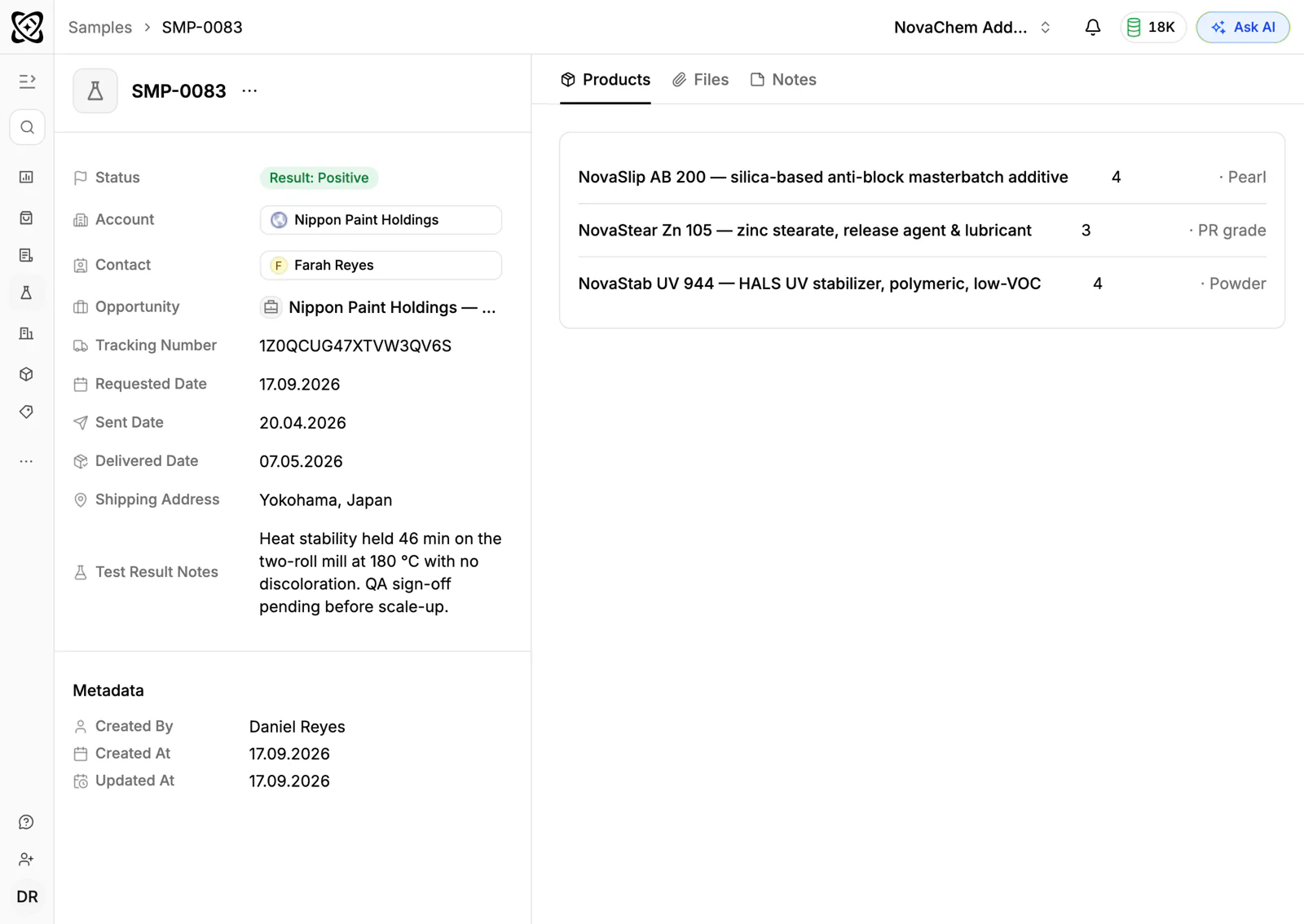
PromptLab has sample tracking on every plan. Each sample request carries its status, the tracking details and the customer's feedback, and it sits on the account beside the emails, meetings and quotes for that customer.
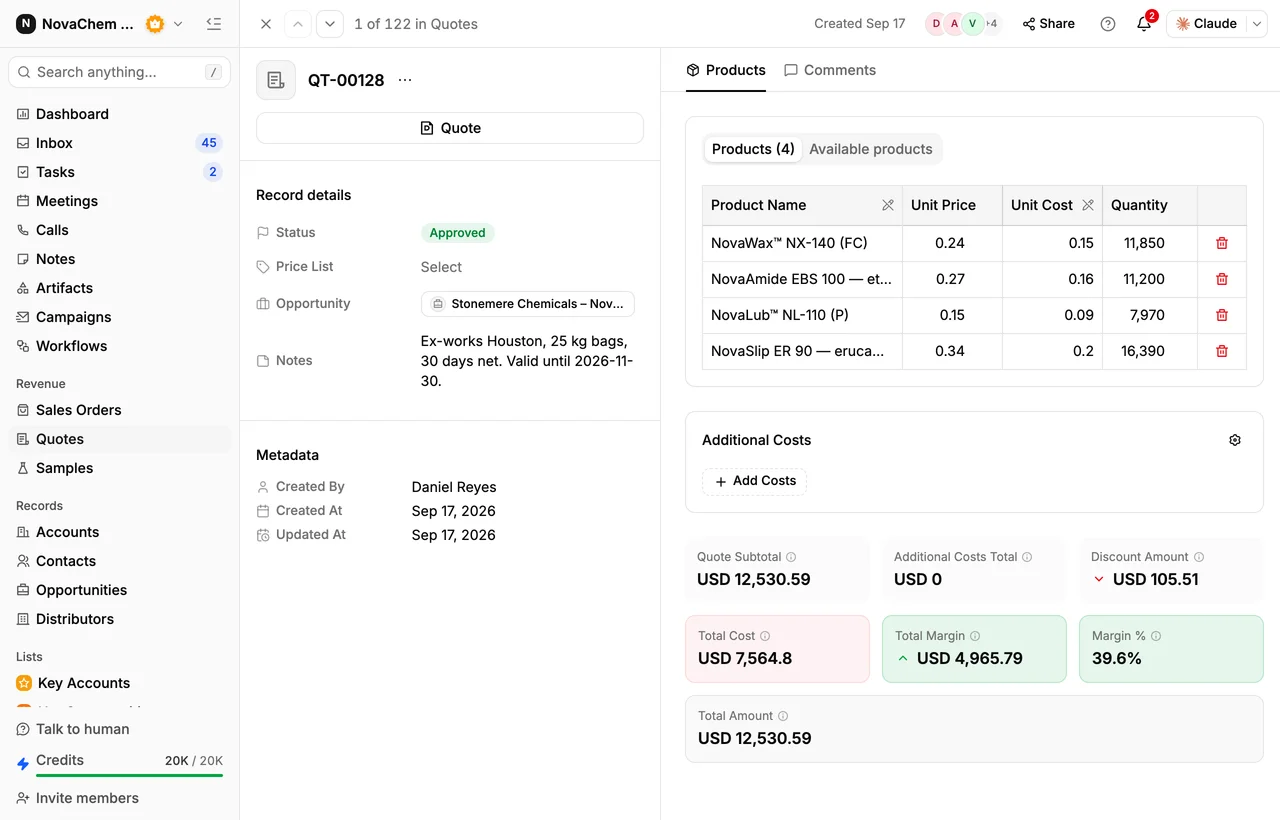
A workflow can create a task when a deal changes stage, so the delivery check and the results call do not depend on memory. When the result is positive, you build the quote from the deal. A quote linked to a customer's price list takes that list's prices, moves through statuses and attaches to the deal automatically. See quotes and samples.
Frequently asked questions
How do you convert a sample into an order?
Agree pass criteria and a test date before the sample ships, follow up the day after the test date, and send a quote within two days of a positive result. Record why any sample fails so you can adjust.
How long should you wait before following up on a sample?
Follow up on the test date the customer gave you. If there was no date, ask for one when the sample is delivered. Chasing without a date tends to produce "we haven't tested it yet".
What should you do if a customer ignores a sample?
Try a different channel and a different person. Email, then WhatsApp or a call, then the colleague who approves the switch. After two follow-ups with no answer, review the deal and decide whether to close it or park it.
Should you send a quote with the sample?
Usually not. Wait for the result, but have the quote half-prepared so it goes out fast. If the customer asks for pricing before testing, give a budget figure and say the quote follows the result.
How many samples should one customer get?
One per grade for the first test, and a second only when the first gave a conditional result and the customer agreed to retest. A third sample with no order in sight is a sign to qualify the deal again.