



















Year-end sales planning checklist for B2B teams
A year-end sales planning checklist for product sellers: review the year, clean the CRM, set targets, plan accounts and reset the pipeline for January.
 By the PromptLab team24 October 20265 min read
The last weeks of the year are the best time to plan the next one. Orders slow down, customers close for holidays and the team finally has a moment to look back. A good year-end review tells you which customers and products earned the money, which deals you lost and why, and what you should do differently in January.
This checklist is for a sales leader or founder at a business that sells physical products. Work through it with your team in the last month, and give each group an owner. It pairs with our guides on how to forecast sales and how to run a quarterly business review.
Review the year: what actually happened
Start with facts, not opinions. The aim is a short list of lessons, not a long report.
Look back
Clean the CRM before you plan from it
Planning from messy data gives messy plans. Spend an afternoon on this, and the next quarter is easier.
Data clean-up
Set the targets for next year
Targets work when they come from accounts and products, not from a round number on a slide.
Targets
Plan the key accounts
A year-end plan for the top accounts is worth more than a plan for the whole list.
Account plans
Reset the team and the process
Finish with the habits that decide whether the plan survives February.
Team and process
How PromptLab helps
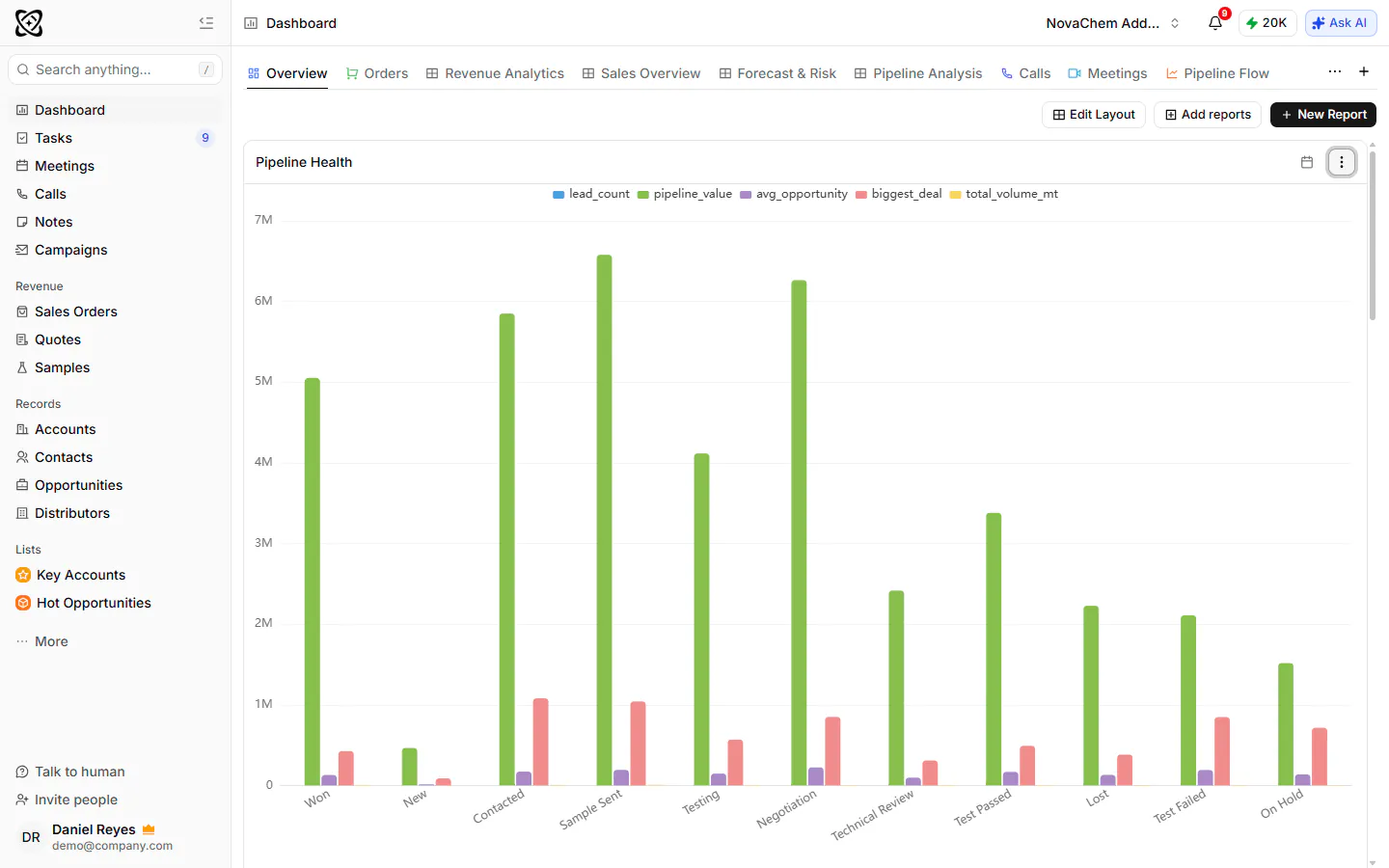
PromptLab has ready-made dashboard templates for the sales pipeline, win/loss, team activity, tasks, quotes and samples, customers, lead sources and meetings. A report builder lets you build the cuts you need, and a public share link lets you send a dashboard to someone outside the team.
Loss reasons on lost deals make the win/loss review honest, and Ask AI answers questions about accounts, deals, quotes, sales orders, meetings and email in plain words. There is one deal pipeline per workspace. Use owners, lists and custom fields to split your view by product or region.
The items people skip
- Loss reasons. If they are blank, you cannot learn from the lost deals.
- Data clean-up. Plans built on dead deals overstate your pipeline.
- Account-level targets. A company target with no accounts behind it is a hope.
- Owners. Every account and every action needs one name.
- Review dates. A plan without a check-in date is forgotten by March.
Frequently asked questions
When should I start year-end sales planning?
About four to six weeks before the year ends. That leaves time to review, clean the data and agree targets before holidays begin.
What should a year-end sales review include?
Revenue and margin by customer and product, deals won and lost with reasons, lead sources, sample-to-order results and a comparison with the targets. Keep it short enough to act on.
How do I set realistic sales targets?
Build them from the bottom: repeat revenue by account, plus new accounts at your own win rate and order size. Then check the total against the company target. Our guide to forecasting sales explains the method.
Why clean the CRM at year end?
Old deals with no activity inflate the pipeline and distort the numbers you plan from. Closing them, adding loss reasons and merging duplicates gives a cleaner start.
How often should we review the plan?
At least once a quarter, with a short check-in each week. A quarterly business review is a good format.