



















How to chase overdue payments without losing the customer
Chase overdue payments on a clear schedule: a friendly reminder, a call, a firm notice and a decision on holding orders, while keeping the customer.
 By the PromptLab team31 October 20265 min read
To chase overdue payments without losing the customer, follow a fixed schedule: a friendly reminder as soon as the invoice is late, a call a few days later, a firm written notice, and a clear decision on whether to hold new orders. Many late payments are admin problems, not refusals, so start polite and become firmer only as the delay continues.
This guide is for sales and finance teams at manufacturers and distributors who sell on credit terms. It covers the schedule, who should make the call, what to say, and when to hold supply. It describes the process; it is not legal or credit advice. For wording, use the payment reminder email templates.
Why customers pay late
Knowing the reason tells you what to do. Common ones:
- The invoice never reached the right person. Wrong email, or it sits in a procurement queue.
- A purchase order mismatch. The invoice does not match the PO number, price or quantity, so it is blocked.
- A dispute. The goods were late, damaged or not as expected, and the buyer is holding payment.
- A payment run. The buyer pays on fixed dates and missed the cut-off.
- Cash flow. The customer is stretched and paying suppliers in turn.
The first four are fixed with a conversation. The last needs a more careful approach, because pushing hard can lose the account or make the debt worse. For terms, see what is Net 30 and what is a credit limit.
Set the schedule before anyone is late
Agree a schedule with finance and apply it the same way every time. A simple one:
| When | Action | Who |
|---|---|---|
| A few days before the due date | Optional courtesy note on large invoices | Account owner |
| Day after the due date | Friendly reminder with the invoice attached | Finance or the rep |
| About a week late | Phone call to find out the reason | The rep who knows the buyer |
| About two weeks late | Firm written notice with the amount and a date to pay | Finance, copying the rep |
| About a month late | Decide on holding new orders; escalate to a manager | Sales lead and finance |
The days are examples. Set yours to match your terms and risk, and write them down.
Step by step: chase an overdue invoice
- 1
Check your own side first
Is the invoice correct? Does it match the PO? Was it sent to the right person? Did you ship everything? Chasing a payment you caused is a quick way to annoy a good customer.
- 2
Send the friendly reminder
Keep it short and assume it was missed. Attach the invoice, state the amount and the due date, and ask them to confirm a payment date.
- 3
Call the buyer, not just the accounts team
Find out the reason. Ask: "Is there anything holding this up on your side?" A rep with a good relationship often gets an answer in two minutes that an automated email would not.
- 4
Agree a payment date in writing
Get a date, or a plan if it will be paid in parts. Send a note after the call: "As discussed, you will pay on [date]."
- 5
Escalate in writing if the date passes
Send a firm notice that states the amount, the original due date, what you agreed and what happens next. Keep the tone professional.
- 6
Decide on holding new orders
For persistent delay, decide who can place an account on hold, and tell the buyer before you do it. Do this as a company policy, not a rep's mood.
What to say on the call
Be calm, and ask rather than accuse. A simple structure:
- "I am calling about invoice [number] for [amount], which was due on [date]."
- "Can you tell me where it is in your process?"
- Listen. If there is a dispute, note it and say who will solve it and by when.
- "Can you confirm the date it will be paid?"
- Thank them and confirm in writing.
If the buyer is in difficulty, ask what you can do: split the payment, or agree a date. A customer that pays you late but pays is worth more than one you lose.
Keep sales and finance on the same page
Chasing goes wrong when finance sends a stern letter on Monday and the rep sends a friendly quote on Tuesday. Agree three things:
- Who owns the conversation. Usually finance sends reminders and the rep calls.
- What the rep sees. The rep should know what is overdue before talking to the buyer about the next order.
- When new orders are held. One rule, applied the same way.
Common mistakes
- Waiting too long for the first reminder. The later you start, the harder it is.
- An accusing tone. Many delays are innocent.
- Chasing without checking the invoice. A wrong PO number is your problem.
- Promising a new quote while an old invoice is overdue. Reps need to know the position first.
- No written record. If a payment date is promised on a call, write it down.
- Treating a dispute as non-payment. Solve the dispute and the payment follows.
How PromptLab helps
Keep the ledger, payment status and credit decisions in your accounting system. PromptLab is where the customer conversation lives, so chasing is consistent across your team.
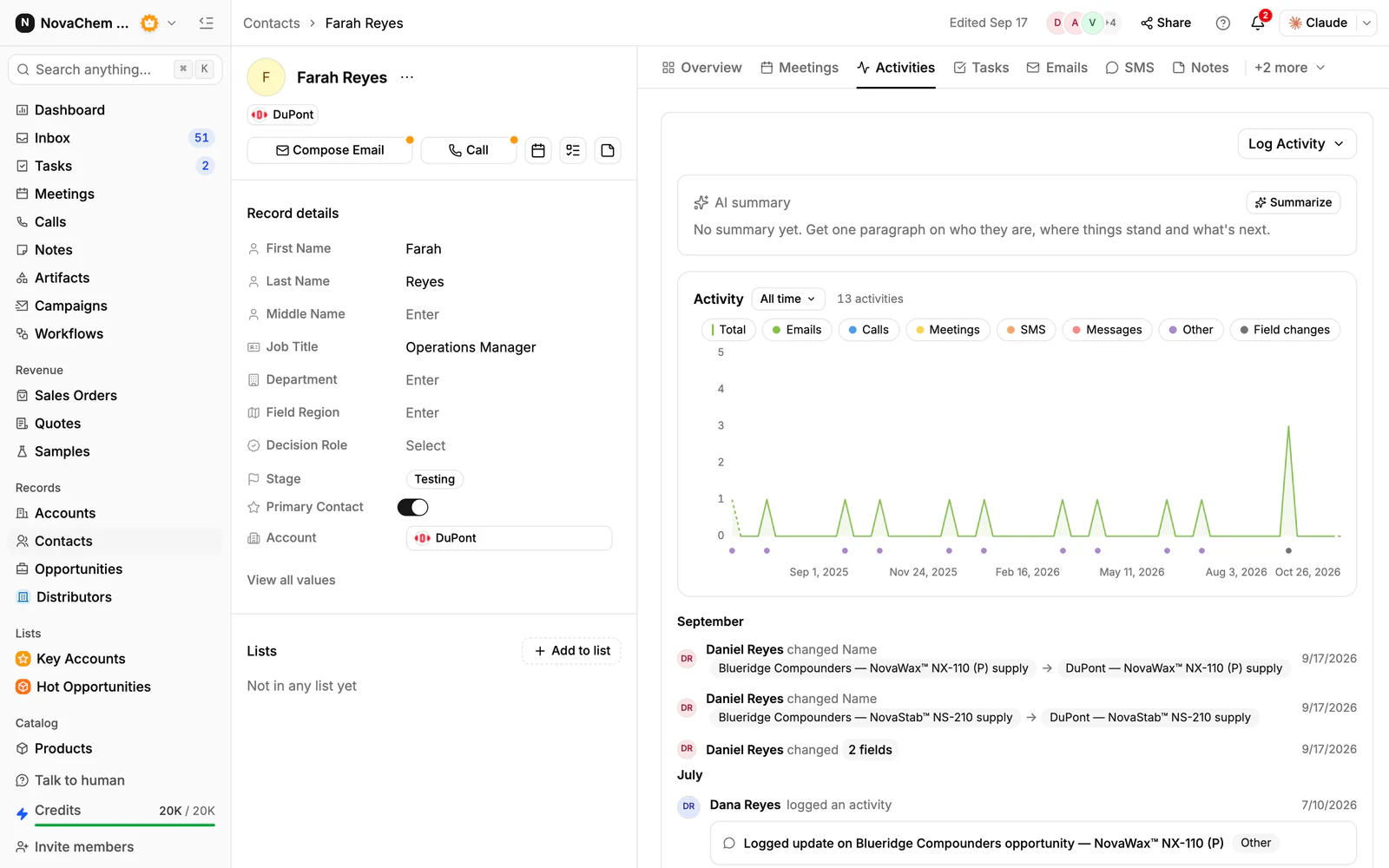
Keep notes on the account with what was agreed and by when, and create a task for the rep to call on the promised date. Email, WhatsApp and Telegram with the buyer are in one shared Inbox, linked to the account, so finance and the rep see the same thread. Sales orders sit on the account, and invoices are created from a sales order. A workflow can create a task for a rep when an email, WhatsApp or Telegram message arrives. Ask AI answers questions about an account's sales orders, meetings and email before you pick up the phone. See the notes reference and the inbox reference.
Frequently asked questions
When should I send the first reminder for an overdue invoice?
The day after the due date is common. A short, friendly note with the invoice attached is enough. Many late payments are simply missed.
Who should chase overdue payments, sales or finance?
Usually both, with clear roles. Finance sends the reminders and notices. The rep who knows the buyer makes the call and finds out the reason.
How do I chase a payment without damaging the relationship?
Stay polite, assume an innocent reason first, ask what is holding it up, and agree a date in writing. Escalate only as the delay continues.
Should I stop supplying a customer who is paying late?
That is a company policy decision for you and finance. Set a rule in advance, tell the buyer before you hold an order, and apply it the same way to every customer.
What if the customer says they are disputing the invoice?
Treat it as a separate problem: note the dispute, say who will solve it and by when, and ask them to pay any undisputed part. Payment usually follows the resolution.