



















How to build a B2B sales team from scratch
Build a B2B sales team in order: win the first deals yourself, write the process down, hire the first rep, set targets and review weekly before you grow.
 By the PromptLab team31 October 20265 min read
To build a B2B sales team from scratch, sell the first deals yourself, write down how you won them, hire a first rep to follow that process, and add structure only as the numbers justify it. Hiring before you know how a deal is won just pays someone to guess. A small product company is usually better off with two well-supported reps than six unmanaged ones.
This guide is for founders and sales leaders at manufacturers and distributors with their first sales hire in view. It covers the order of the steps, what each hire does, how to onboard, and how to keep the team honest with simple numbers.
Step 1: sell it yourself first
The founder or sales lead should close the first customers. You learn who buys, what they ask, what price holds, which objections come up and how long a deal takes. Without that, you cannot teach or measure anyone.
Keep notes as you go. After 10 or 20 sales you should be able to say who the ideal buyer is, what they want first (a sample, a quote, a price list), and where deals stall. How to set up a B2B sales process shows how to turn those notes into a process.
Step 2: write the process down
Before you hire, put it on one page:
- The buyer: who you sell to and who decides.
- The stages: from first contact to repeat order, with what must be true to move on.
- The tools: price lists, quote format, sample routine.
- The rules: discount limits, who approves what.
A new rep with a one-page process is productive in weeks. A rep with nothing spends months inventing one.
Step 3: decide which role to hire first
| Role | What they do | Best first hire when |
|---|---|---|
| Account manager | Grows and looks after existing customers, handles reorders | You have customers but little time for them |
| Field or territory rep | Visits and wins accounts in an area | Buyers expect a visit, and you know the territory |
| Inside sales rep | Calls, emails and follows up from the office | You have leads and a repeatable pitch |
| Sales support | Quotes, samples, orders and admin | The founder is buried in paperwork |
For product companies, the first hire is often someone who can run the follow-up: quotes, samples and repeat orders. The skills that matter are curiosity about the product, discipline in follow-up and comfort with technical buyers.
Step by step: hire, onboard, manage
- 1
Write a job description that matches the real job
Say what the rep will do in a week, what product they sell and who they sell to. Be honest about the pay structure and the support they get.
- 2
Interview with a real task
Ask a candidate to write a follow-up to a buyer who asked for a sample, or to plan the first week in a territory. Judge how they think, not how they talk.
- 3
Onboard in a set order
Product knowledge, the process, the CRM, shadowing calls, then their first accounts. Use the sales rep onboarding checklist.
- 4
Give clear targets
Agree a few numbers you both can see: calls or visits, samples sent, quotes sent, deals won. See how to set sales targets.
- 5
Run a weekly meeting and a pipeline review
Short and regular. Look at each live deal and decide the next step. See how to run a weekly sales meeting.
- 6
Coach from the real calls
Listen to recorded calls and give specific feedback. A rep who is coached improves faster than one who is only measured.
What to pay and how to measure the first rep
Keep the first pay plan simple enough to explain in two minutes: a base salary, plus a variable part tied to one or two results the rep controls, such as won revenue or new accounts opened. A complicated plan invites arguments. Review it after a quarter. If you want to model a commission plan, try the sales commission calculator.
Measure the first rep on activity and outcome together. Activity alone (calls made) rewards noise, and outcome alone (revenue) hides the early signs that something is wrong. A short weekly view of samples sent, quotes sent, deals moved and deals won is enough. Be patient: in product sales, a deal often needs a sample and a trial order, so the first months show activity before they show revenue.
When to add the next hire
Add a rep when the current ones are full, not when you feel behind. Signs: leads wait for a reply, quotes go out late, and good accounts go quiet because nobody has time. If reps have capacity and results are weak, the problem is the process or the targeting, not the headcount.
Say two reps each handle about 30 active accounts and both are stretched, with leads waiting. That is the moment to hire a third. If they are each handling 10 accounts and missing numbers, fix the pitch first.
Common mistakes
- Hiring before the process exists. You cannot manage what you cannot describe.
- Hiring a manager too early. At first the leader sells and coaches.
- Vague targets. Reps need numbers they can influence.
- No onboarding. The first 30 days set the pattern.
- Different tools per rep. One CRM, one pipeline, one set of records.
- Not looking at the numbers. Review pipeline and won deals every week.
How PromptLab helps
PromptLab gives a new team one shared system from the first day. There is one deal pipeline per workspace with stages and owners, accounts and contacts, tasks, quotes from products and customer price lists, sales orders and sample tracking, all on every plan.
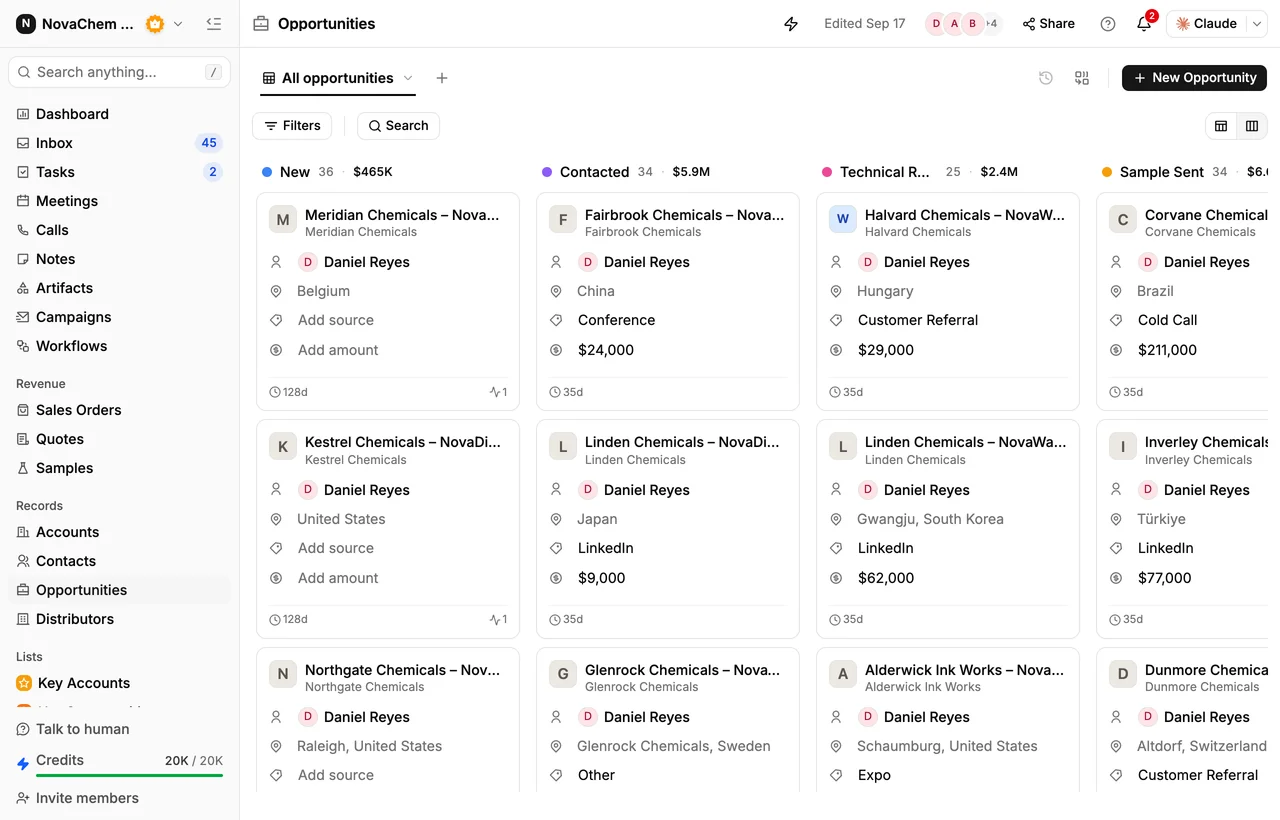
Meetings are recorded with transcripts in 30+ languages, AI summaries and action items that become tasks, which makes coaching and onboarding easier. Reports and dashboards cover pipeline and revenue, so a leader sees where deals sit and what has been won. Import accounts and deals from CSV and Excel to start. The shared Inbox keeps email, WhatsApp and Telegram in one place.
Frequently asked questions
When should a founder hire the first salesperson?
After you have closed a number of customers yourself and can describe who buys, why, and how a deal moves. Hiring earlier means paying someone to work out what you have not.
What should I hire first: a rep or a manager?
Usually a rep. The founder or sales lead sells and coaches at the start. Hire a manager once the team is large enough that you cannot coach each person.
How big should a B2B sales team be at the start?
Small. Two well-supported reps who follow a clear process do more than six working alone. Add people when the current team is full, not when you feel behind.
How do I onboard a new B2B sales rep?
Teach the product, the process and the CRM, have them shadow calls, then give them a few accounts and a clear first-month plan. Check in weekly.
What tools does a new sales team need?
A CRM with a pipeline, accounts and contacts, tasks, quotes and a shared inbox. Keep it to one system so everyone's records match.