



















How to set sales targets for a B2B team
A step-by-step way to set sales targets for a B2B product team: start from revenue, split it by rep and account, and check the pipeline can support it.
 By the PromptLab team16 October 20266 min read
To set sales targets for a B2B team, start with the revenue the business needs, split it between existing accounts and new ones, turn each part into a number per rep, and then check that the pipeline and win rate can support it. A target that fails that last check is a wish.
This guide is written for teams that sell physical products, where much of next year's revenue comes from customers who already buy. That changes how you split the number, and it changes what a fair target looks like for a rep.
What a good target looks like
A target does three jobs. It tells a rep what a good month is. It tells the business whether the plan is on track. And it tells you early when something is wrong.
A good target is:
- Specific. A revenue number for a period, such as a quarter.
- Owned. One name against it, not "the team".
- Reachable with the pipeline you have. Not a stretch that needs three times the deals.
- Measured from data you trust. Closed sales orders or won deals, not guesses.
Step by step: set the target
- 1
Start with the revenue goal
Take the figure the business needs, for example from the budget. Say it is $2.4 million for the year, or $600,000 a quarter. Everything else is a split of this number.
- 2
Split it between repeat and new business
Look at what existing customers bought last year and how many are likely to reorder. Say $1.5 million of the $2.4 million should come from repeat orders and $0.9 million from new accounts. These are different jobs and need different targets. See how to increase repeat orders.
- 3
Break it down by rep, territory or account list
Share the number by who owns the accounts, not by headcount. A rep who inherits ten large accounts has a different base from one who starts with a new territory. Give each rep a repeat target and a new-business target.
- 4
Check it against win rate and deal size
Work backwards. If the average order is $8,000 and you need $900,000 of new business, that is 113 orders. If one in four qualified deals closes, you need about 450 qualified deals. Does the pipeline show that? If not, the target and the activity do not match. Read what is win rate for how to measure the one in four.
- 5
Check pipeline coverage
Compare open pipeline to the target for the period. A common rule is to hold a multiple of the target in open pipeline, and the multiple depends on your win rate. The pipeline coverage calculator works out your own.
- 6
Set leading targets too
Revenue arrives late. Add a few targets for the activity that comes before it: samples sent, quotes issued, meetings held. These tell you in week three whether the quarter is in trouble.
- 7
Write it down and review it monthly
Put each rep's target in one place that both of you can see. Review it every month and adjust if something big changed, such as a lost key account or a new product. Do not change it every week.
Targets that suit product sales
Selling products brings a few things that general sales advice skips.
Repeat business is the base. If many of your orders are reorders, most of the target depends on keeping accounts active, not on finding new ones. Count the accounts that have not ordered in a normal cycle. They are your risk.
Sales cycles vary by product. A commodity with a standing price may close in days. A new grade that needs testing may take months. Give new-business targets a longer ramp, and set the number on deals that will close in the period, not on every deal that exists.
Price lists move the number. Revenue targets that ignore price changes will mislead you. If prices rise, the same volume is more revenue. Say which one the target is based on.
Margin matters. Hitting the revenue target at lower margin can be worse than missing it. Consider a margin or gross profit target alongside revenue, especially if reps can discount.
A worked example
Say a distributor of industrial fasteners has four reps and a $2.4 million annual goal. Repeat accounts should deliver $1.5 million, so the manager lists each rep's existing accounts and last year's orders, then applies an honest reorder expectation. Two reps hold bigger books, so their repeat targets are higher. The new-business $0.9 million is shared by rep, with a lower number for the rep who joined in spring.
The manager then checks the pipeline. The new-business pipeline is thin for one rep. Rather than lower her target, they agree a leading target: 15 new qualified deals in the first quarter.
Mistakes to avoid
- Setting one number for everyone. Territories and books differ.
- Using last year plus a round percentage. It ignores what happened to the accounts and the pipeline.
- Targets with no activity behind them. If you cannot say what has to happen to hit it, you cannot coach.
- Never revisiting it. A target set in January and ignored until December is a forecast nobody checked. See how to forecast sales.
- Rewarding revenue only. Pair it with margin or repeat rate if you want those.
Target-setting checklist
How PromptLab helps
PromptLab has reports and dashboards on pipeline and revenue, with a report builder, so you can see the numbers a target depends on: pipeline by stage, deals won, and revenue over time.
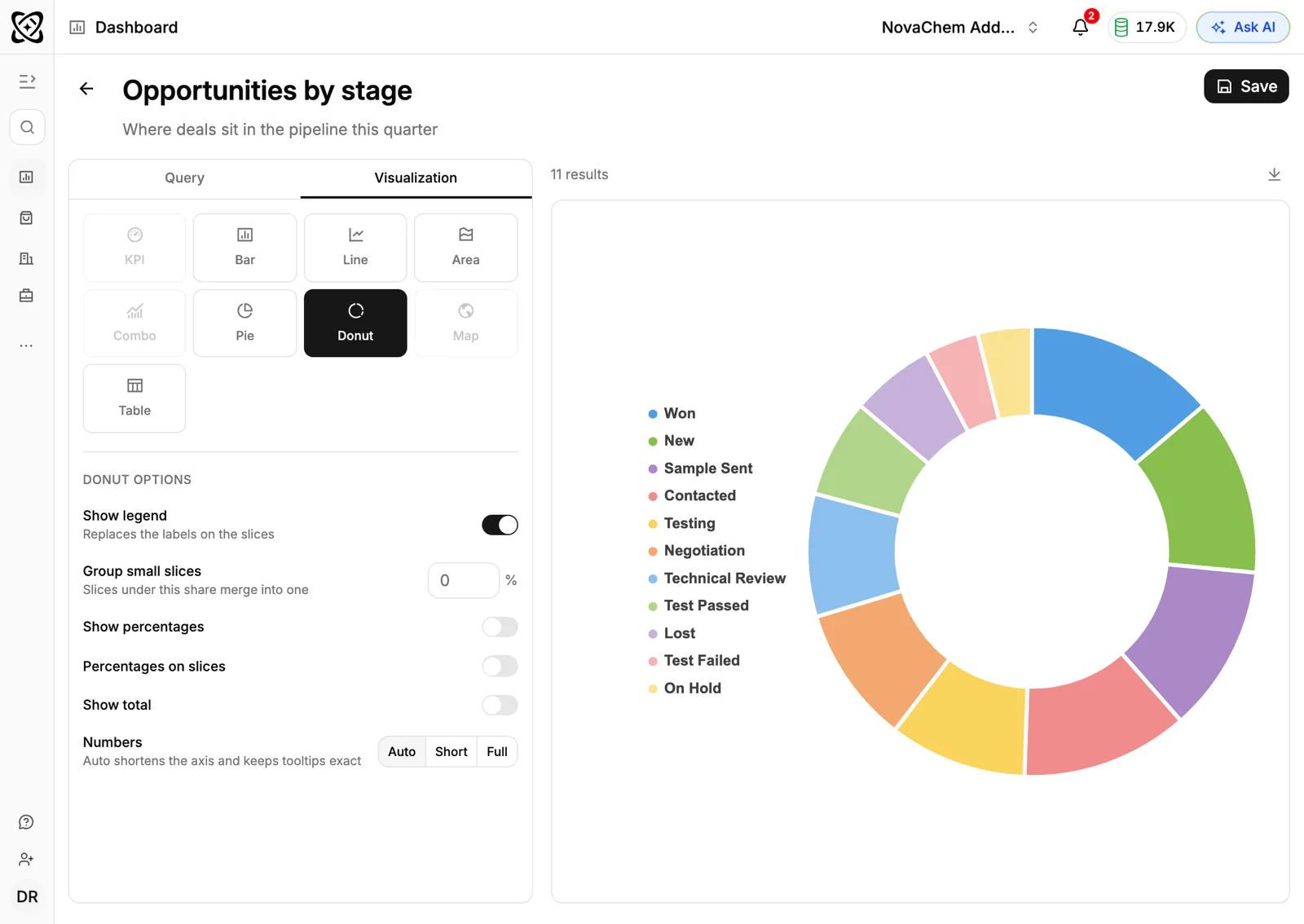
PromptLab does not set or track targets itself, so keep the target figures in a sheet or document and compare them against the reports. Pipeline, deals, quotes, sales orders and sample tracking are on every plan, which means the leading numbers, such as samples sent and quotes issued, come from the same system as the revenue.
Pair this with a sales dashboard so the target is visible every week.
Frequently asked questions
How do you set realistic sales targets?
Start from the revenue the business needs, split it into repeat and new business, and give each rep a number based on the accounts they own. Then test it against win rate, average order size and open pipeline. If the pipeline cannot support it, change the plan.
Should sales targets be based on revenue or margin?
Revenue is the common choice, but it can reward heavy discounting. If your reps set prices, add a margin or gross profit target. For many product teams, revenue plus margin is a fair pair.
How often should you review sales targets?
Check progress weekly in the pipeline review, and review the target itself monthly or quarterly. Change it only when something material changes, such as a lost account or a new product.
What is a stretch target?
A stretch target is a number above the one you plan around, which a rep can reach with an unusually good period. Keep it separate from the plan so budgets and forecasts rest on the realistic figure.
How do you set targets for a new rep?
Give a ramp. A new rep starts with a lower target or leading targets only, such as meetings and samples, and moves to a full revenue target as the pipeline builds. Use your typical sales cycle as the guide.