



















How to find distributors for your product
How to find distributors for a manufactured product: define the gap, build a longlist, check fit, reach out, compare and sign. A practical B2B guide.
 By the PromptLab team31 October 20265 min read
To find distributors for your product, first decide what you need from them (a region, an industry or a customer group), then build a longlist from trade bodies, trade shows, your own customers and your competitors' channels. Check fit before you pitch, contact a short list with a clear offer, and compare what comes back.
This guide is for manufacturers and exporters who want a partner to carry their range into a market they cannot cover alone. Once you have found them, how to sell through distributors covers the working relationship, and the distributor evaluation checklist helps you judge them.
Decide what you need from a distributor
A vague search finds vague partners. Write down the gap first:
- Where: which country, region or cities do you want covered?
- Who: which customers should they sell to, such as workshops, factories, retailers or contractors?
- What: the whole range, or a few product lines?
- How: do they hold stock, deliver, give technical advice or handle service?
- Exclusivity: are you open to an exclusive territory, and on what terms?
Say a plastics additive maker wants a partner in a new country who calls on compounders and holds stock. That sentence already tells you who to look for and who not to.
Build a longlist
Aim for 20 to 40 names. Good sources:
- Your own customers. Ask which suppliers they trust and who delivers their goods.
- Trade shows and exhibitor lists. Distributors show up where their suppliers and buyers do.
- Trade associations and chambers of commerce. Member directories list firms by region and sector.
- Competitors' and neighbours' channels. Look at who carries similar products. A distributor that already sells related goods knows the buyers.
- Online searches and marketplaces. Search the product category and the country in the local language.
- LinkedIn. Find the owners and sales managers at likely firms, and check what they already sell.
Record each one as you go, with the source, so you can see which route works best.
Check fit before you contact anyone
A distributor can look right on paper and be wrong in practice. Screen the longlist on a few facts you can find from outside:
| Check | Why it matters |
|---|---|
| Range | Complementary products, not direct competitors, unless you want to displace them |
| Customers | Do they sell to the buyers you want? |
| Coverage | Branches, vehicles, sales staff in your target area |
| Size and age | Enough scale to carry your product, and a record of staying in business |
| Technical skill | Can they explain your product to a buyer? |
| Reputation | Ask two of their suppliers or customers |
Cut the list to the 10 to 15 that fit. Fewer, better-matched outreach messages beat a mass mailing.
Reach out with a clear offer
Distributors get pitches every week. Yours needs to say, in a few lines, who you are, what you make, why it suits their customers and what they would earn.
- 1
Open with their customers' problem
Say what your product solves for the people they sell to, not what your factory can do.
- 2
State the terms in outline
Give the territory, the kind of margin or discount structure, minimum volumes and any exclusivity you would consider. Keep detail for the call.
- 3
Offer something easy to say yes to
A sample, a product call or a short trial order. A small first step beats a request to sign an agreement.
- 4
Follow up
Send a second message after a week and a third after two. Many replies only come after a follow-up. The distributor outreach email templates give you wording for each step.
Compare the candidates
After the first calls, score each distributor on the same points: fit with your customer type, coverage, technical ability, commitment to your line, terms they ask for and how they handled the first conversation. Meet the best two or three in person if you can, or visit their warehouse. Ask what they would do in the first ninety days.
Be careful with a distributor that wants broad exclusivity and offers no volume commitment. Tie any exclusivity to a minimum order level and a review date.
Start small and agree the basics in writing
Begin with a trial period or a limited range. Agree the territory, price list, payment terms, minimum orders and how long it lasts, and have a lawyer check the contract. For a first order, the distributor onboarding checklist covers what to send them.
How PromptLab helps
Add each candidate as an account and put the longlist on a list, with an owner for each. Custom fields hold the source and the territory. When talks start, open a deal on the single pipeline, marked as a distributor deal with a field, so stages such as In talks and Trial show where each candidate stands. Email campaigns send your multi-step sequence from your own mailboxes and stop when the contact replies, and a shared Inbox gathers email, WhatsApp and Telegram replies in one place.
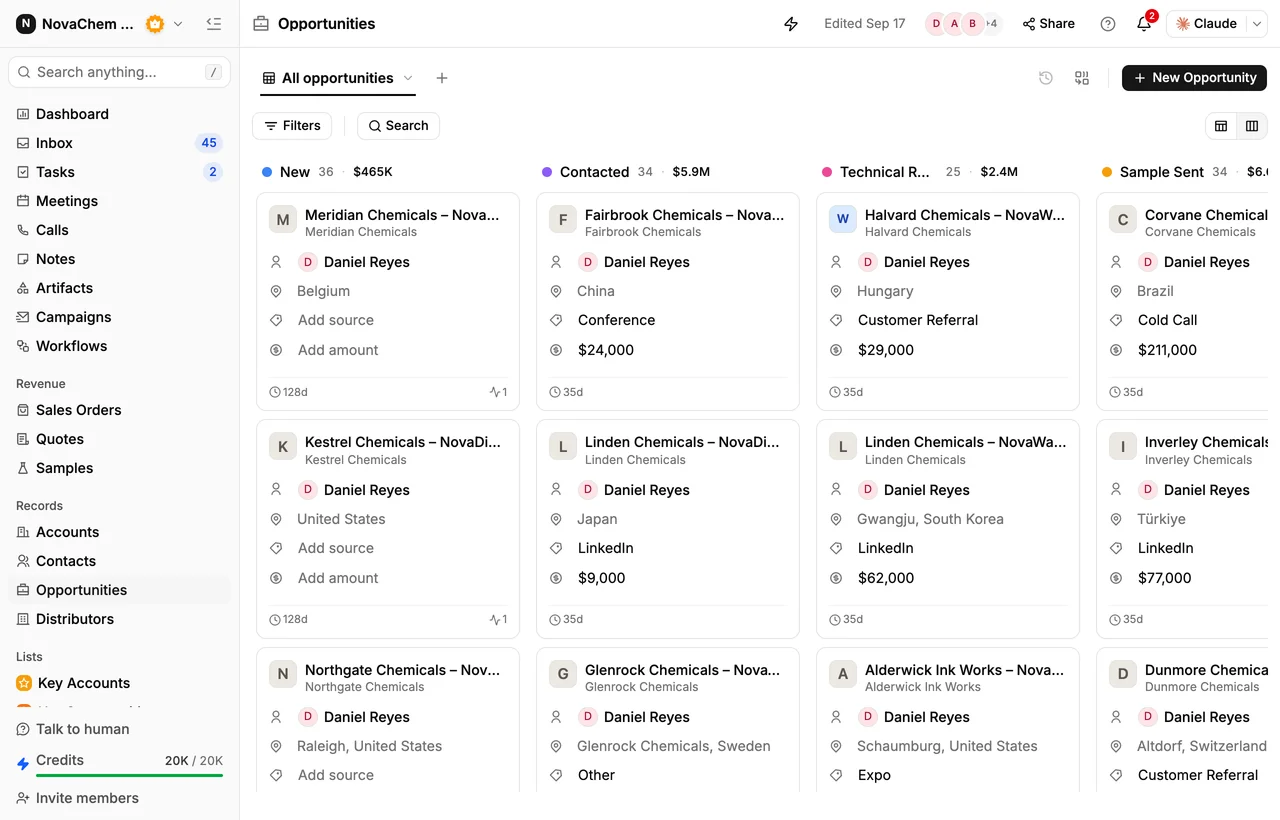
Once a distributor is signed, give them their own customer price list on their quotes, so their terms are held in one place. See the Campaigns reference for the sequence screens.
Frequently asked questions
How many distributors should I approach?
Screen 20 to 40 and contact the 10 to 15 that fit best. You usually need one or two good partners per territory, so a short, well-matched list works better than a mass mailing.
Should I give a distributor an exclusive territory?
Only with conditions. Tie exclusivity to a minimum purchase level and a review date, and keep the right to end it if targets are missed. Take local legal advice, because rules differ by country.
What do distributors want from a supplier?
Usually a good margin, a product their customers already want, reliable delivery, marketing and technical support, and a supplier that will not undercut them. Make these points clear in your first message.
How long does it take to find and sign a distributor?
It varies a lot with the market and the product. Plan for months, not weeks, from the first outreach to the first order, and use a trial period to test the fit.
Should I sell direct or through distributors?
Direct selling gives control and margin but needs your own people and reach. Distributors give coverage and local service at a lower margin. Many suppliers use both, direct for large accounts and distributors for the rest.