









How to prepare for a B2B sales meeting
Prepare for a B2B sales meeting in four steps: research the account, build a one-page brief, set an agenda and bring samples and prices. Includes a checklist.
 By the PromptLab team6 October 20265 min read
Prepare for a B2B sales meeting in four steps: research the account, write a one-page brief, agree a short agenda with the buyer, and bring the samples and prices you may need. Aim to walk in knowing what the buyer bought, what is open, and what outcome you want.
Teams that sell physical products have more to carry than most. A buyer may ask about a grade, a price break or the status of a sample, and "I will come back to you" costs credibility. This guide gives you a routine that takes twenty minutes.
Step 1: research the account
- 1
Read the history in your CRM
Open the account. Look at past orders, open quotes, sample requests, the last meeting notes and any email in the last month.
- 2
Look up the people
Check each attendee's role. A purchasing manager cares about price and lead time. A technical manager cares about specs and performance.
- 3
Check the company
Read the company's website and recent news. A new plant, a new product line or a change of owner changes what they need.
- 4
Note any open issues
Late deliveries, a failed sample or an unanswered question all belong in the meeting. Raise them before the buyer does.
If this reads like a lot, it is because the facts sit in too many places. A CRM with email, meetings and quotes in one place shortens it a great deal.
Step 2: write a one-page brief
A brief is a single page you can read on your phone in the lift. It should hold:
- Who is attending and what each person cares about
- What the account buys today, and how much
- What is open: quotes, samples, orders, questions
- What happened last time and what you promised
- Your goal for this meeting, in one sentence
- Two or three questions to ask
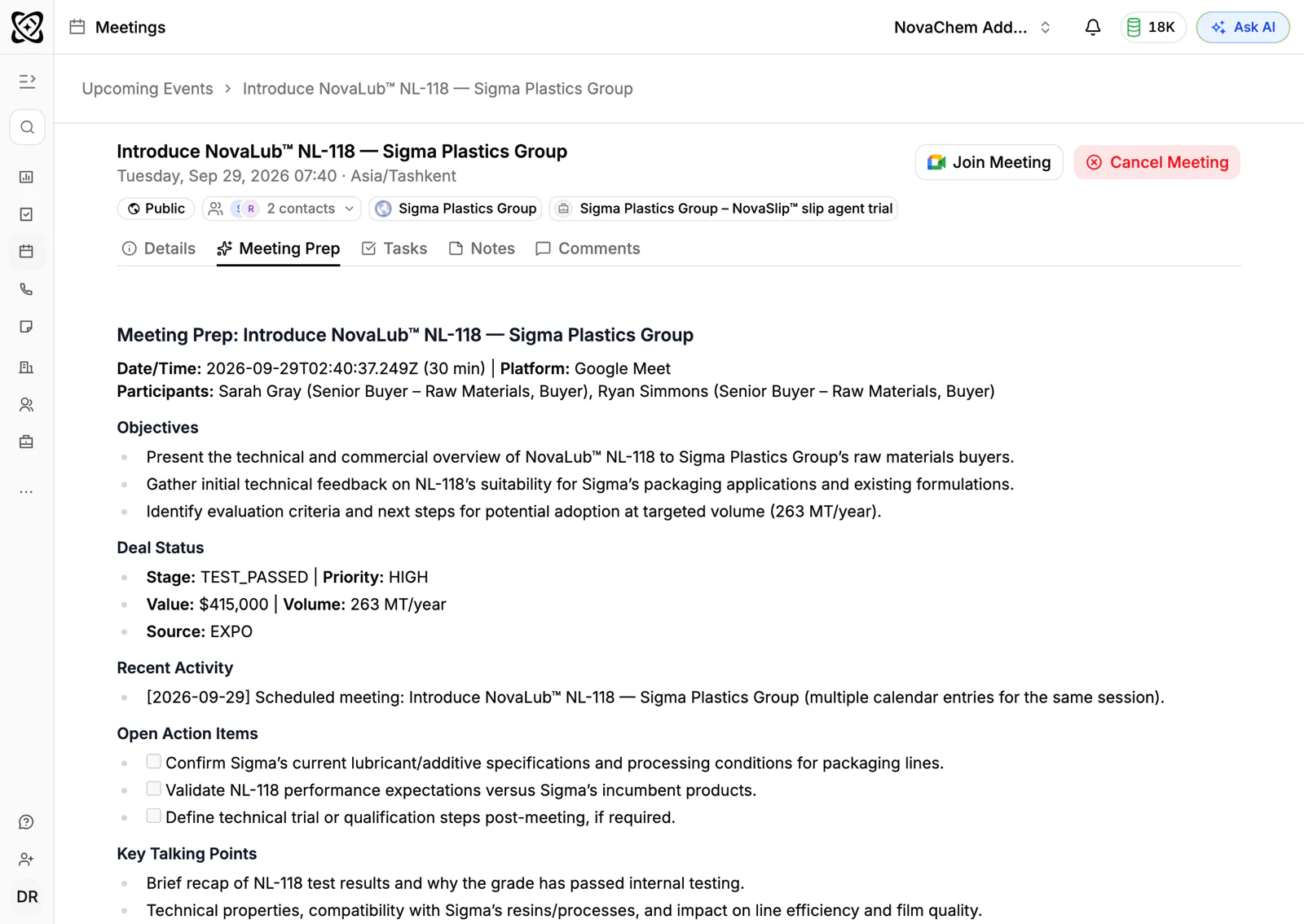
Keep the goal modest and specific: "agree a trial order of 2 t" beats "build the relationship".
Step 3: set the agenda
Send a short agenda a day ahead. Three items is plenty, and it tells the buyer you respect their time.
Subject: Agenda for [Day]: [Company] and [Your company]
Hi [First name],

Looking forward to [Day] at [Time]. Here is what I would like to cover:

1. Your results with [Product] so far
2. Volumes and delivery for the next quarter
3. Next steps on [open item]

Let me know if you would like to add anything.

[Your name]
An agenda also gives you a reason to ask who will attend. If a decision maker is missing, you can find out early. Our post on qualifying B2B leads covers who to look for.
Step 4: bring samples and prices
Nothing slows a product meeting like a missing sample or an unknown price. Decide what to carry and check it.
Bring to the meeting
Check sample status before you go. If a trial is still running, say so, and know when feedback is due. Our guide to tracking product samples shows how to keep that record straight, and managing customer price lists covers the prices.
Prepare differently for different meetings
A first meeting needs more research and fewer prices. Spend your time on the buyer's business: what they make, what they buy now and what problem might bring them to you. Bring one or two samples and a general price range, and aim for a clear next step such as a trial.
A renewal or reorder meeting is the opposite. You know the account, so the preparation is about the numbers: volumes, price changes, delivery performance and anything that went wrong. Bring the customer's current price list and be ready to defend or adjust it.
For a trade show conversation, keep it shorter still. Note who you spoke to and what they asked for, and prepare the follow-up meeting from those notes. Our guide to following up after a trade show covers that case.
During and after the meeting
Take notes on decisions, numbers and dates, not on everything. Repeat the agreed next steps at the end, with a date for each.
Send the follow-up the same day. Summarise what you agreed in four lines and attach any quote or data sheet you promised. If you recorded the meeting, check the summary rather than retyping it. Our guide to writing follow-up emails has wording to start from.
Finally, close the loop. After each meeting, compare the goal you set with what happened, and note one thing to do differently next time. Over a few meetings, your briefs get sharper and your preparation gets faster.
How PromptLab helps
PromptLab writes a first draft of the brief for you. Before a meeting, its AI pre-meeting brief is built from the account's history in the CRM, so you read one page instead of opening five tabs.
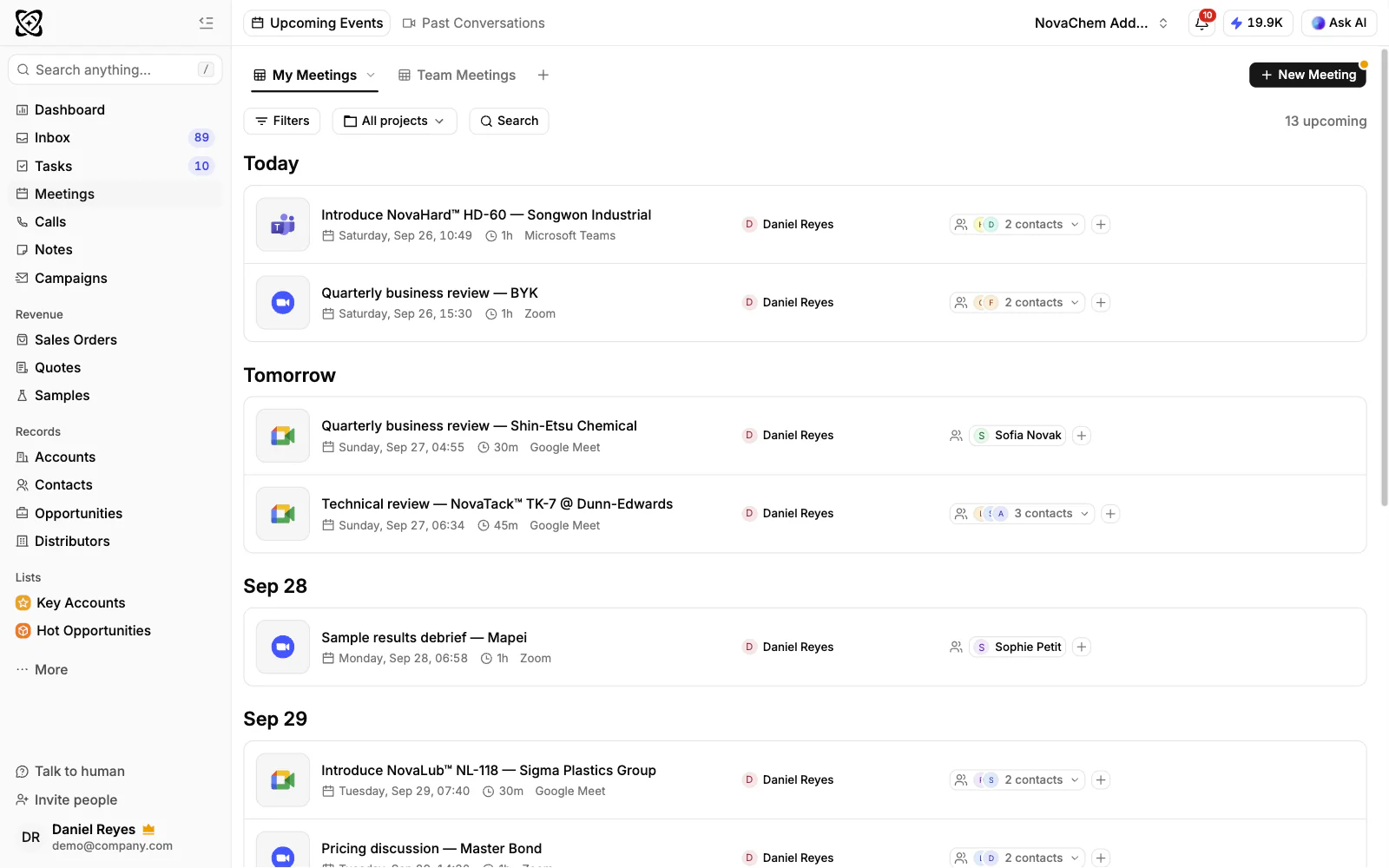
The same account holds quotes, customer price lists and sample tracking, so the prices and sample status you need are a click away. PromptLab records and transcribes the meeting, then writes an AI summary and drafts the follow-up email, all on every plan from $11.99 per user per month.
See pricing, or read about quotes and samples.
Frequently asked questions
How long should sales meeting preparation take?
Around twenty minutes for a normal account meeting, if the account history is easy to find. For a big new account, give yourself more time to research the company and attendees.
What should be in a sales meeting brief?
Who is attending, what the account buys, what is open, what happened last time, your goal and a few questions. Keep it to one page.
Should I send an agenda before a sales meeting?
Yes. A short agenda a day ahead sets expectations, shows respect for their time and helps you find out who will attend.
What samples and prices should I bring?
Bring samples of the grades the buyer uses, the customer's own price list, relevant data sheets and any open quotes. Check the status of running sample trials before you arrive.
Can AI prepare a meeting brief for me?
Yes. PromptLab's AI pre-meeting briefs are built from the account's history in the CRM. Read the brief and add your own goal before the meeting.