

















How to warm up a new sales mailbox
Warm up a new sales mailbox in four weeks: set up authentication, send real mail first, ramp volume slowly, and watch bounces. A plain guide for B2B teams.
 By the PromptLab team6 November 20265 min read
To warm up a new sales mailbox, set up SPF, DKIM and DMARC, use the mailbox for a few days of ordinary one-to-one email, then raise your sending volume in small steps over about three weeks while you watch bounces and replies. Never send a big campaign from a mailbox that was created yesterday. Inbox providers judge new senders on how they behave, and a bad first impression is slow to fix.
This guide is for sales leaders at manufacturers and distributors who are adding mailboxes for outreach, for example to reach distributors in a new region. The idea is explained in what email warm-up is. This post gives the steps.
Why a new mailbox needs warming up
Gmail, Outlook and other providers have no history on a new address. If it suddenly sends hundreds of near-identical emails, it looks like a spammer, and the mail goes to junk or is rejected. A mailbox that has sent a few real messages, got replies and slowly increased its volume looks like a person.
Warm-up does not make bad email good. A mailbox sending to a purchased list, with no unsubscribe link and a vague subject line, will still land in spam. Warm-up protects a good sender. It does not rescue a careless one.
Step by step: warm up a new mailbox
- 1
Use a separate mailbox for outreach
Create mailboxes on your own domain, such as anna@yourcompany.com, but keep outreach apart from the address your accountant and your best customers use. If a mailbox gets flagged, you don't want it to be the one that sends invoices. Many teams also register a close variant of the domain for cold outreach so the main domain stays safe.
- 2
Set up SPF, DKIM and DMARC before the first email
These three records tell receiving servers that your domain really authorised this mailbox to send. Your email provider or IT contact adds them in DNS. Test with a free checker before you send anything. A missing record is the most common reason a new mailbox lands in spam.
- 3
Fill in the profile and send real emails first
Add a name, a photo and a signature with your company, role and phone. In the first week, send ordinary one-to-one emails to people you know: colleagues, customers and partners. Ask them to reply. Replies are the strongest sign that the mailbox is real.
- 4
Start small and raise volume in steps
Begin with a handful of emails a day and increase every few days. A simple ramp is 10 a day in week one, 20 in week two and 30 in week three. Stay under any daily limit your email provider sets. Don't jump from 10 to 100 because the first days went well.
- 5
Send to the people most likely to engage first
In the early weeks, send to your warmest contacts: past customers, people who asked for a sample, contacts from a trade show. Save the cold list for when the mailbox has a record.
- 6
Watch bounces, replies and spam complaints
A bounce rate that climbs, or a run of messages with no replies at all, means you should slow down and clean the list. Remove bad addresses straight away. Read the cold email deliverability checklist for the checks to run each week.
- 7
Keep the volume steady afterwards
Warm-up does not end on day 21. A mailbox that goes quiet for a month and then sends 200 emails is a new sender again. Keep sending at a steady daily level, and add more mailboxes rather than pushing one hard.
How many emails per mailbox per day?
There is no number that is right for everyone. It depends on your domain's age, your list quality and your provider's own limits. The safe rule is to stay low and steady: a small daily volume per mailbox, and several mailboxes if you need reach. Rotating a campaign across a few mailboxes spreads the load and means one problem doesn't stop everything.
Warm-up mistakes
- Skipping the DNS records. Everything else is wasted if the domain isn't authenticated.
- Sending a campaign on day one. It is the fastest way to a spam folder.
- Using a bought list. Bounces and complaints will undo the warm-up.
- Tracking everything. Open and click tracking adds hidden images and links. Turn it off if you are in doubt about deliverability.
- No way to opt out. Always include one.
A four-week plan at a glance
Week 1: authentication checked, profile filled in, ordinary one-to-one emails to colleagues and customers, with replies. Week 2: a small number of emails a day to warm contacts, such as past customers. Week 3: a first small cold batch to a clean list, with bounces checked daily. Week 4: steady volume, with new mailboxes added instead of raising the numbers on this one.
How PromptLab helps
PromptLab sends email campaigns from your own mailboxes, and a new mailbox gets a built-in three-week volume ramp-up: 10 emails a day in week one, 20 in week two and 30 in week three. You can turn it off. This is a sending limit, not a warm-up network: PromptLab doesn't trade emails with other inboxes, so the first week of real one-to-one email is still your job.
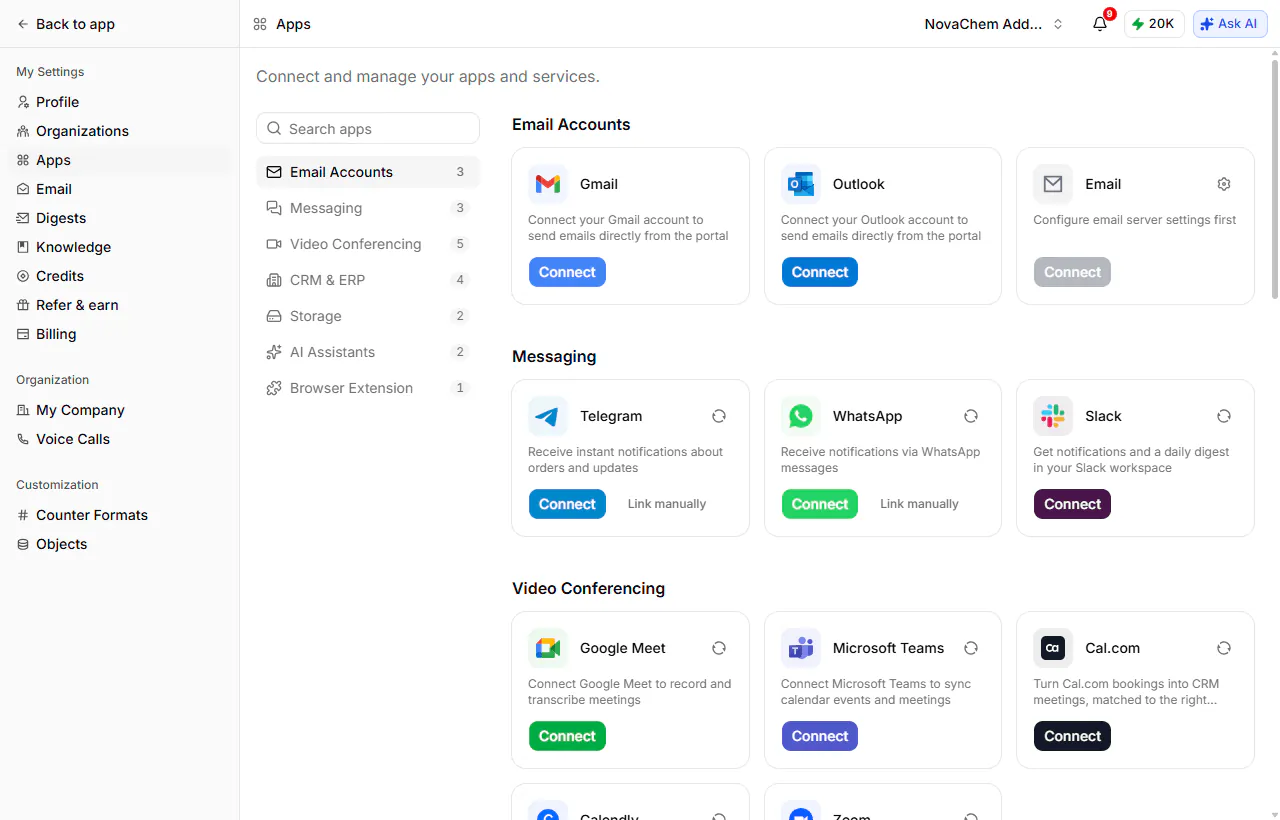
A campaign can rotate up to 20 mailboxes, with a per-mailbox daily limit, a sending window and random gaps between sends. Open and click tracking are optional, every email carries a one-click unsubscribe, and the sequence stops when the contact replies or the email bounces. Replies come back into the shared Inbox so nothing sits in one rep's mailbox. See what an email sequence is.
Frequently asked questions
How long does it take to warm up a new email account?
About three to four weeks of gradually rising, genuine sending is a sensible plan. Providers don't publish a fixed schedule, so watch your bounces and replies and slow down if either looks wrong.
Do I need a warm-up tool?
Not necessarily. A careful schedule, real one-to-one emails in week one, and a clean list do most of the work. Some tools trade emails between inboxes to build a history; PromptLab doesn't, and instead limits how much a new mailbox sends in its first three weeks.
Can I warm up a mailbox I already use for customers?
It already has history, so it needs less warming, but don't run a cold campaign from it. Use a separate outreach mailbox so a problem never touches the address your customers rely on.
What is a safe number of cold emails per day?
Start low and stay steady. A few dozen per mailbox per day, spread over several mailboxes, is a common ceiling. Your provider's own daily limit is the hard cap.
Why are my emails going to spam after warm-up?
Check authentication first, then your list quality, your subject lines and whether you include an unsubscribe link. A high bounce rate is the usual cause.