



















How to build an ideal customer profile for B2B
Build a B2B ideal customer profile in five steps: start from your best accounts, find what they share, add disqualifiers, test it and keep it current.
 By the PromptLab team31 October 20265 min read
To build an ideal customer profile (ICP), start from the accounts you already have. Pick the customers that buy often, pay without drama and are cheap to serve, find what they have in common, and write that down as a short list of traits you can check before you spend time on a lead. Then add the traits that rule a company out.
This guide is for sales leaders and founders at companies that make or distribute products. It takes five steps and one afternoon. For the definition and the parts of an ICP, see what an ideal customer profile is. This post is the build.
Step 1: Choose your best customers
Do not start with a description of who you would like to sell to. Start with who is already good for you. List your accounts and mark the best ones against a few plain tests:
- They reorder, rather than buying once.
- Their orders are large enough to cover the cost of selling and serving them.
- They pay close to terms.
- They need little hand-holding after the first order.
- You would happily find ten more like them.
Say a coatings supplier has 80 active accounts. Fifteen of them pass at least four of the five tests. Those fifteen are your sample. Ignore the biggest account if it fails the tests: a large customer that squeezes your margin and calls daily is not an ideal customer.
Step 2: Find what the best accounts share
Put the sample in a table and look for patterns. Useful columns for a product business:
| Trait | Example answers |
|---|---|
| Industry | Paint makers, packaging converters, food plants |
| Size | Number of staff, sites or annual spend on your category |
| Buying model | Buys through a distributor, buys direct, buys by tender |
| Product fit | Uses the grade or range you sell best |
| Geography | Within the regions you can ship to without trouble |
| Buying trigger | New plant, new product line, a supplier problem |
| Buyer role | Purchasing manager, technical lead, owner |
You are not looking for every detail. You want the three to five traits that most of the sample share. If twelve of your fifteen best accounts are mid-sized converters who buy a certain grade monthly, that is the core of your profile.
Step 3: Write the profile down
Keep it to one page. A good ICP reads like a filter a rep can apply in two minutes:
- Must have: the traits every ideal account shares.
- Good to have: traits that raise the priority but are not required.
- Disqualifiers: reasons to walk away, such as a region you cannot serve, a volume below your minimum order, or a spec you do not make.
Name the buyer too. In B2B product sales, the person who signs is often not the person who sets the spec, so describe both. If you sell through channel partners, see how to sell through distributors for how the profile changes.
Step 4: Test the profile against your pipeline
An ICP is a hypothesis. Check it against deals you know the outcome of:
- 1
Take the last 30 deals you won or lost
Mark each one as a fit, a partial fit or not a fit, using the page you wrote.
- 2
Compare the outcomes
If most wins are fits and most losses are not, the profile works. If fits lose as often as non-fits, a trait is wrong or missing.
- 3
Read the loss reasons
A pile of Price losses among small accounts says your minimum order or price list does not suit them. A pile of Product fit losses says a spec is missing from the profile.
- 4
Adjust and run it again
Change one trait at a time so you can see which change helped.
Step 5: Put the ICP to work
A profile that sits in a document changes nothing. Put it in three places:
- Prospecting. Build target lists from the traits. How to use LinkedIn for B2B prospecting covers finding the right buyers inside a company that fits.
- Qualification. Ask the must-have questions on the first call. How to qualify B2B leads shows a method that marks each must-have question yes, no or unknown.
- Marketing and campaigns. Write copy for the buyer role and the trigger, not for everyone.
Review the profile twice a year. Markets move, and your best customers today may not look like your best customers in two years.
How PromptLab helps
Record the ICP traits as custom fields on the account, such as industry, size band and buying model, and use the single deal pipeline with owners and stages for the sales work. Lists and views then show you the fit accounts, and reports on pipeline and revenue show whether they win and reorder more often than the rest.
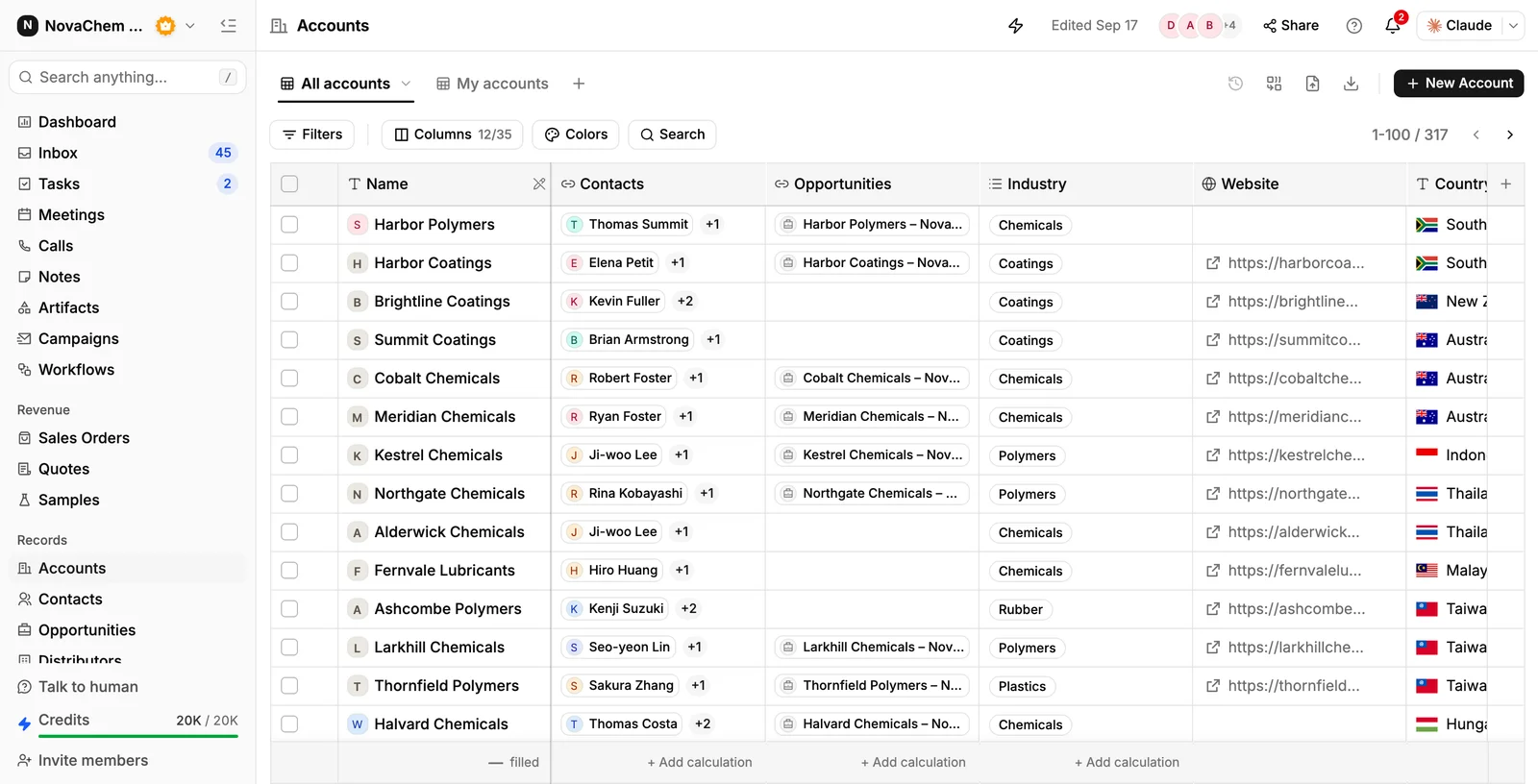
Every lost deal needs a loss reason from a fixed list, so the testing in step 4 is a report rather than a hunt through notes. Sales orders sit on the account, so repeat buying is easy to see. See the Accounts reference for the screens.
Frequently asked questions
How many traits should an ideal customer profile have?
Three to five must-have traits are enough. A longer list is hard to apply, and almost no real account matches every line. Keep extras in a good-to-have list.
How is an ICP different from a buyer persona?
The ICP describes the company: industry, size, buying model and so on. A buyer persona describes the person inside it, such as their role, goals and worries. B2B product sales need both.
Can a company have more than one ICP?
Yes, if you sell very different products or through different channels. Keep each one short, and keep one deal pipeline with owners and fields that show which profile a deal belongs to.
How often should I update my ICP?
Review it every six months, and after any big change such as a new product, a new region or a lost key customer. Test it on recent wins and losses each time.
What if I have too few customers to find a pattern?
Use what you have, even five accounts, and add what you learn from lost deals and first calls. Treat the profile as a first draft and refine it as the data grows.