



















How to cross-sell to existing B2B customers
How to cross-sell to existing B2B customers selling products: map what each account buys, pick the next product, time the offer and sample first.
 By the PromptLab team16 October 20266 min read
To cross-sell to an existing B2B customer, look at what they buy from you, find a related product they buy from someone else, and offer it at a moment when they are already talking to you. Start with your best accounts, bring the new product up in a normal conversation and let a small sample do the persuading.
Cross-selling is the easiest growth in a product business because the trust is already there. The buyer knows your delivery, your invoicing and your people. This guide shows how to do it without turning every call into a pitch. For the definition, see what cross-selling is. For the wider account habit, read how to manage key accounts.
What cross-selling means in product sales
Cross-selling means selling a different product to a customer who already buys from you. A coatings supplier sells a primer to a customer who buys topcoats. A packaging distributor sells labels to a customer who buys cartons.
It is not the same as upselling, which is a bigger or better version of the same product. The two work together, but this guide is about breadth: more of your range in the same account. Most customers buy a fraction of what you could supply, because they never thought to ask or did not know you sold it.
Step 1: Map what each account buys today
You cannot cross-sell blind. For each target account, list the products it buys, how much and how often. Then list your range next to it. The gaps are your opportunities.
| Account | Buys from us | Related products we sell | Gap |
|---|---|---|---|
| Furniture maker | Water-based lacquer | Sanding sealer, thinner, cleaner | Sealer and cleaner |
| Bakery supplier | Flour improver | Emulsifier, enzyme blend | Both |
| Pack house | Cartons | Labels, tape, pallet wrap | Labels and tape |
Say a furniture maker orders 800 litres of lacquer a month and nothing else. The sealer goes on before every coat, so they are buying one from somebody. That is the one to offer.
Step 2: Choose the right next product
Not every gap is worth chasing. Pick products with a real link to what the customer already buys:
- Used in the same process: the product goes on the same line or at the same step.
- Bought by the same person: the buyer already has authority, so no new approval is needed.
- Easy to try: a small sample proves it without disrupting production.
- Worth supplying: the margin and the minimum order make sense for you.
Avoid offering something because you have too much of it. Buyers can tell, and it weakens your next real recommendation.
Step 3: Learn what they use now
Before you pitch, ask. In a normal call or visit, ask what else they use alongside your product and who supplies it. "Who do you buy your sealer from?" is a plain question and gives you a price to beat, a supplier to displace and a reason they might switch.
Listen for complaints too. A buyer who says the current sealer is slow to deliver or inconsistent has just opened the door. Write the answer on the account, so you can come back to it. If you record meetings, the summary can hold the detail for you.
Step 4: Time the offer
Raise the new product when the buyer is already engaged and happy:
- After a smooth delivery or a good reorder.
- After a quote they accepted.
- During a regular account review.
- When they mention a new project, a new line or a changed spec.
Avoid the moment right after a problem. A late delivery followed by a pitch for another product reads as tone-deaf. Fix the problem, wait until it is settled, then raise the offer.
Step 5: Let a sample do the work
For physical products, a sample is the best cross-sell tool. It is cheap compared with a lost argument and gives the buyer a way to test without risk.
- 1
Offer a small sample, not a pitch
"We make a sealer that suits your lacquer. Would you like a litre to try on your next batch?" The buyer only has to say yes.
- 2
Ship it with the data sheet
Include the technical data sheet and one line on how to test it. Log the sample on the account the day it ships.
- 3
Follow up on the result
Call or write a week after delivery and ask how the test went. Our sample follow-up templates help with the wording.
- 4
Quote from the customer's price list
If the test goes well, send the quote the same day, with the customer's own prices. The deal is fast because there is no new onboarding.
For the process behind this step, see how to track product samples.
Step 6: Make the quote easy to say yes to
Keep the first order small and simple. A trial order of the new product, added to the next regular delivery, saves the buyer a separate transport cost and a separate purchase order. Offer a bundle only if it is real, such as a combined delivery or one invoice. Do not invent a "bundle discount" to push a deal.
Handle price pushback calmly. If the buyer compares your price with their current supplier, our guide to handling price objections shows how to answer it without cutting your price first.
Step 7: Track what you offered
A cross-sell effort fails quietly when nobody records it. For each account, log which product was offered, when, to whom and with what result: sample sent, feedback, quote, order or "not now". Then review monthly. You will see which products convert, which accounts were never approached and which reps ask.
Cross-sell plan for one account
Mistakes to avoid
- Pitching your whole catalogue. One product at a time is easier to answer.
- Offering before listening. Ask what they use before you suggest something.
- Skipping the sample. In physical products, a good test beats any argument.
- Cross-selling to unhappy accounts. Repair the relationship first.
- Not recording the offer. Another rep may pitch the same thing next month.
How PromptLab helps
Cross-selling starts with knowing what an account has already bought. In PromptLab, the account shows its sales orders, quotes, sample requests, emails and meetings, so a rep can see the gap before the call. Ask AI answers plain questions about your accounts, deals, quotes and sales orders, for example which customers of one product have never ordered another.
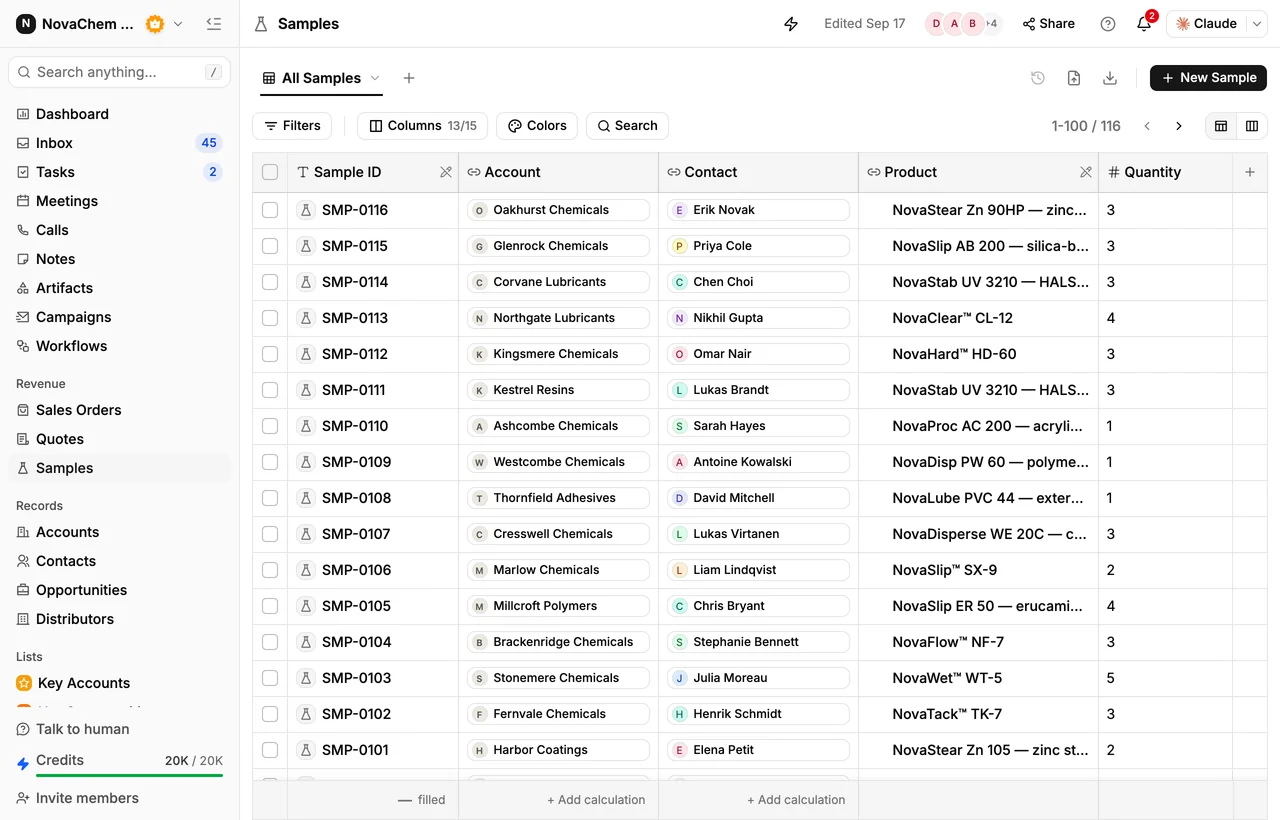
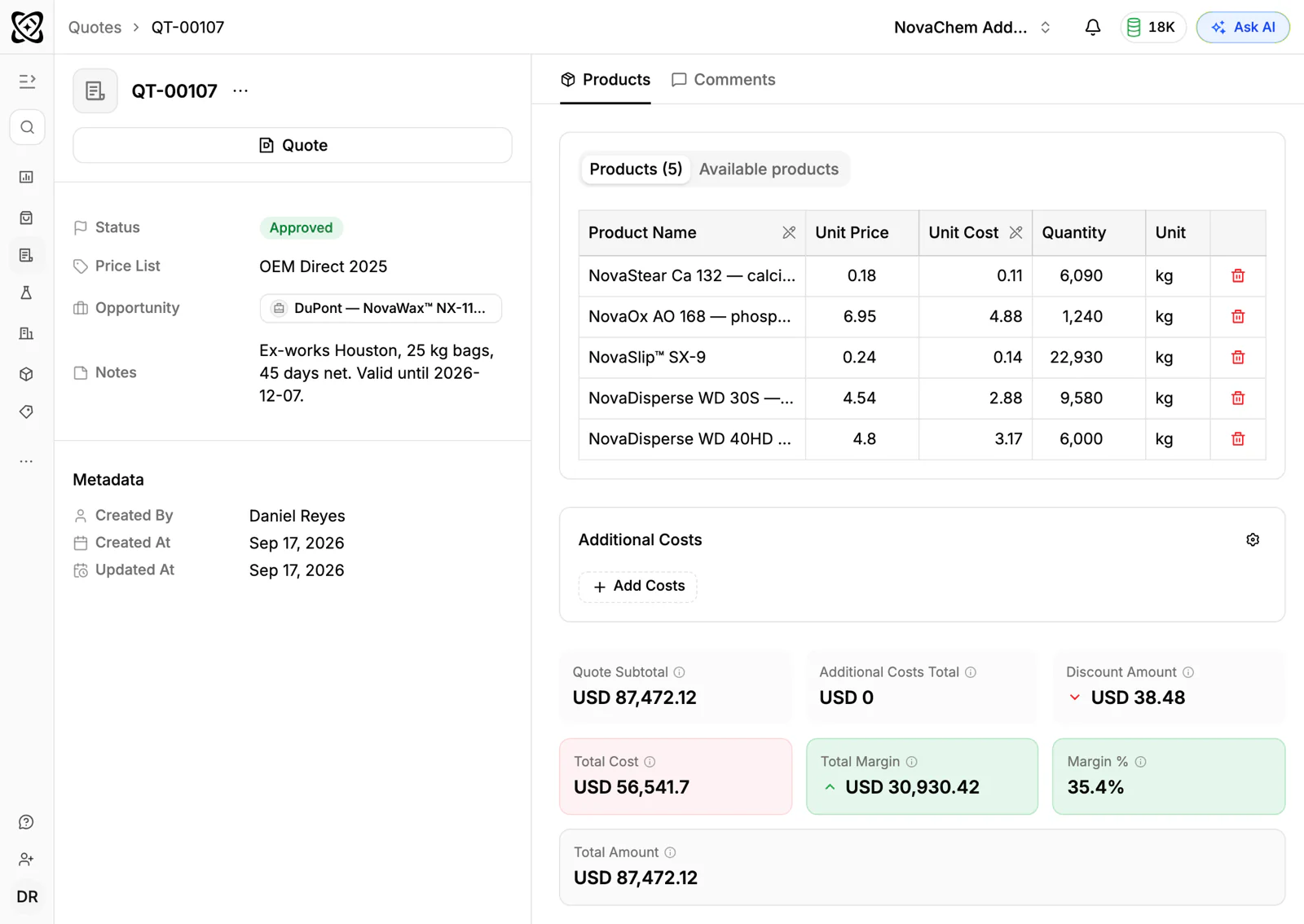
Samples and quotes are on every plan. A quote linked to the customer's price list takes that list's prices, quotes move through statuses and attach to the deal, and a workflow can create a task or post to Slack when a quote changes status. That keeps the follow-up on the calendar.
Frequently asked questions
What is the difference between cross-selling and upselling?
Cross-selling offers a different, related product. Upselling offers a bigger or better version of what the customer already buys. Both grow an account, and they are often done in the same conversation.
How do you find cross-sell opportunities in B2B?
List what each account buys, put your range beside it and look for related products they buy elsewhere. Ask the buyer what else they use and who supplies it. The answer shows the opportunity and the price to beat.
When is the best time to cross-sell to a customer?
When the customer is happy and engaged: after a smooth delivery, an accepted quote, an account review or a mention of a new project. Avoid the days after a problem.
Should I send a sample before cross-selling?
Yes, where it is practical. A small sample lets the buyer test the product with little risk and gives you a natural reason to follow up.
How many products should I offer at once?
One, or two at most. A single clear offer is easier to answer, and you can raise the next product after the first has landed.