



















How to get leads at a trade show
How to get qualified leads at a trade show: book meetings first, staff the stand with a plan, qualify in two minutes and capture every contact before you leave.
 By the PromptLab team7 November 20265 min read
To get leads at a trade show, book meetings with your best accounts before the show, give every person on the stand a job, ask three qualifying questions at each conversation, and write the lead into one shared place before the next visitor arrives. The leads you get are decided by what you do in the weeks before and the minutes at the stand, not by the size of the booth.
This guide is about the days of the show itself. For the packing list, read the trade show checklist. For what happens once you are home, see how to follow up after a trade show and the follow-up email templates.
Decide what a lead is before you go
A show produces three kinds of contact, and mixing them wastes the week after.
- A real lead. Has a need, a product in mind and some sign they can buy. Worth a call within days.
- A maybe. Interested, but no project or timing. Worth an email and a place in a later campaign.
- A courtesy chat. A competitor, a student, someone collecting pens. Note it if you must and move on.
Write the test on a card for the team. For a coatings supplier it might be: "Buys or specifies resins, has a named project or a current supplier they want to change, and we spoke to the person who decides or can name them." See how to qualify B2B leads for a fuller version.
Step by step: get leads at the stand
- 1
Book meetings before the show
Email your top accounts and your best open deals four weeks out and offer a fixed half-hour at the stand or nearby. Visitors who have a slot come with a purpose, and these are the conversations that turn into orders. The invitation email templates have wording for it.
- 2
Give each person on the stand a job
One person greets and qualifies, one demonstrates the product or samples, one writes up leads and keeps the rhythm. Rotate every two hours so nobody is tired by the afternoon. A stand where everyone stares at their phone loses visitors in seconds.
- 3
Open with a question, not a pitch
"What are you working on at the moment?" works better than "Can I tell you about us?" Listen for a product, a volume and a problem with the current supplier.
- 4
Ask the three qualifying questions
Ask what they buy or plan to buy, roughly how much and when, and who else is involved in the decision. Two minutes is enough. The answers decide which of the three kinds of contact they are.
- 5
Offer something specific to take away
A sample request, a technical data sheet or a quote for their project is a reason to stay in touch. Promise a date: "I'll send the quote by Friday." Offering a sample on the spot turns a vague interest into a named next step. See how to turn samples into orders.
- 6
Capture the lead straight away
Scan the badge or take the card, then write three lines before the next conversation: what they need, what you promised, and who else matters. Memory fails by the second evening. Do this at the stand, not in the hotel.
- 7
Review the day each evening
Spend fifteen minutes with the team. Count real leads, maybes and meetings held, fix leads written badly, and set tasks for the promises made. Tomorrow's stand should be sharper than today's.
Ways to get more leads without more footfall
- Walk the aisles. Visit the stands of your customers and your distributors' customers, and say hello. Some of your best conversations will not happen at your own stand.
- Run a small demonstration. A viscosity test, a sample pack to hand out or a price-per-tonne example draws people who care about the product.
- Use the pre-show list. Most shows publish an exhibitor and visitor list. Look at who is attending and message the ones you want to meet.
- Meet outside the hall. A dinner with three buyers is often worth more than a day on the stand.
Mistakes that cost leads
- Collecting everything. A box of 400 cards with no notes is not a lead list. Quality of notes matters more than count.
- No promise recorded. "I'll send you the price list" that nobody wrote down is a lost sale.
- Lead entry after the show. Typing 80 cards a week later means half are cold and the rest are wrong.
- One person owns the list. If the booth lead is the only one who knows the leads, the rest of the team cannot follow up.
A worked example
Say a packaging distributor takes two reps to a three-day fair. Before the show they book eight meetings with existing accounts. On the stand they speak to about sixty people. Fourteen meet the lead test, twenty are maybes. Each real lead gets a task with a date and a note of what was promised. On the evening of day three the team counts: eight meetings held, fourteen leads, four sample requests. The week after, every lead hears from a named rep within two working days.
How PromptLab helps
PromptLab's web forms can create a contact, account or opportunity from a submission, and a form can be shared as a QR code. Put a short "Visit our stand" or "Request a sample" form on a tablet or print its QR code on the stand: each submission creates the record with a note of the answers. Qualified leads become deals on your one pipeline, with the deal's Source set to Expo, an estimated value and a next follow-up date. Add the show's name in a custom field, and reps can create tasks for each promise and record notes as they go.
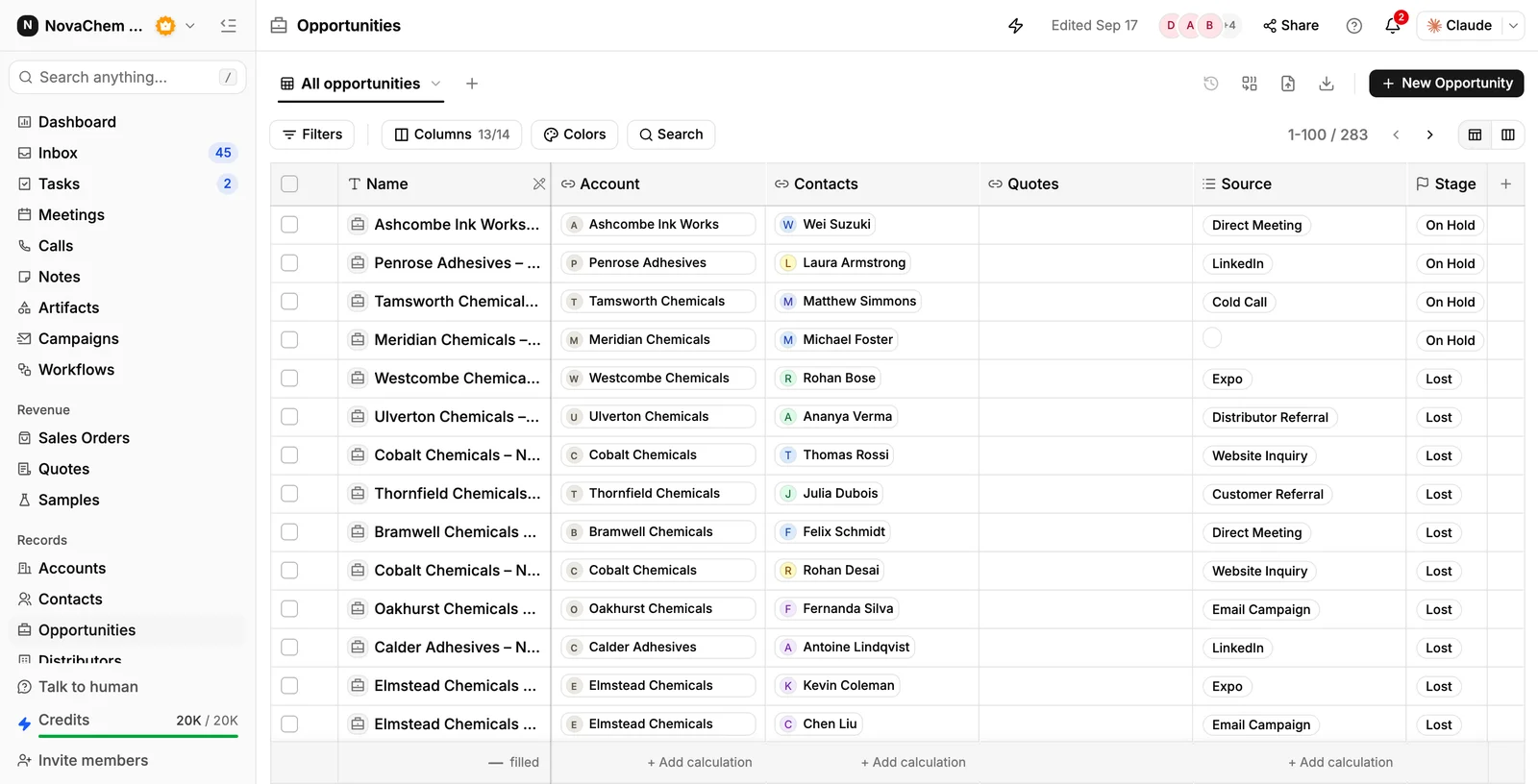
If a visitor wants a sample, log a sample request linked to the deal. When the show ends, the team can work through the leads in a list, and the shared Inbox keeps email, WhatsApp and Telegram replies on the same account.
Frequently asked questions
How many leads should I expect from a trade show?
It depends on the show, the stand and how many people you speak to, so there is no honest standard figure. Set your own target from your last show: real leads, meetings held and sample requests, not cards collected.
How do I qualify a lead in two minutes?
Ask what they buy or plan to buy, roughly how much and when, and who else decides. If they answer all three, it is a real lead. If they answer one, it is a maybe.
What should I do with leads that are not ready to buy?
Record them as maybes with a note of their interest and add them to a later email campaign. Do not call them as if they were hot leads.
Should I give away samples at a trade show?
Offer them to people who meet the lead test and log who took one. A sample handed to a stranger with no name or project attached rarely turns into an order.
How soon should I follow up after the show?
Within two working days for real leads, with something specific such as the quote or sample you promised. See the follow-up guide for the full sequence.