



















How to onboard a new distributor
A six-step plan to onboard a new distributor: agree terms, load prices, train their reps, ship samples and track the first orders until they reorder.
 By the PromptLab team6 November 20265 min read
To onboard a new distributor, agree the commercial terms in writing, give them the price list and product material they need, train their sales team, get a first order moving through samples and a quote, and review the first 90 days on a fixed rhythm. The aim is one repeat order, not a signed contract that never turns into sales.
Most distributor deals fail quietly after signature. The contract is done, the manufacturer moves on to the next prospect, and the distributor never learns what to sell or to whom. This guide is for a sales lead at a manufacturer who has just signed a distributor and wants them selling within a quarter. For the shorter tick-list version, use the distributor onboarding checklist.
What good onboarding looks like
You are done when the distributor has placed a second order without being chased. That needs four things in place: they know your prices, they know your products well enough to quote, they have a named contact on your side, and you can see their activity.
Set a 90-day target before you start. For example: "Two trained reps, three samples shipped, one quote won, one reorder." A target gives both sides something to measure the first review against.
Step by step: onboard the distributor
- 1
Write down the terms in one page
Cover territory, product range, price level, payment terms, minimum order and Incoterms. Say whether the distributor is exclusive. Agree what happens if they miss a target. A one-page summary beats a 30-page contract that nobody reads. If you are still choosing partners, use the distributor evaluation checklist first.
- 2
Create the account and name the people
Add the distributor as an account with every contact: the owner, the purchasing lead, each rep and whoever handles logistics. Give the account one owner on your side. Add custom fields for what you need to know about a partner, such as territory, tier and contract date.
- 3
Send the price list and product pack
Give them their own customer price list, not your public one. Say a coatings maker sells a resin at $4.20 a kilo to end customers and $3.30 to a distributor in the first tier. The distributor's list carries the $3.30. Send datasheets, safety data sheets, certificates and application notes in one folder, and keep the folder in the account's files.
- 4
Train their reps on the products and the sale
Run one live session on what you sell, who buys it and which questions customers ask. Record it. Include how to request a sample and how to request a quote, because those are the steps where distributors stall. Give each rep two products to lead with instead of the whole catalogue.
- 5
Start a first deal with a real customer
Ask the distributor for one named prospect. Create a deal, ship a sample, send a quote and set a follow-up date. A live deal teaches more than any slide deck. Joint calls on the first two deals show you how they pitch.
- 6
Review at 30, 60 and 90 days
Put three reviews in the calendar on day one. Look at deals opened, samples out, quotes sent and orders placed. Ask what is blocking them. Agree three actions each side owes before the next review.
What to give the distributor in the first week
- One contact who answers. Not a general inbox. Give a name, a mobile number and a promise of same-day replies in the first month.
- Prices they can quote from. Their list, their discount rules and the minimum order.
- Samples. A small kit of your top products so they can show customers something real.
- A way to order. Say how they place an order, who confirms it and how long delivery takes.
- Territory clarity. A list of customers that stay with you, so nobody argues later.
Mistakes to avoid
- Signing and leaving. The first 30 days decide whether the distributor sells.
- Giving the whole catalogue. A rep who knows two products sells them. A rep given 400 sells none.
- No visibility. If you cannot see their deals and samples, you learn about problems at the first review, three months too late.
- Mixed price lists. Sending the wrong list means a quote at the wrong margin. Check the list before the first quote goes out.
For the wider strategy, read how to sell through distributors and how to manage key accounts.
A 90-day example
Say a lubricants manufacturer signs a distributor in a new region. In week one the distributor gets its price list, a sample kit and a named contact. In week three two reps finish training and name three prospects. By day 45 one sample has shipped and one quote is out. At the 60-day review the quote is still unanswered, so the manufacturer joins a call with the buyer. By day 90 the first order is in and a reorder is scheduled. The pattern is simple: small, dated steps, each with an owner, and a review that asks what is blocking the next one.
How PromptLab helps
PromptLab keeps the distributor as an account with all its contacts, a Files tab for the product pack, and customer price lists. Quotes are built from the products and price list you pick on each quote, so the distributor's pricing carries through. A price list adds its own amount to each product's base price, so set the base at your lowest tier (the $3.30 distributor price above) and build the end-customer list on top of it; a rep can still change a line's price or discount on the quote. Samples are tracked on the deal, and sales orders sit on the account.
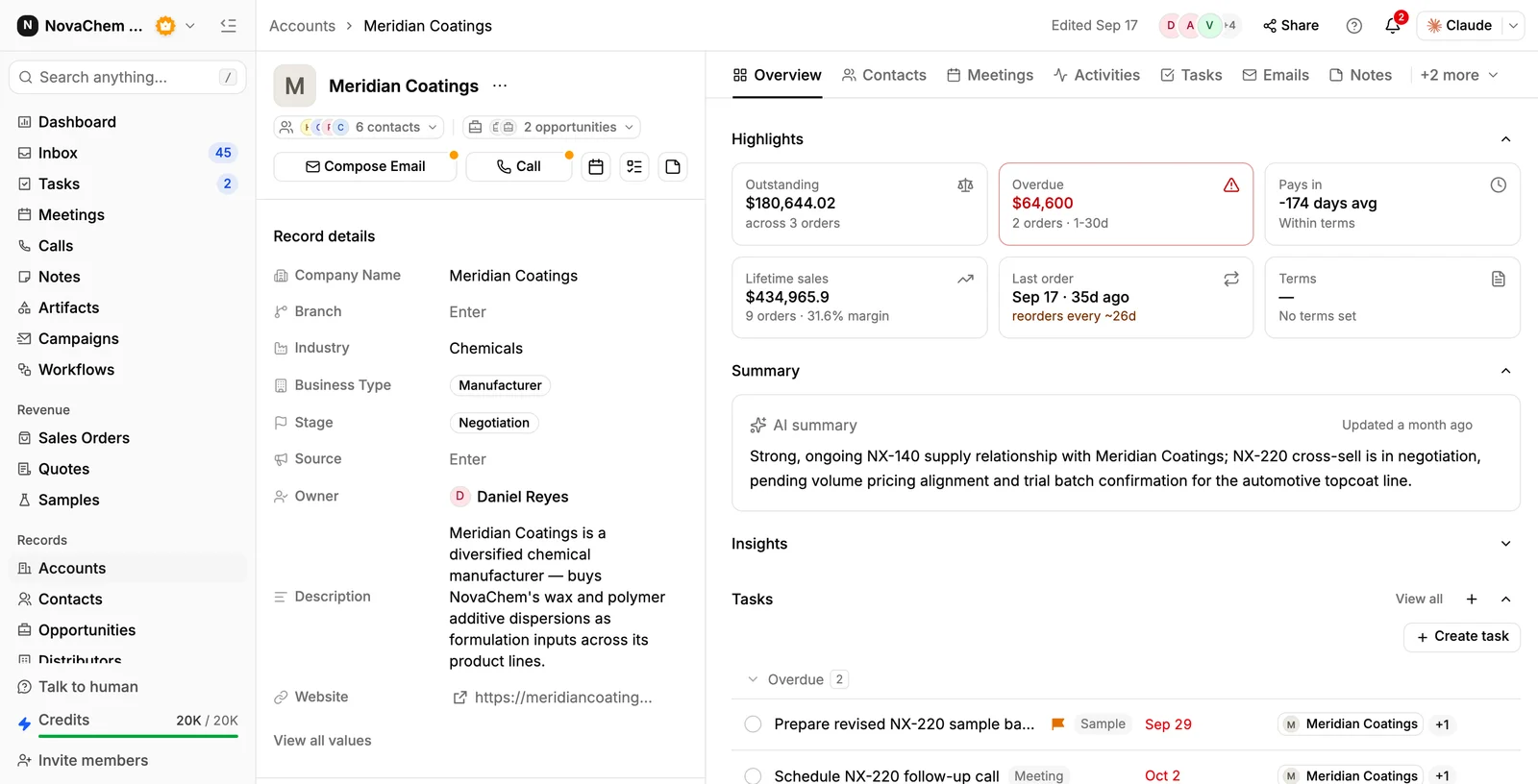
Add custom fields on the account for territory, tier and contract date, then build a list of all your distributors and review it at each 30-, 60- and 90-day check. A workflow can create a follow-up task when a quote changes status, so a stalled first quote does not go unnoticed.
Frequently asked questions
How long does it take to onboard a distributor?
Plan for 90 days from signature to a first reorder. The set-up (terms, prices, access) takes one to two weeks, training a few more, and the first deal runs through the rest. Fast distributors do it quicker, but plan on 90.
What should a distributor onboarding pack include?
Their price list, datasheets and safety data sheets, a short product guide, how to request samples and quotes, the order process and a named contact. Keep it in one folder and send it on day one.
Who should own the distributor relationship?
One named person on your side, with a back-up. They run the 30-, 60- and 90-day reviews and are the first call for any problem. Rotating contacts is the quickest way to lose a distributor's attention.
How do you know if a new distributor is working?
Look at activity before sales: deals opened, samples shipped and quotes sent in the first 60 days. Orders follow activity. No activity by day 45 means a conversation, not a wait.
Should a distributor get exclusive territory?
Only if they commit to targets in writing. Exclusivity without a minimum is a risk: a weak distributor blocks the territory. Tie it to a review date.