












How to speed up quote to order
Shorten the gap between sending a quote and getting the order. Seven fixes for B2B product sellers, from same-day quotes to a prompt sales order.
 By the PromptLab team6 October 20265 min read
To speed up quote to order, remove the waiting. Quote from agreed prices on the day of the request, follow up on a fixed schedule, answer buyer questions in the channel they use, and raise the sales order the day the quote is accepted. Much of the delay between a quote and an order is idle time, not the buyer deciding.
This guide is for teams selling physical products, where a quote often passes through a rep, a manager, a price check and a customer before it becomes an order. Each handoff is a place for the deal to sit. We go through where the time goes and how to cut it.
Where the time goes between quote and order
Look at your last ten orders and mark the days between each step. You will usually find the waiting in four places:
- Building the quote. Hunting for prices and costs.
- Approval. A manager checks the margin and takes two days.
- Silence after sending. Nobody follows up, and the buyer forgets.
- Order entry. The accepted quote is retyped into an order form, then into finance.
Say a typical quote takes you 12 days to become an order. If you find that three of those days are building and approval, five are silence and two are retyping, only two are the buyer deciding. Now you know what to fix.
Seven ways to speed it up
- 1
Quote from customer price lists
Prices already agreed need no checking. A rep who builds the quote from the customer's list does it in minutes, not hours. See how to manage customer price lists.
- 2
Set approval rules in advance
Agree a margin floor and a discount limit per rep. Inside the limits, reps send without asking. Only quotes below the floor go to a manager, and the manager sees the margin on the quote itself.
- 3
Send the same day
Ask the buyer for the missing details during the call, not afterwards. Then the quote can go within hours of the conversation. How to write a sales quote lists what every quote needs.
- 4
Follow up on a fixed schedule
Contact at two days, at one week, and before the validity date. Each message should answer a likely question, not just ask "any news?". Use the quote follow-up email templates.
- 5
Answer in the buyer's channel
If the buyer asked on WhatsApp, answer there. A quote question that waits for an email reply waits a day. See how to sell to B2B buyers on WhatsApp.
- 6
Make acceptance a simple step
Tell the buyer exactly how to accept: reply "accepted" with a purchase order number, or send a signed copy. One clear action beats a paragraph of options.
- 7
Raise the order where the quote lives
When it is accepted, create the sales order in the same system as the quote, with the products, trade terms and payment schedule. Every copy between systems is a chance to mistype.
Remove the approval bottleneck
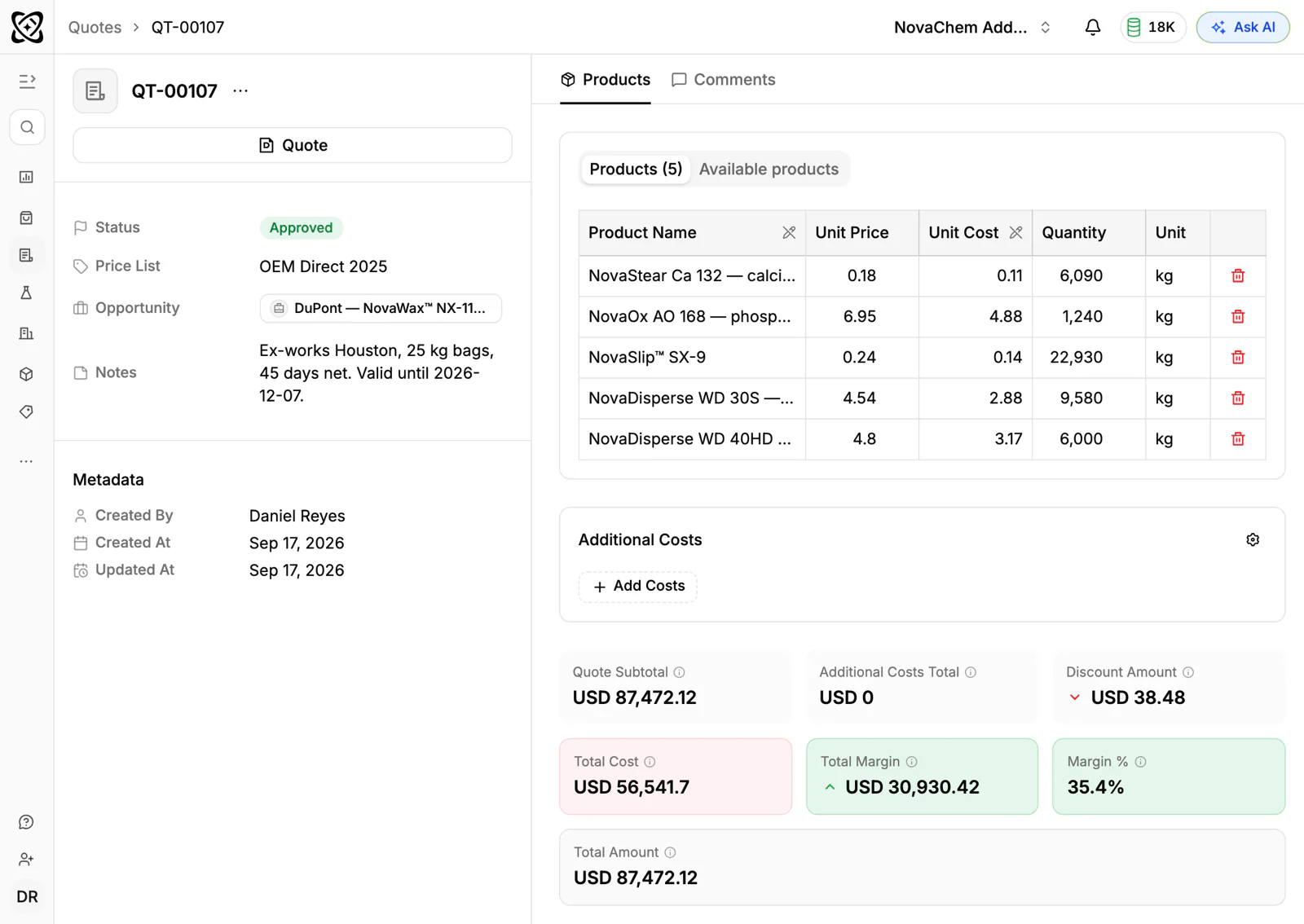
Approval delays are the easiest to fix, and the most often ignored. A manager reading a spreadsheet of costs needs time to understand it. A manager looking at a quote that shows unit cost, unit price and the margin on each line decides in a minute.
Give the manager a notification when a quote needs approval, and a rule for how long they have. A quote waiting for approval should show up as a task, with a due date, not as an email at the bottom of an inbox.
Chase the quote without nagging
The first follow-up should add something: a data sheet, an answer to an objection, or a delivery date. The second can ask about the decision timeline. The third, before the quote expires, should state the date and offer to extend it if they need more time.
Log each contact on the deal so a colleague can pick up. A quote that has been "pending" for three weeks should appear in your pipeline review. See how to run a weekly pipeline review.
A fast quote-to-order routine
Measure the gap
Track one number: days from quote sent to order confirmed, by rep and by product. Review it monthly. Say the median falls from 12 days to 8: every order now lands four days sooner. If one rep sits far above the others, look at their follow-up habits first.
Also track quotes that never become orders, and note why. "Price" and "lead time" tell you different things. The what is quote to order entry explains the process as a whole.
How PromptLab helps
In PromptLab, a quote links to the deal and to the customer's price list, and shows unit cost and unit price on every line with the total margin. Quotes move through Draft, Pending and Approved, so a manager can see which are still pending. Once accepted, you create the sales order under Sales Orders with the products, the trade terms and the payment schedule, and create the invoice from the same record.
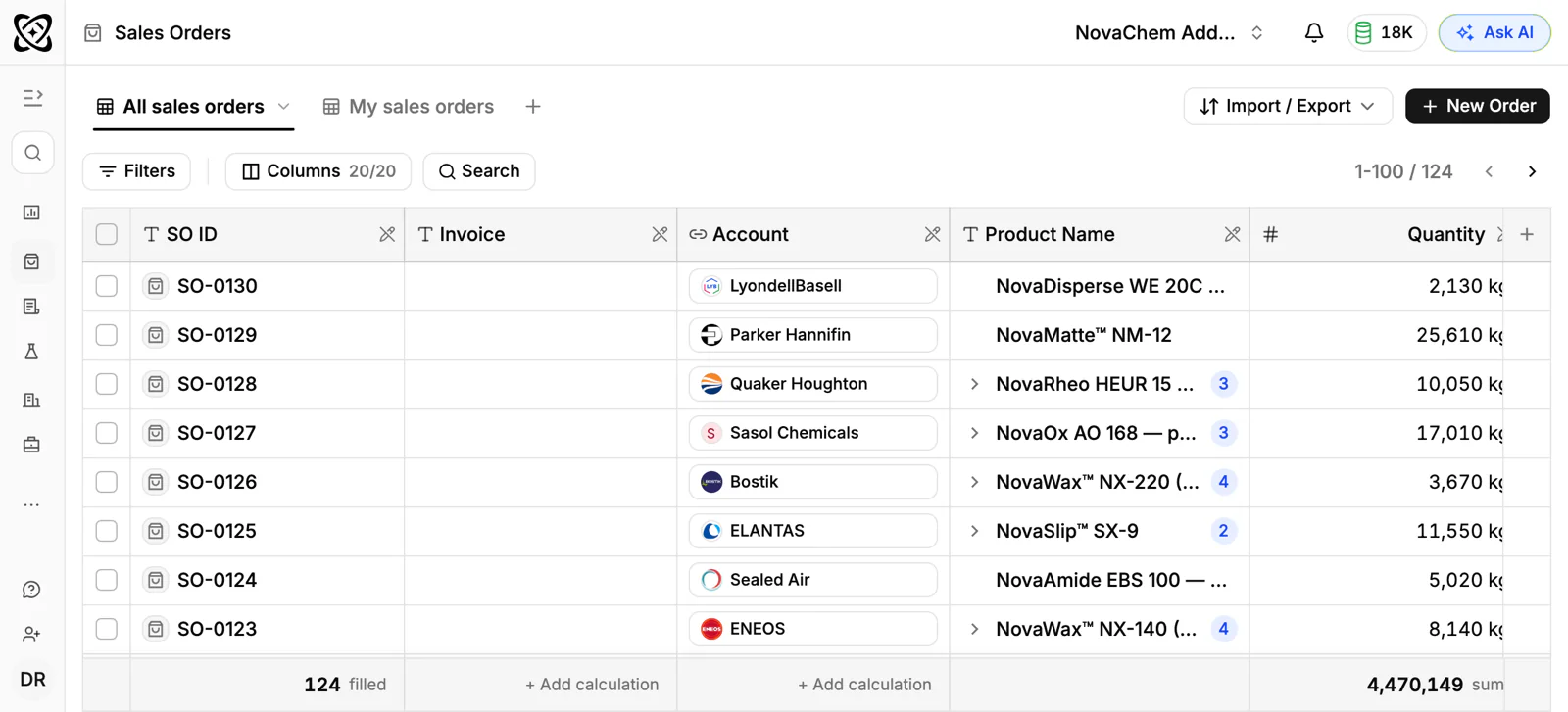
A workflow can create a task or post to Slack when a quote changes status, so approvals and follow-ups do not depend on memory. The shared Inbox keeps email, WhatsApp and Telegram messages about the quote on the same account, so you answer where the buyer asked. Ask AI answers plain-language questions about your quotes and sales orders, such as which quotes are still pending.
Details are on the quotes and samples page, and plans are on pricing.
Frequently asked questions
What is quote to order?
Quote to order is the process from sending a quote to confirming a customer's order, including approval, follow-up, acceptance and order entry. The shorter and clearer it is, the sooner you earn the revenue.
How long should it take to turn a quote into an order?
It depends on your product and your buyer's approval cycle, so compare against your own history. Measure days from quote sent to order confirmed, then work to lower your median.
Why do customers not respond to quotes?
Usually because something is unclear, such as freight, lead time or validity, or because a competitor's quote is easier to approve. A quote that answers every question, followed up on a schedule, gets more replies.
Should I discount to close a quote faster?
Only as a last step, and only above your margin floor. A better first move is to find the objection. A discount you give before you have asked what is holding the buyer back is usually wasted.
Can I automate quote follow-ups?
You can automate the reminders: a workflow can create a task when a quote changes status, so a rep follows up at the right time. The message itself should still be written for that buyer.