








What is a sales order?
A sales order is the document that confirms what a customer has agreed to buy. Here is what it contains, how it differs from a quote, and an example.
 By the PromptLab team6 October 20263 min read
Definition
Sales order
A sales order is the record that confirms a customer's purchase: which products, what quantities, at what prices, and when and where they are to be delivered. It is created once the buyer accepts your offer.
A quote says "here is what we can offer". A sales order says "this is what we have agreed to deliver".
Why a sales order matters
The sales order is the point where a promise becomes a commitment. Whoever picks, packs and ships works from it. If it is wrong, the wrong goods leave the warehouse.
It also helps sales. A clean list of orders shows what each customer buys, how often, and which products sell. That is the basis for repeat-order calls and for revenue reports.
What a sales order contains
The usual fields are:
- The customer and the contact who ordered
- Product lines with quantity, unit and price
- Delivery address and requested date
- Payment terms and any notes
- A reference to the quote or deal it came from
- A status, such as confirmed, shipped or closed
Sales order versus quote versus invoice
Three documents get confused. A quote is an offer and can be declined. A sales order is the accepted deal. An invoice is the bill, sent once goods ship or as terms require.
How a sales order is created
The best way is to create it from the accepted quote, so lines and prices carry over. Typing it again invites errors. If a customer changes quantity on the phone, update the order and keep a note of the change.
An example from product sales
A plastics distributor sends a quote for 10 pallets of polyethylene granules at the customer's agreed price. The buyer accepts by email. The rep creates a sales order from the quote, adds the delivery date the buyer asked for, and the warehouse gets what it needs. Three months later the same buyer reorders, and the rep copies the last order as a starting point.
Related terms
- Quote-to-order: the process that ends in a sales order.
- Customer price list: the source of the prices on the order.
- Sales pipeline: where the deal sits before it becomes an order.
- CRM: the place orders should be recorded next to the customer.
How PromptLab handles it
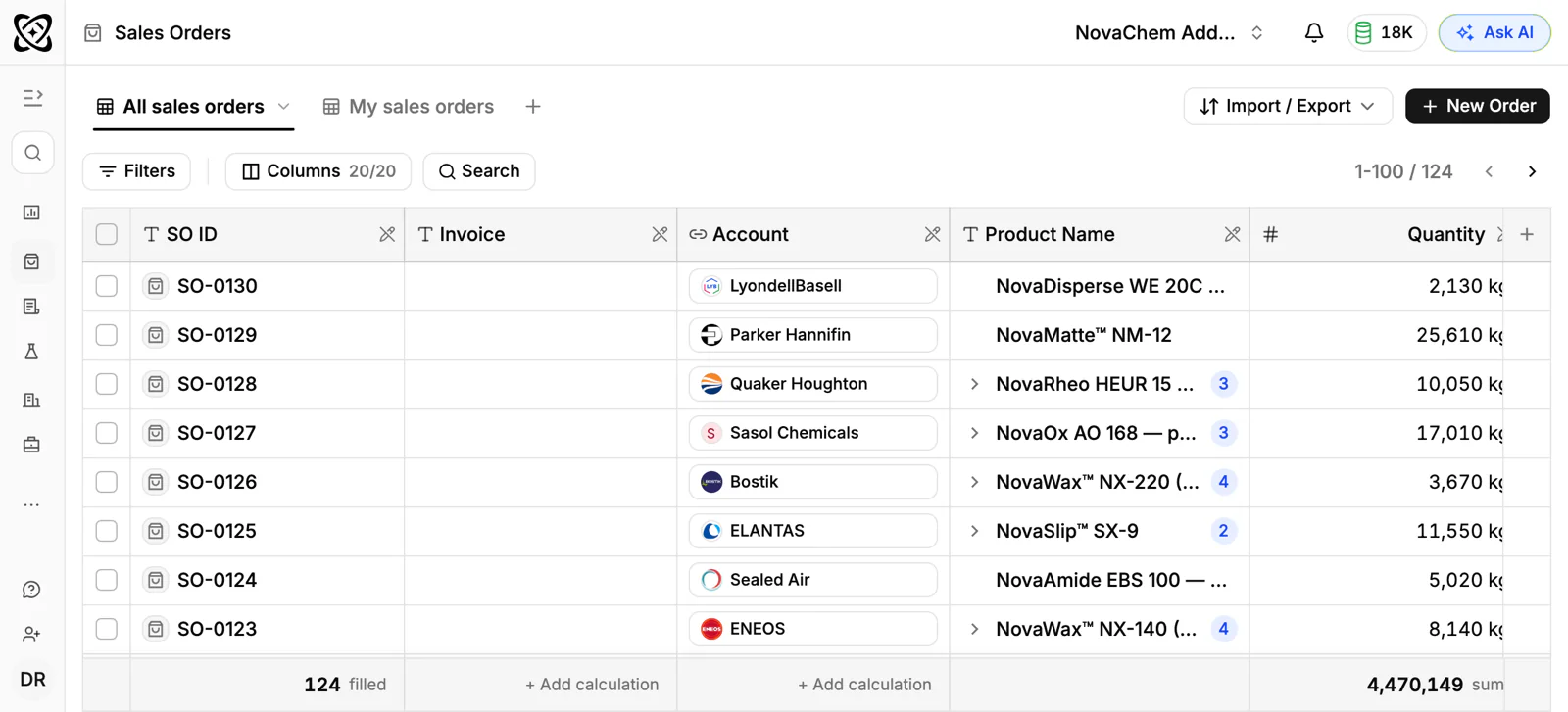
Sales orders are part of PromptLab on every plan, next to quotes, sample tracking and customer price lists. When a customer says yes, you raise the order with its products, trade terms and payment schedule, then create the invoice from the same record. Ask AI answers questions about sales orders in plain words, and reports and dashboards cover revenue.
Frequently asked questions
Is a sales order the same as a purchase order?
No. A purchase order comes from the buyer. A sales order is created by the seller to record the same transaction on its side.
When is a sales order created?
After the buyer accepts the quote or sends a purchase order, and before goods ship.
Can a sales order be changed?
Yes, until it ships. Record any change so that sales, the warehouse and the customer all see the same version.
Does a CRM need sales orders?
For a team that sells products, yes. Without them the CRM shows deals but not what customers actually buy.