



















How to announce a price increase
Announce a B2B price increase well: decide the number, give notice, call key accounts first, prepare for pushback and update price lists and open quotes.
 By the PromptLab team7 November 20265 min read
To announce a price increase, decide the amount and the effective date, give each customer written notice well before it takes effect, call your largest accounts before they read the letter, explain the reason in one plain paragraph, and prepare answers for pushback. Customers accept increases they saw coming and understand. They resist surprises.
This guide is the process. For the wording, use the price increase letter templates. It is written for suppliers of chemicals, packaging, ingredients and similar goods whose customers buy against price lists.
Decide before you tell anyone
Get the internal facts straight first. A vague announcement invites a negotiation.
- How much, and on what? A flat percentage on everything, or different amounts by product family? Costs usually rise unevenly, and customers notice when a flat rise hits a product whose cost has not moved.
- From when? A fixed date, not "soon". Check your contracts and any local rules for the notice period, because some customers have fixed prices for a term.
- Who is exempt? Customers on a fixed-price contract until it ends, or quotes already issued and still valid. Decide and write it down.
- How much room do reps have? Agree in advance how much a rep may concede and for whom, so you do not give different answers to similar customers.
Step by step: announce the increase
- 1
Work out the new prices and the margin
Take each product family, add the cost rise, and check the margin on a typical order. Say your average order is $8,000 and your raw material cost is up on one family: calculate the new price for that family from its cost rather than applying a flat figure to the whole catalogue. The margin and markup calculator helps.
- 2
Sort customers into groups
Typical groups: strategic accounts, regular accounts, small and occasional buyers, and distributors. Each group gets a different route (a call, a personal email, a standard letter) but the same facts and the same date.
- 3
Write the reason in one paragraph
Give the real reason: raw material, freight, energy, packaging, currency. Be specific where you can, and do not invent one. Customers forgive an honest cost increase far more readily than an excuse. Do not apologise at length.
- 4
Tell the key accounts first, by phone
Call your top accounts a few days before the letter goes out. Give the number, the date and the reason. Ask if there is anything about their volume or planning that matters. A buyer who hears it from you first does not feel ambushed by a letter.
- 5
Send the written notice to everyone
State what changes, from what date, for which products, and who to contact. Attach the new price list. Send it from a named person, not a no-reply address. Give enough time for customers to place an order at the old price if your terms allow it.
- 6
Handle pushback with a plan
Prepare answers for the common reactions: "Why so much?", "Can you hold my price?", "Your competitor didn't raise." Offer what you can, such as a volume commitment in return for a longer price hold. Do not discount quietly for the loudest customer. For the language, see how to handle price objections.
- 7
Update the lists, quotes and open orders
Change the price lists on the effective date. Review open quotes that are still valid: honour them, or let them expire and re-quote. Tell sales which orders ship at which price. A wrong price on a quote after the date costs you the margin you raised prices to protect.
How much notice to give
Notice depends on your contract, your market and your relationship. Some customers need weeks to update their own prices to their buyers. Distributors, who pass the rise on, usually need longer than a direct buyer. Where nothing is fixed, longer notice is almost always kinder and safer than short. Check your terms, and local rules, before you decide.
Mistakes to avoid
- Letting customers hear it from a rep in passing. Inconsistent messages are worse than none.
- Hiding the date. If the date is in paragraph four, customers will say they missed it.
- Discounting in secret. The customer who finds out another got a deal asks for the same.
- Forgetting the open quotes. A quote that is still valid at the old price is a promise.
- Raising once and going quiet. Follow up with the key accounts a week later to hear how it landed.
A worked example
Say a packaging supplier faces a film cost rise. It raises prices on film products by a set amount from the first of the next month and leaves other lines alone. Sales calls its ten largest accounts in the second week, explaining the cost and the date, and offers any that commit to a six-month volume a fixed price for a quarter. The letter goes to everyone else the same week with the new list. Open quotes are honoured until they expire. The following week, reps check back with the ten large accounts, and the three who pushed hardest get a call from the sales director. No customer learns of the change from an invoice.
How PromptLab helps
Customer price lists in PromptLab add a set amount on top of each product's base price. Editing a list reprices only its Draft quotes, and lines priced by hand keep their price. Quotes already Pending or Approved stay at the price they were issued at, so you decide what to do with each open quote rather than finding they changed overnight. Use a list or a custom field to mark which accounts are strategic, and a task to remind the owner to call each one.
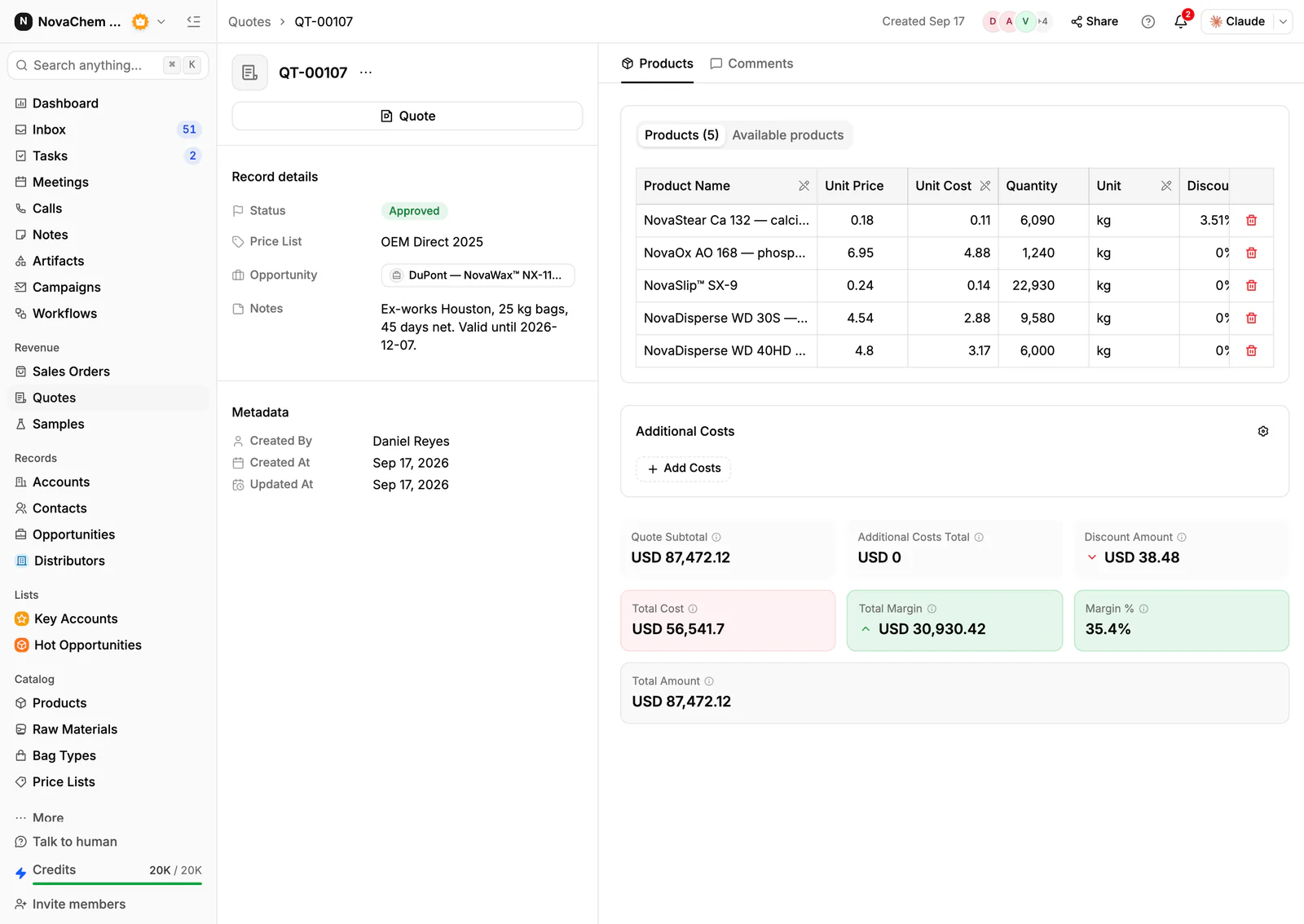
For the notice, send the letter by email from your own mailbox, or use a multi-step email campaign to the smaller accounts. For help with the numbers, the margin on each quote line shows what the new prices do to your margin. When you update a product's cost, the margin on its Draft and Pending quotes updates too, so you can see which open quotes the cost rise has squeezed. See also how to manage customer price lists.
Frequently asked questions
How much notice should I give for a price increase?
It depends on your contracts, your market and the customer. Longer notice is safer, and distributors who pass the rise on need more than direct buyers. Check your terms and local rules before you decide.
How do I tell customers about a price increase?
Call the largest accounts first, then send a written notice to everyone with the amount, the effective date, the reason and a named contact. Attach the new price list.
What reason should I give for raising prices?
The true one: raw material, freight, energy, packaging or currency. Be specific where you can. An honest cost reason is accepted far more readily than a vague one.
What do I do about open quotes when prices go up?
Decide per quote. Honour those still valid by their own terms, or let them lapse and re-quote at the new prices. Tell your team which orders ship at which price.
How do I handle customers who push back?
Listen, restate the reason and the date, and offer what you planned in advance, such as a longer price hold in exchange for a volume commitment. Do not discount quietly for one customer.