



















How to handle customer complaints in B2B
A six-step process for B2B complaints about late deliveries, quality and invoices: acknowledge fast, find the cause, fix it and keep the customer.
 By the PromptLab team29 October 20265 min read
To handle a B2B customer complaint, acknowledge it the same day, find out exactly what went wrong, tell the buyer what you will do and by when, fix it, and then check that they are satisfied. A single mistake rarely loses a customer on its own. Silence after it often does. A clear process turns a complaint into proof that you can be relied on.
This guide covers complaints about delivery, quality, paperwork and invoices in product sales. For ready-made wording, use the customer complaint response email templates.
Why complaints are a sales matter
A complaint reaches a sales rep first, often by WhatsApp or a short email, and it arrives at a bad time. If the rep hands it to operations and waits, the buyer sees nobody owning it. Your customer remembers who answered, not which department was at fault.
Handled well, a complaint is a chance to show how you work under pressure. Handled badly, it is the start of the buyer's search for another supplier. Treat it with the urgency of a deal.
The six steps
- 1
Acknowledge within hours
Reply on the day with three things: you have it, who owns it, and when they will hear back. You do not need the answer yet. Do not argue, explain or blame anyone in the first reply.
- 2
Collect the facts
Ask for the order number, product and batch, quantity affected, photos or test results and what the buyer needs. Check your own records at the same time: the order, the shipment and the quality documents. Use the buyer's words and your data, not guesses.
- 3
Find the cause
Work out whether it was a quality issue, a pick or pack error, a carrier delay, a documentation error or a misunderstanding about the spec. Ask the people involved, without looking for a culprit. A real cause is what stops the next complaint.
- 4
Offer a remedy and a date
Choose a fix the buyer can accept: replacement, credit, re-delivery, a corrected invoice or a technical visit. Give a date. Where you are not at fault, say so politely and show the evidence, but still help.
- 5
Deliver and confirm
Do what you said, on the day you said. Then ask the buyer in writing whether it is resolved. A complaint that you think is closed can still be open for them.
- 6
Record and prevent
Log the cause, the remedy and what you changed. If three complaints share a cause, fix the process and tell the team.
Set the response times before you need them
Agree internally what "fast" means, such as a same-day acknowledgement, an update every two working days and a target to close. Write the times down. A rep under pressure should not have to decide them.
Say a distributor receives a message that a pallet arrived damaged. By noon the rep has replied, asked for photos and opened a task for the warehouse. By the next morning the cause is known: the carrier. The replacement ships that day. The buyer's trust is likely higher than before the damage, because they saw the response.
Sort complaints by type
Not every complaint needs the same response. A late delivery needs a new date and an apology. A quality problem needs the batch, a test result and often a replacement. An invoice error needs a corrected document and a quick credit note from finance. Sorting the complaint in the first reply tells you who to bring in, and tells the buyer you understood the issue.
Keep a short note of the type on the account. After a few months you can see which type is most common, and where to fix the process first.
Keep sales in the loop
Even if operations or quality lead the fix, the account owner stays the voice to the buyer. One person writing to the customer avoids mixed messages. Operations can add facts, but the rep sends the answer.
Check an open complaint before you contact the buyer about anything else. Pitching a new product to a customer with an unresolved issue shows poor judgement. In the same way, review key accounts regularly, so a pattern of problems shows up early.
Turn the complaint into follow-up
After resolution, wait a few days and check in. Ask whether the product is performing and whether there is anything else. Thank the buyer for raising it. A buyer who has seen you fix a problem properly has a reason to trust you with the next order. See how to increase repeat orders.
How PromptLab helps
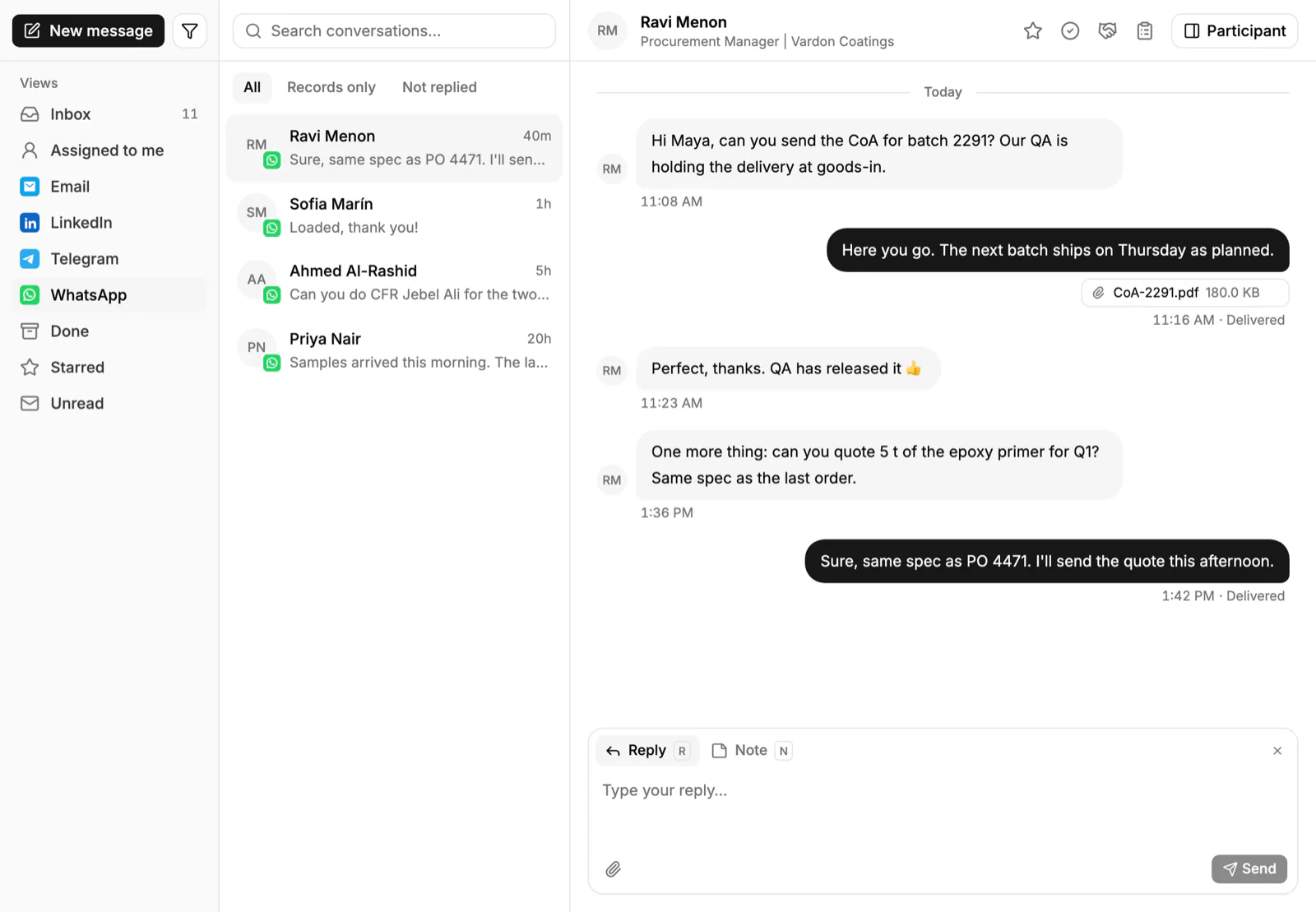
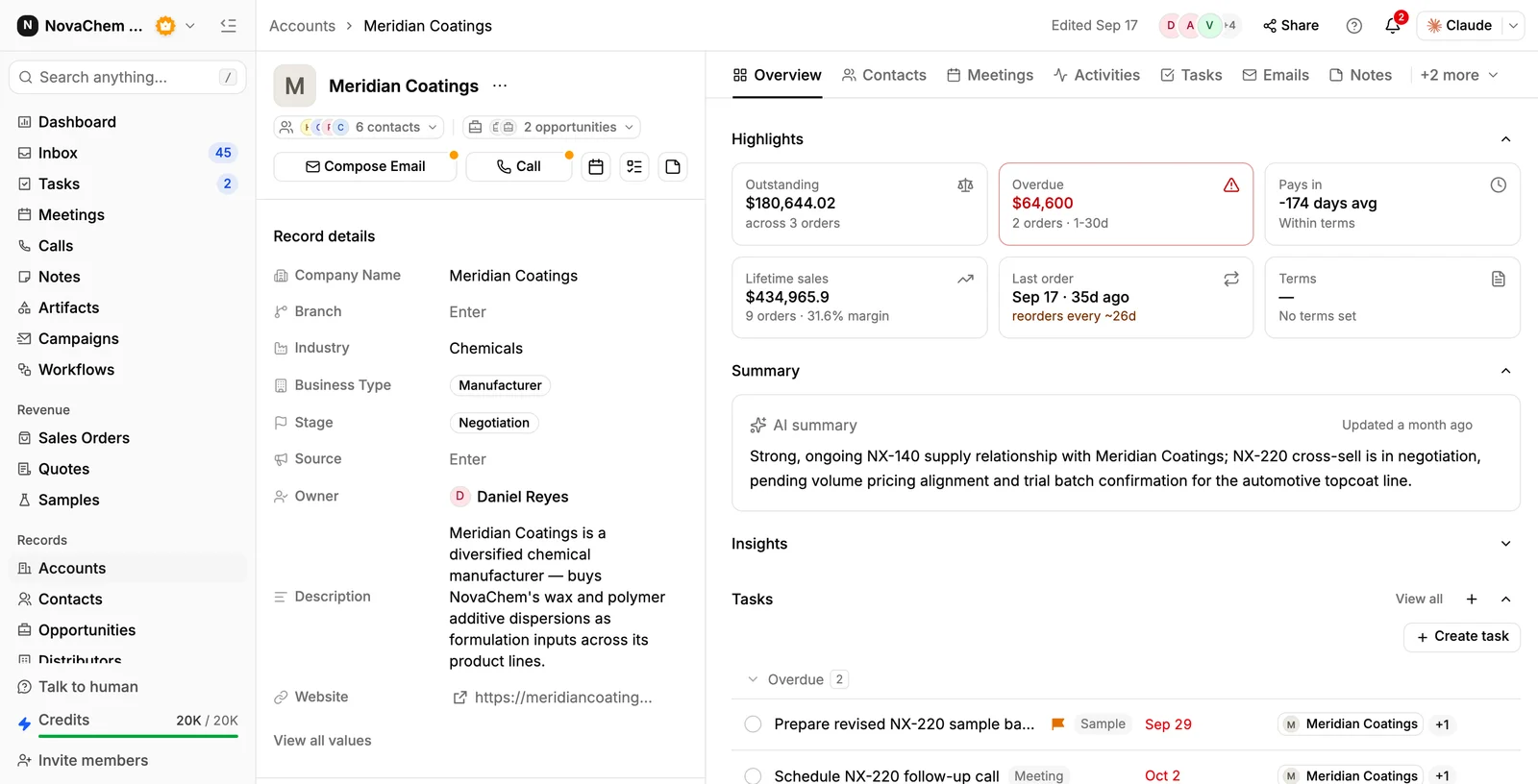
When a buyer writes by email, WhatsApp or Telegram, the message arrives in the shared Inbox, with the buyer's contact, account and deal beside it. The messages also show on the account's timeline, next to its emails, meetings and notes, so anyone covering for the owner sees the whole story. (WhatsApp uses your WhatsApp Business number, and Telegram works through your company's own Telegram bot, where the buyer messages first.)
Create a task for each complaint with an owner and a due date, and add a note for the cause and the remedy. A workflow can create a task or post to Slack when an email, WhatsApp or Telegram message arrives, though you still decide which messages are complaints. Notes and the account timeline keep the record for the next review. See the Inbox and Notes references.
Frequently asked questions
How quickly should I respond to a B2B complaint?
Acknowledge the same day, even if you only say who owns it and when the buyer will hear back. Then update them on the date you promised. Speed matters more at the start than a perfect answer.
Who should handle a customer complaint, sales or operations?
Operations or quality may investigate, but the account owner should stay the buyer's contact. One voice avoids mixed messages and shows the buyer that someone owns the issue.
What if the complaint is not our fault?
Say so politely, with evidence such as the delivery record or test result, and still offer help. Arguing without helping risks the relationship even when you are right.
Should I offer a discount after a complaint?
Not by default. Fix the problem first, and offer a credit only when it matches the loss. A discount used to calm a buyer teaches them to complain for price.
How do I stop the same complaint happening again?
Record the cause of every complaint, and review the log each month. When two or three share a cause, change the process, such as packing, labelling or documents, and tell the team what changed.