



















How to plan customer visits that lead to orders
How to plan B2B customer visits: choose which accounts to see, set an aim for each, prepare, build a route, run the meeting and follow up so the visit pays.
 By the PromptLab team31 October 20265 min read
To plan customer visits that lead to orders, choose accounts by value and need, give every visit one clear aim, prepare from the account's history, group visits into an efficient route and send a follow-up the same day. A visit with no aim is a social call. A visit with an aim leads to a next step.
This guide is for field reps, area managers and owners of companies that sell products to factories, workshops and stores. For the day itself, use the customer visit checklist. This post is about the planning around it.
Decide which accounts deserve a visit
You cannot see everyone. Sort your accounts into groups and set a visit rhythm for each:
| Group | Examples | Visit rhythm |
|---|---|---|
| Key accounts | Largest buyers, strategic customers | Several a year |
| Growth accounts | Buying a little, with room for more | Once or twice a year |
| At-risk accounts | Orders falling, a new contact, a complaint | As soon as possible |
| New accounts | First order placed | Within the first weeks |
| Prospects | Qualified, with a real need | When a visit moves the deal |
Say a rep has 60 accounts and about 10 days a month in the field. A fixed rhythm for each group stops that rep visiting the friendly ones again and again, and ignoring the ones who matter. How to manage sales territories covers dividing the map between reps.
Give each visit one aim
Write the aim in a sentence before you book. Good aims are about an outcome:
- Get a decision on the quote sent last month
- Introduce a second product line to the technical lead
- Find out why orders have dropped since spring
- Meet the new purchasing manager
- Collect feedback on the sample
Avoid "to maintain the relationship". If you cannot name a result, ask whether a call would do.
Prepare before you go
Preparation separates a useful visit from a pleasant one. Spend 20 to 30 minutes on each key visit. Read:
- The last orders, quotes and samples, and what happened to them
- Open tasks, complaints and promises you made
- Recent emails and messages
- Who you will meet, their role and anything they told you before
- The price list they are on and any pending changes
Then write three questions to ask, one thing to show or leave (a new data sheet, a sample, a short price note) and the next step you want. How to prepare for a sales meeting gives a longer method.
Book it and confirm it
Contact the buyer ahead of time, with the purpose and the length. A short message works: "I will be in your area on Thursday. Could we spend 30 minutes on the new grade and your spring volumes?" Confirm the day before. Ask who else should attend, such as a technical colleague or a purchasing lead, so the right people are in the room.
Build the route
Group visits by area and keep two spare slots for urgent ones. Leave a buffer between visits, because meetings run long and traffic does not care. Put the most important visit at a time when the buyer is fresh and never last on a Friday.
- 1
Pin the fixed appointments
Mark visits that cannot move: factory shutdowns, trade shows, the customer's busy weeks.
- 2
Add priority accounts
Put at-risk and key accounts into the days with the best fit.
- 3
Fill the gaps with nearby accounts
Add smaller accounts in the same area, so each trip pays for itself.
- 4
Leave room
Keep a buffer for overruns and one spare slot a day.
Run the visit
Start by checking the buyer's priorities: "What is the most pressing thing for you this quarter?" Listen more than you talk. Show the product or the sample only where it answers something you heard. Note what they say, in their words. Before you leave, agree the next step with a date: a quote by Tuesday, a sample shipped this week, a call next month.
Follow up the same day
Write your notes while the visit is fresh. Send a short message that thanks the buyer, repeats what you agreed and attaches anything promised. Create the tasks for your side and put dates on them. A visit that is not recorded and followed up is mostly lost within a week. For the type of message to send, see sample follow-up email templates.
How PromptLab helps
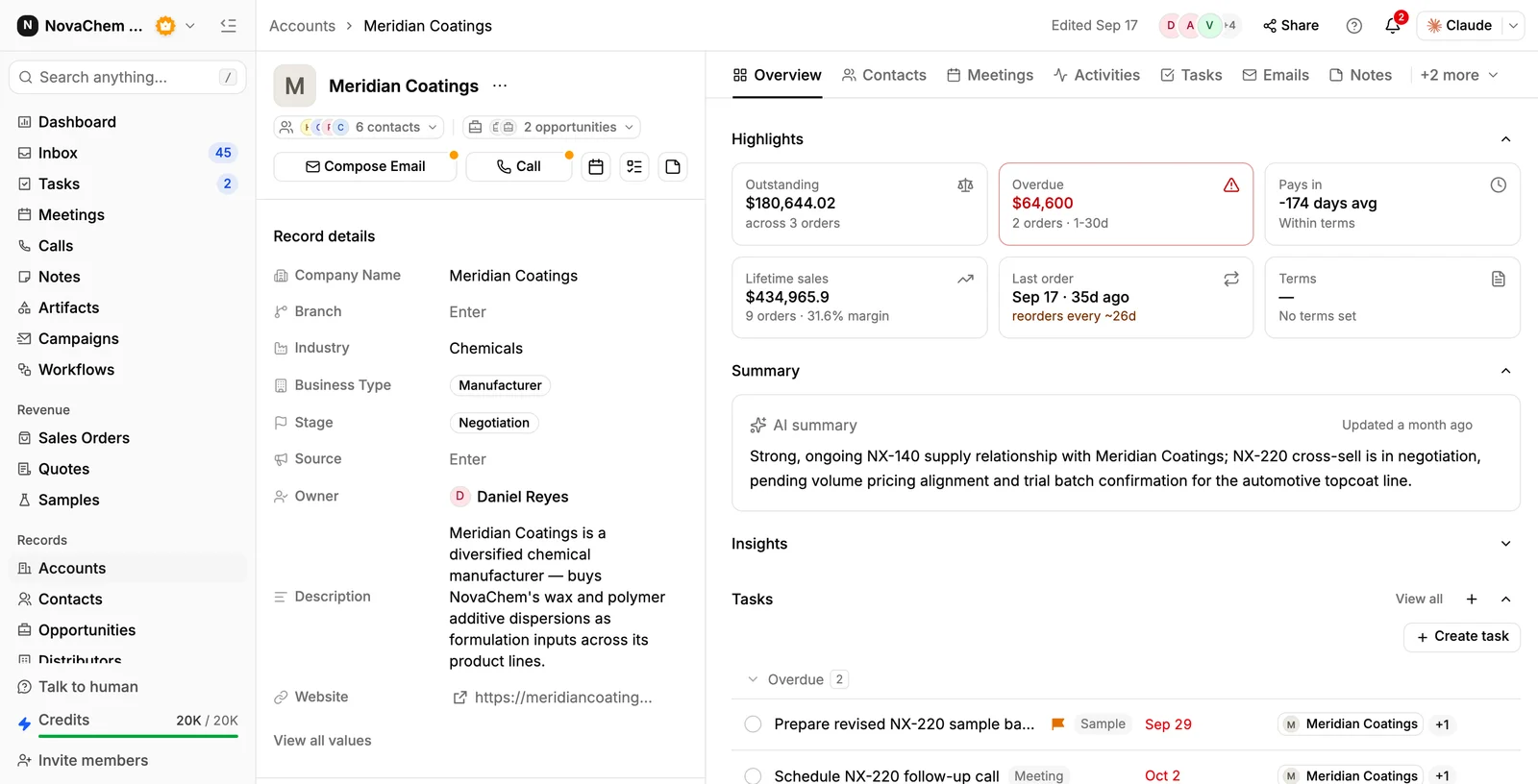
Keep each account's history in one place: deals, quotes, samples, sales orders, emails, WhatsApp and Telegram messages, notes and files. Before a visit, open the account and read it, or have Ask AI summarise it in plain words. After the visit, record a note and create tasks with owners and due dates. A saved view of accounts with owner, city and last activity columns gives you the list to build a route from, and each account's overview shows its last order.
If you meet online on Google Meet, Zoom or Microsoft Teams, the call is recorded, the AI summary and follow-up email draft are produced for you, and action items become CRM tasks. See the Tasks reference.
Frequently asked questions
How often should I visit my customers?
It depends on their value and need. Key accounts may justify several visits a year, growth accounts one or two, and small accounts a call or message. Visit at-risk accounts sooner.
How many visits can a rep make in a day?
It depends on distance and the length of each meeting. Many field reps plan three to five, but quality matters more than count. Leave a buffer so a long meeting does not wreck the day.
How do I make sure a visit leads to an order?
Give it a clear aim, prepare from the account history, ask about their priorities and agree a dated next step before you leave. Then follow up the same day.
Should I visit or call?
Visit when the relationship, the size of the account or the topic is worth the time, such as a first meeting, a problem or a major quote. A call or video meeting suits routine updates.
What should I bring to a customer visit?
Current price list and data sheets, samples relevant to their needs, notes on their last orders and open issues, and a list of your questions. Bring only what serves the aim of the visit.