



















How to prioritise deals in your pipeline
A simple way to decide which B2B deals get your time this week: score value, stage, buyer engagement and next step, then work the list from the top.
 By the PromptLab team29 October 20265 min read
To prioritise deals, rank every open deal on four things: the value if it closes, how close it is to an order, how recently the buyer engaged, and whether a dated next step exists. Work the list from the top each morning. Reps who treat all deals alike spend their week on the loudest buyer, not the best deal.
This guide gives you a plain scoring method you can run in a spreadsheet or a CRM view, with an example, and a routine that keeps the list honest.
Why a long pipeline hides the best deals
A rep with 40 open deals cannot give each one a call each week. Without a rule, the time goes to whoever replies fastest or whoever the rep likes. Meanwhile a large deal with a sample that just passed testing waits two days for a quote.
Prioritising is not about ignoring small deals. It is about deciding, once, what earns attention first, so that the decision is not made again in every meeting.
The four signals
- 1
Value
Use the expected order value for the first year, not the list price of one pack. A repeat-order account worth $60,000 a year outranks a one-off $4,000 order, all else equal.
- 2
Stage
A deal with a quote out is closer than one still at qualification. Give later stages more points, but only if the stage means something: a deal is in "quote sent" only if a quote exists.
- 3
Engagement
Check the last real contact: a reply, a call, a test result. A deal where the buyer answered this week is warmer than one you last heard from a month ago.
- 4
Next step
A deal with a dated next step is moving. A deal without one is drifting. No next step should lower the score until the rep adds one.
Score the deals
Give each signal 1 to 3 points and add them up for a score out of 12. If your business runs on a few large accounts, count value twice, for a score out of 15.
Say a coatings supplier has three deals:
| Deal | Value | Stage | Engagement | Next step | Score |
|---|---|---|---|---|---|
| Deal A: new account, large annual volume | 3 | 2 (sample under evaluation) | 3 (replied yesterday) | 3 (call booked) | 11 |
| Deal B: existing customer reorder | 2 | 3 (quote sent) | 2 (replied last week) | 1 (none set) | 8 |
| Deal C: small trial order | 1 | 1 (qualified) | 1 (no reply in 3 weeks) | 1 (none set) | 4 |
Deal A and Deal B get time first. Deal B's score is held down only by the missing next step, so the rep adds one in two minutes and the score rises to 10. Deal C moves to a nurture routine or gets a clear closing message.
The numbers are yours to change. What matters is that every rep ranks the same way.
Review the scores with the team once a month. If the highest-scoring deals are not the ones that close, change the points. A scoring method is a tool you tune against your own results, not a rule to defend.
Handle the traps
- Big and slow. A very large deal that cannot move for 90 days should not take the whole week. Keep a task on it, and still work the deals that can close now.
- Loud and small. A buyer who emails five times a day about a small order is not a priority because of the noise. Reply fast and keep it short.
- Stale stages. If a deal has sat in a stage past your usual time, check whether it belongs there. See how to run a pipeline review.
- Hidden risk. A deal with one contact is fragile. Add the buyer, the lab and procurement to the account.
Build a daily routine
Start each day with the same three steps. Open your deals sorted by the date of the next step. Do everything due today. Then pick the top two deals by score that have nothing due and move them forward.
Once a week, check the deals with no next step and the deals with no engagement for 14 days. Each one gets a next step or a decision: close it out with a recorded loss reason, or park it. Loss reasons are Price, Competitor, Timing, No budget, Product fit or Other, so the lost list teaches you something. How to analyse lost deals shows how.
How PromptLab helps
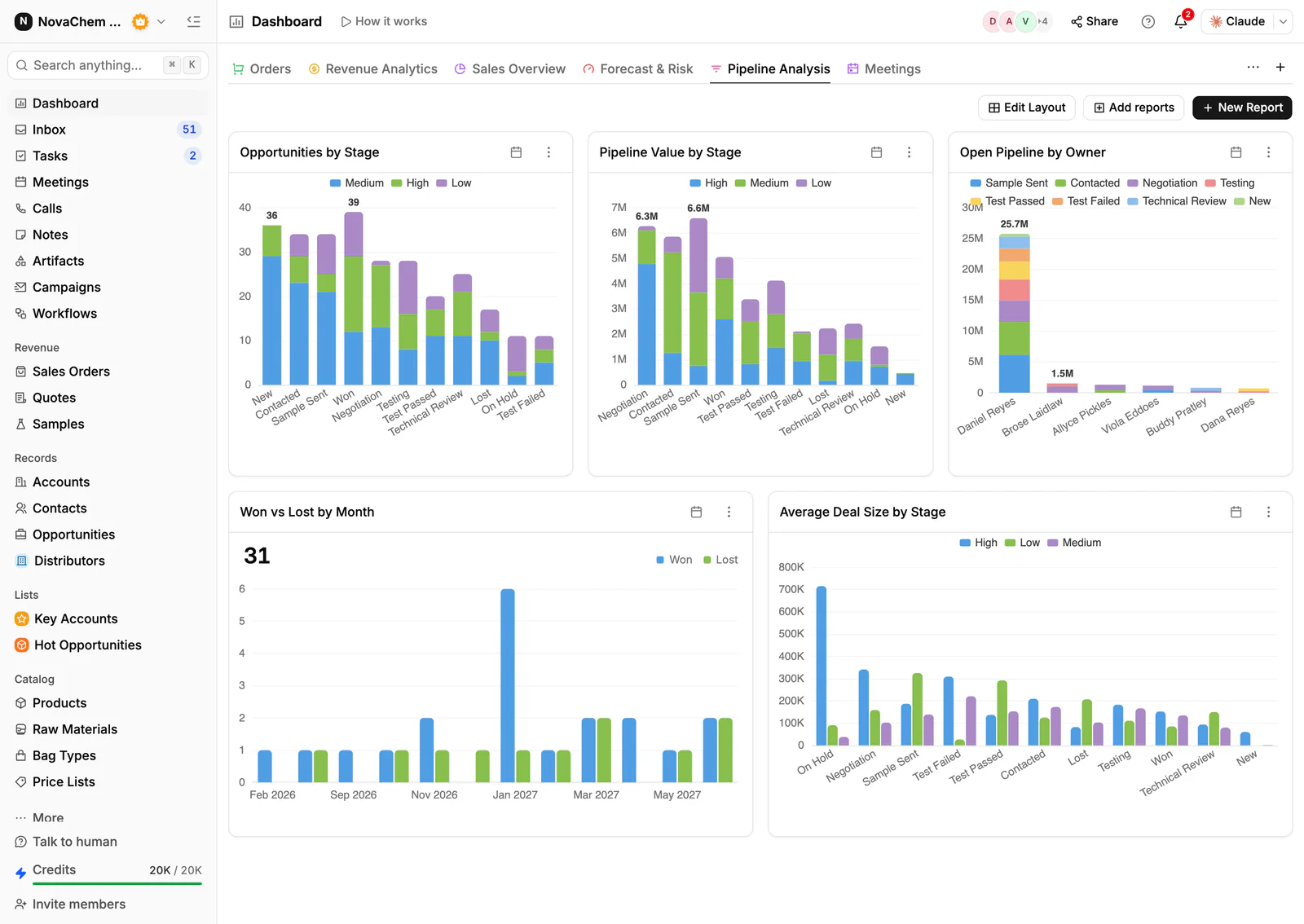
In PromptLab, a deal carries its account, contacts, value, stage, owner, tasks, emails, meetings and quotes. You can keep your score in a custom number field, put the next step's date in the deal's next follow-up date, and use lists and views to show each rep their deals in order. Reports on pipeline and revenue show value by stage and where deals move.
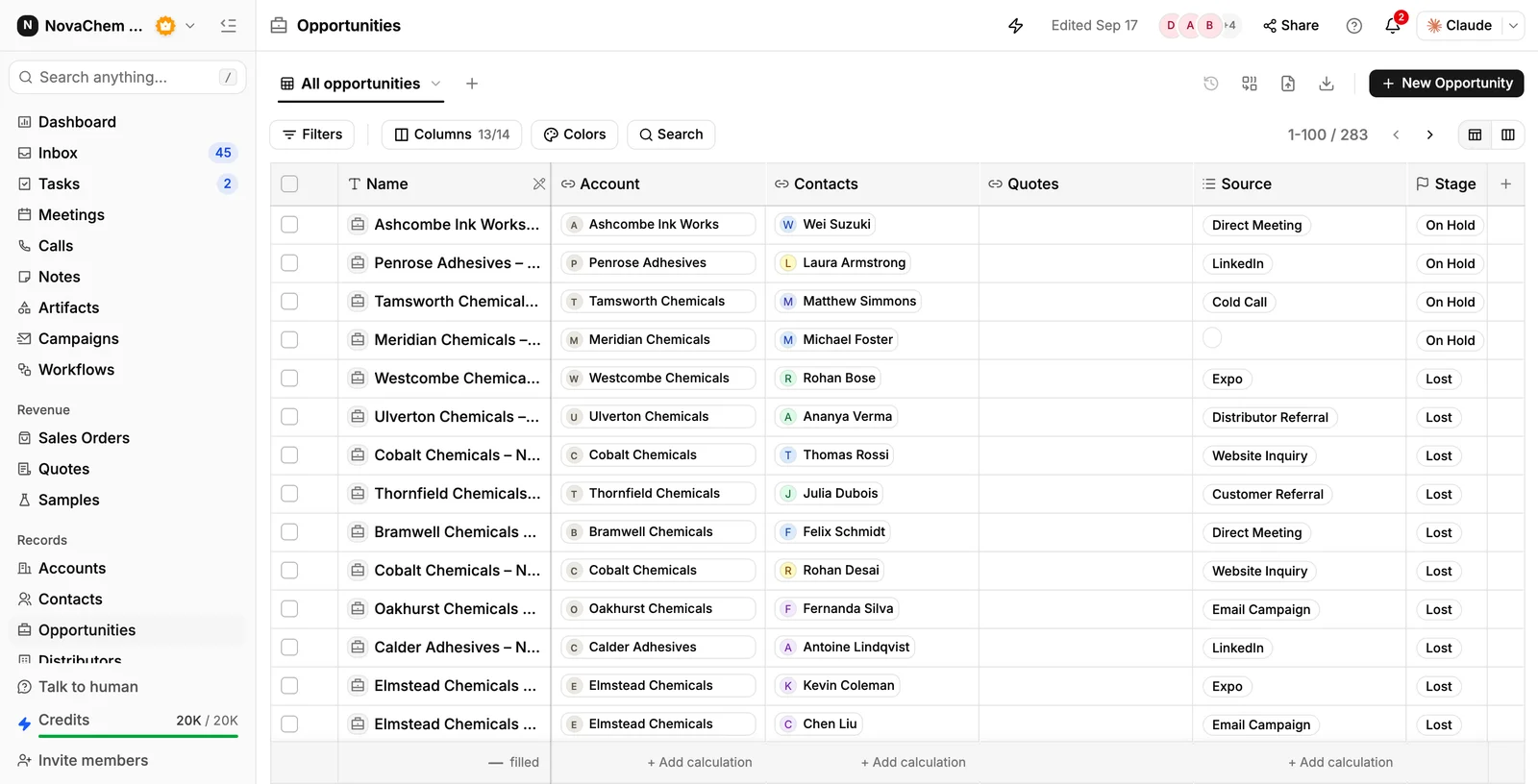
Tasks are the engine of the routine. A task has an owner and a due date, and meeting action items become tasks, so a next step agreed on a call goes straight onto the list. The Opportunities and Tasks references explain the screens.
Frequently asked questions
How do I prioritise deals in a sales pipeline?
Score each open deal on value, stage, recent buyer engagement and whether a dated next step exists. Work the highest scores first each day, and give any deal without a next step one before the end of the week.
Should I prioritise by deal size or by stage?
Use both. A large deal early in the funnel can matter less this week than a smaller deal with a quote out. A score that combines them shows the difference.
How many deals should a rep have open?
It depends on the length of your cycle and the complexity of the product. A useful test is whether the rep can name the next step of every deal without looking. If not, there are too many, or too many dead ones.
What do I do with deals that never score high?
Give them a closing message that asks for a decision, and then record a loss reason if there is no answer. Keeping them open only makes the pipeline look bigger than it is.
Can a team share the same scoring?
Yes, and it should. Agree the points in a team meeting, write them down, and review them every quarter against the deals you won and lost.