



















How to run a sales kickoff
How to run a sales kickoff for a B2B product team: set goals, build the agenda, mix training with planning, and follow up so the year starts with a clear plan.
 By the PromptLab team31 October 20265 min read
To run a sales kickoff, set two or three goals for the meeting, build a short agenda that mixes strategy, product, skills and planning, give every rep a clear plan for the year before they leave, and follow up within a month. A kickoff works when people go home knowing the targets, the focus accounts and what changes.
This guide is for sales leaders at product companies, with teams from five to fifty. The kickoff usually sits at the start of the year or the start of a half. Between kickoffs, the weekly routine is in how to run a weekly sales meeting.
Set the goals of the kickoff
Decide what should be different when the room empties. Good goals are specific:
- Everyone can state the company's targets and priorities for the year
- Every rep has a written plan for their top accounts
- The team knows the new products, prices and processes
- The team has practised one or two skills that matter, such as handling price objections
If a session does not serve a goal, cut it. A kickoff that tries to cover everything covers nothing well.
Prepare from the data
Spend the weeks before looking at last year's numbers by rep, product, region and customer group. Useful questions:
- Which products and accounts grew, and which fell?
- Where did deals stall, and why were they lost?
- Which customers reorder, and which have gone quiet?
- What did the best reps do differently?
Bring the answers to the room, as charts and a few plain sentences. The team believes a story built from their own results more than a speech. If you also set targets, see how to set sales targets before the meeting, so numbers are agreed and not announced.
Build the agenda
A one- or two-day kickoff can follow this shape:
| Block | Purpose |
|---|---|
| Last year in review | Honest results, wins and what was learned |
| Strategy and targets | Where the company is going and what each team owns |
| Product and market | New products, prices, competitors and customer needs |
| Skills workshop | Practice, not slides: role-plays, call reviews |
| Account planning | Each rep plans their top accounts, with a peer |
| Customer voice | A short session on what customers say, from notes and loss reasons |
| Close | Commitments, owners and dates |
Keep sessions to 45 minutes or less, and put the practical blocks in the morning, when people are fresh. Ask one or two customers or a technical colleague to speak if you can. Their stories do more than any slide.
Run the account planning session
Give each rep a one-page template to fill in during the meeting:
- 1
List the top accounts
Pick the accounts that matter most for the year, by current revenue and by potential.
- 2
Write the goal for each
A number or an outcome: reorder more often, add a second product line, win back volume from a competitor.
- 3
Name the first three actions
With dates. For example, a visit in February, a sample in March, a quote in April.
- 4
Share and test the plan
Each rep explains the plan to a colleague or the manager, who challenges it.
For the visit part of the plan, see how to plan customer visits.
Keep the energy useful
Avoid long monologues, packed schedules and prizes that reward only the top performer. Include the newest rep and the quietest voice. Run the social side lightly, a dinner or a short activity, because the relationships help the team share what works.
Remote or spread-out teams can hold a shorter version online. Record the sessions so those who were away can watch them, and give the same plan template to everyone.
Avoid the common mistakes
A few traps catch many kickoffs:
- Too many slides. If a session is a presentation, send it as a document instead and use the time for discussion.
- Targets announced, not agreed. People commit to numbers they helped shape.
- No time for the field. Invite reps to say what they hear from customers, and write it down. Their notes should feed the product and pricing plan.
- Nothing after. If there is no follow-up date on the calendar before the room empties, the plan will not survive the first busy month.
Follow up so it sticks
A kickoff fades unless you follow it. Within a week, send a summary of decisions and each person's commitments. Within a month, check the first actions from the account plans. Then bring the plans into your weekly meetings and pipeline reviews. At the next quarter, ask what was used and what was not, and change the next kickoff.
How PromptLab helps
Use the CRM for the review and for the plan. Build a dashboard of pipeline by stage and revenue by product to show last year, and run the pipeline analysis in the room. Share a dashboard or report by a read-only link, with an optional expiry, if you want to send it to the team ahead of time.
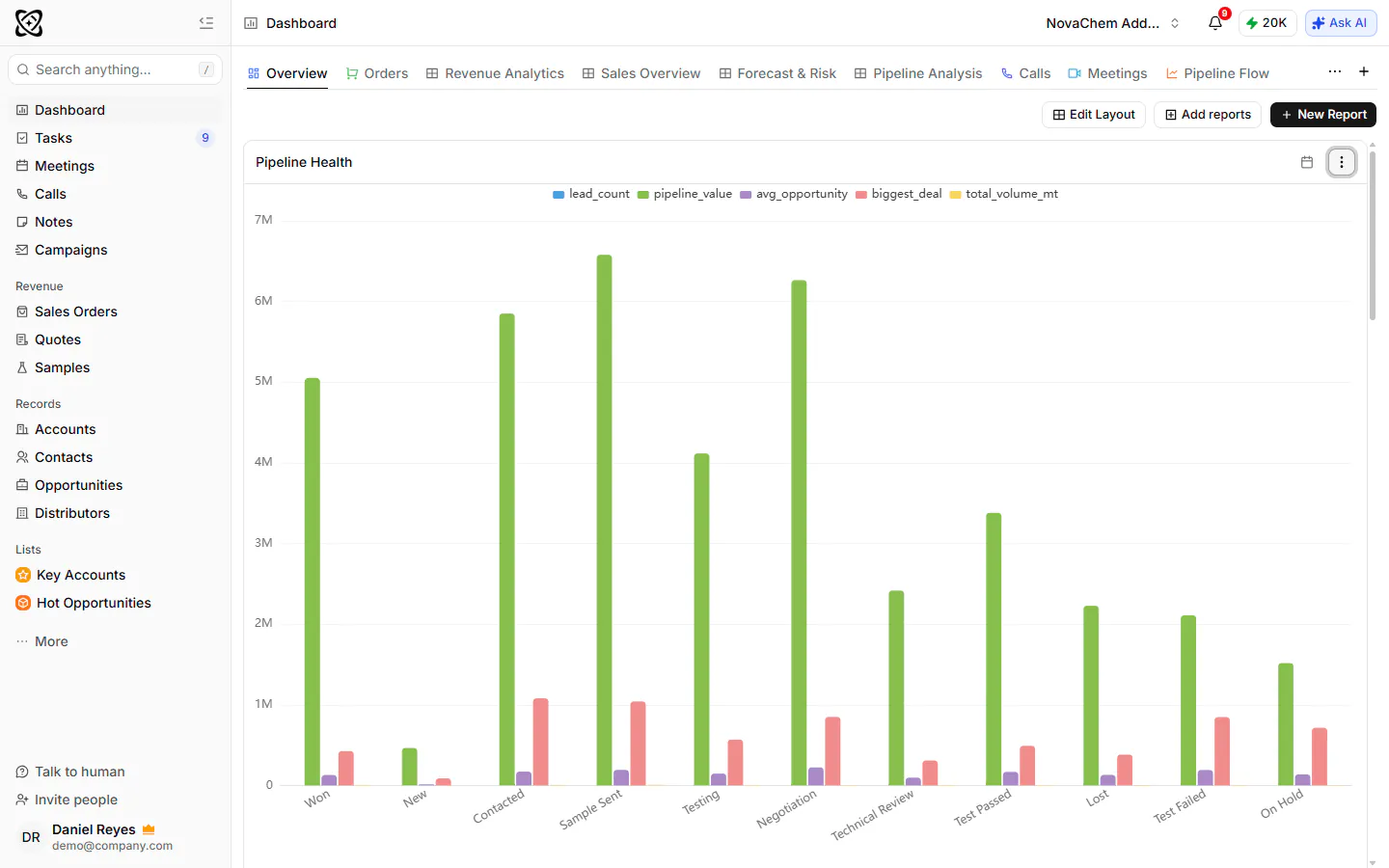
After the meeting, each rep's account-plan actions become tasks on the account with due dates, and the single deal pipeline shows whether the plan is moving. See the Dashboards reference.
Frequently asked questions
How long should a sales kickoff last?
One to two days suits most product sales teams. A single focused day works for small teams. Longer meetings rarely add value and cost a lot in travel and time away from customers.
When should we hold a sales kickoff?
Many companies hold it at the start of the year or of a new sales half, once last year's figures are final and the targets are agreed. Avoid peak ordering season.
What should be on a sales kickoff agenda?
A review of last year, the strategy and targets, product and market updates, a skills workshop, account planning and a close with commitments. Keep sessions short and practical.
How do you measure whether a kickoff worked?
Check whether each rep has a written account plan, whether the first actions happened, and whether the team can state the priorities. Then watch pipeline and orders over the next quarter.
How do we run a kickoff for a remote team?
Shorten it, run it in blocks over a few days, record the sessions and use breakout rooms for account planning. Send everyone the same plan template and set a follow-up date.