



















How to sell to procurement teams
How to sell to procurement teams when you supply products: understand what buyers need, pass supplier approval, answer RFQs, prepare documents and negotiate.
 By the PromptLab team16 October 20267 min read
To sell to a procurement team, treat the buyer as a professional with a checklist: show that your product meets the specification, that your company can be approved as a supplier and that your price and terms hold up against alternatives. Make every step easy to verify, give the documents before they are asked for and keep your promises on dates.
Procurement buyers are measured on cost, risk and reliability, not on liking your product. They compare suppliers, follow a process and answer to colleagues in production and finance. This guide explains how that process works for companies that sell chemicals, packaging, ingredients and industrial supplies, and how to get through it.
How procurement buyers think
A procurement buyer wants three things: a product that meets the spec, a supplier that will not cause trouble and a total cost that beats the alternatives. Price matters, but so do lead time, minimum order, payment terms and the risk of a supply failure.
They also do not decide alone. The user in production or the lab says whether the product works. Quality checks the paperwork. Finance checks terms. The buyer runs the process and makes sure the rules were followed. Your job is to help each of those people say yes, and to give the buyer what they need to defend the choice.
Our guide to qualifying B2B leads covers the questions to ask early, including who tests, who approves and who buys.
Step 1: Find out who is involved
Ask at the start, not after the quote. Useful questions:
- Who will test the product, and who signs off the result?
- Does your company have an approved-supplier list, and what is needed to join it?
- Is there a minimum number of quotes the buyer must collect?
- When is the decision due, and what drives the date?
Say a packaging buyer tells you three quotes are required and the plant manager must approve a sample. Now you know your quote will be compared and who to send the sample to. Write the answers on the account, so the next person on your team does not ask again.
Step 2: Get through supplier approval
Many procurement teams keep an approved-supplier list. To join it, you may be asked for a company profile, bank details, insurance, quality certificates, safety data sheets and sometimes an audit or a questionnaire. The exact list varies, so ask for the requirements early.
Prepare a standing pack you can send within a day:
Supplier approval pack
Approval can take weeks. Start it as soon as there is real interest, in parallel with the sample, not after it.
Step 3: Respond to RFQs properly
Procurement often works through a request for quotation. An RFQ asks several suppliers for a price on the same specification, so the buyer can compare. If you want a refresher, read what an RFQ is.
Answer it as a comparison, not a sales letter:
- Reply on time. A late quote is often not considered.
- Answer exactly what was asked. Same product, same quantity, same delivery point, same units.
- State the terms clearly: price per unit, minimum order, lead time, payment terms, delivery terms and how long the price is valid.
- Attach the documents the RFQ lists.
- Say what you cannot meet. If you cannot supply the full volume, say so and offer an alternative.
Our guide to responding to an RFQ walks through this in detail, and the RFQ response email templates help with wording.
Step 4: Make your quote easy to compare
Buyers put your quote next to two or three others in a table. Anything unclear costs you. Use the same units as the RFQ. Show the unit price and the total. List what is included and what is not, such as freight, packaging or testing.
If your offer is better in a way that does not show on the price line, say it in one sentence: a shorter lead time, a local warehouse, a certificate the others lack. Do not hide extra charges that appear later, since that destroys trust.
Step 5: Win the technical side
Procurement will not choose a product that fails in production. A sample, tested by the people who will use it, protects both sides. Send a sample that matches the batch you would supply, with its data sheet, and agree the test criteria before it ships.
Follow up on the test result as you would for any sample. See how to track product samples for the routine. When the user is on your side, the buyer has an internal reason to choose you, not just a price.
Step 6: Negotiate calmly
Procurement teams negotiate as part of the job, so expect it. A few principles:
- Know your floor before you start. Decide the lowest price and the terms you can accept.
- Trade, don't give. If they want a lower price, ask for something back: a larger volume, a longer contract, faster payment.
- Negotiate the whole package. Price is one lever. Payment terms, delivery schedule, minimum order and contract length are others.
- Stay specific. "We can reach that price at 10 tonnes a quarter" is better than "we'll see what we can do".
- Put the result in writing. Confirm the agreed terms in a quote or sales order, with a validity date.
Say a buyer asks for a lower price on a resin. You hold the unit price and offer a quarterly volume commitment with a slightly better rate at a higher tier. The buyer gets a saving they can report, and you get a planned volume. For pushback on price specifically, read how to handle price objections.
Step 7: Keep the relationship after the order
Winning the first order only gets you onto the list. Buyers remember whether you shipped on time, whether the documents matched and whether problems were solved quickly. Confirm the delivery date, send the certificate with the shipment and follow up after the first delivery.
Then review the account on a rhythm and watch for renewals and repricing rounds. Customer price lists help you keep agreed prices consistent across quotes.
Mistakes to avoid
- Going around the buyer. Do not skip procurement to sell to the user. Involve both.
- Sending documents late. Missing paperwork is the commonest reason for delay.
- Quoting something different from the RFQ. It makes comparison hard and looks like avoidance.
- Discounting before being asked. Hold your price until you know what you are up against.
- Vague promises on dates. Procurement remembers a missed delivery longer than a good price.
How PromptLab helps
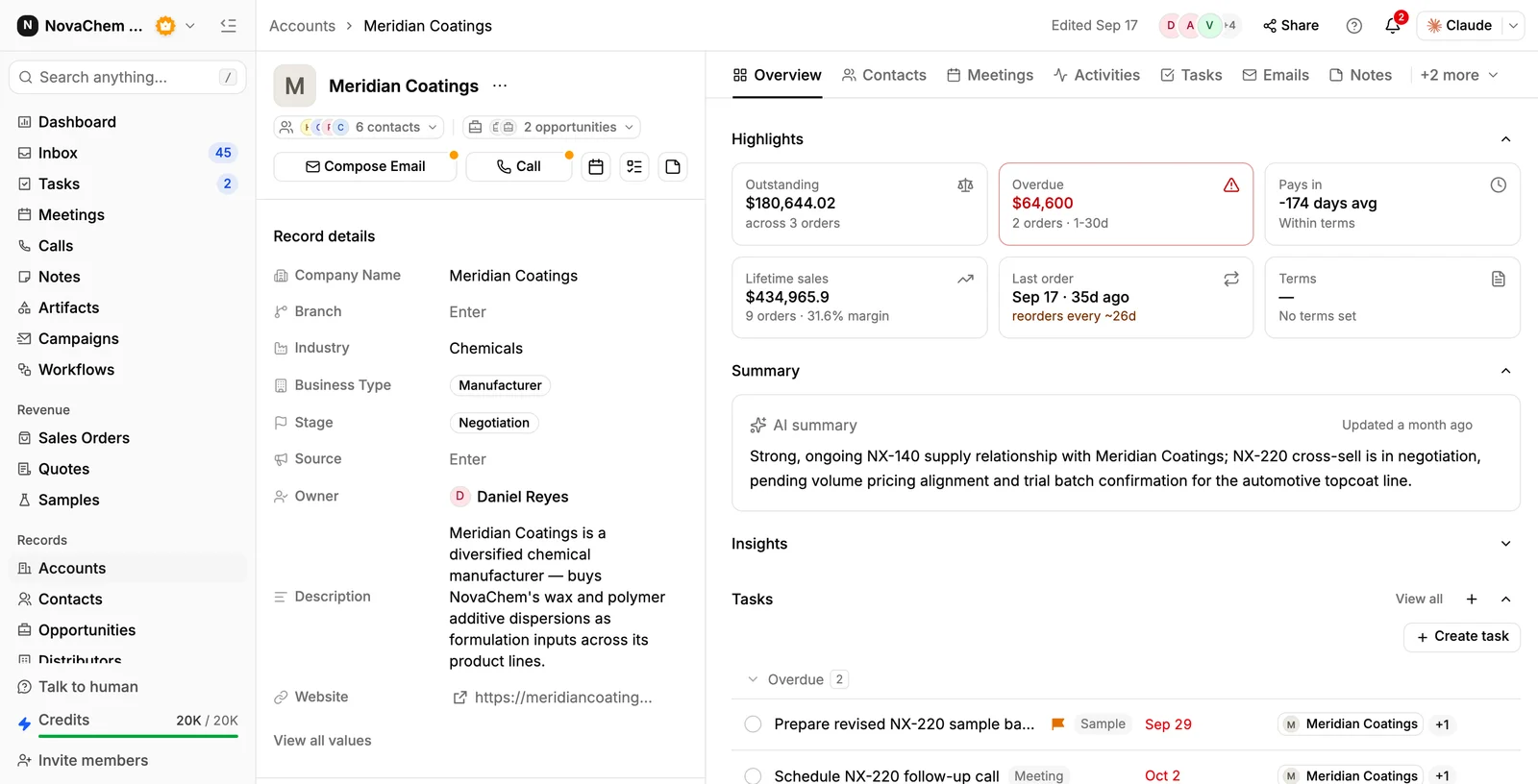
Selling to procurement involves many people, documents and dates. In PromptLab the account holds the contacts, so you can record who tests, who approves and who buys. Accounts have files and documents, so your supplier approval pack and data sheets sit where the whole team can find them.
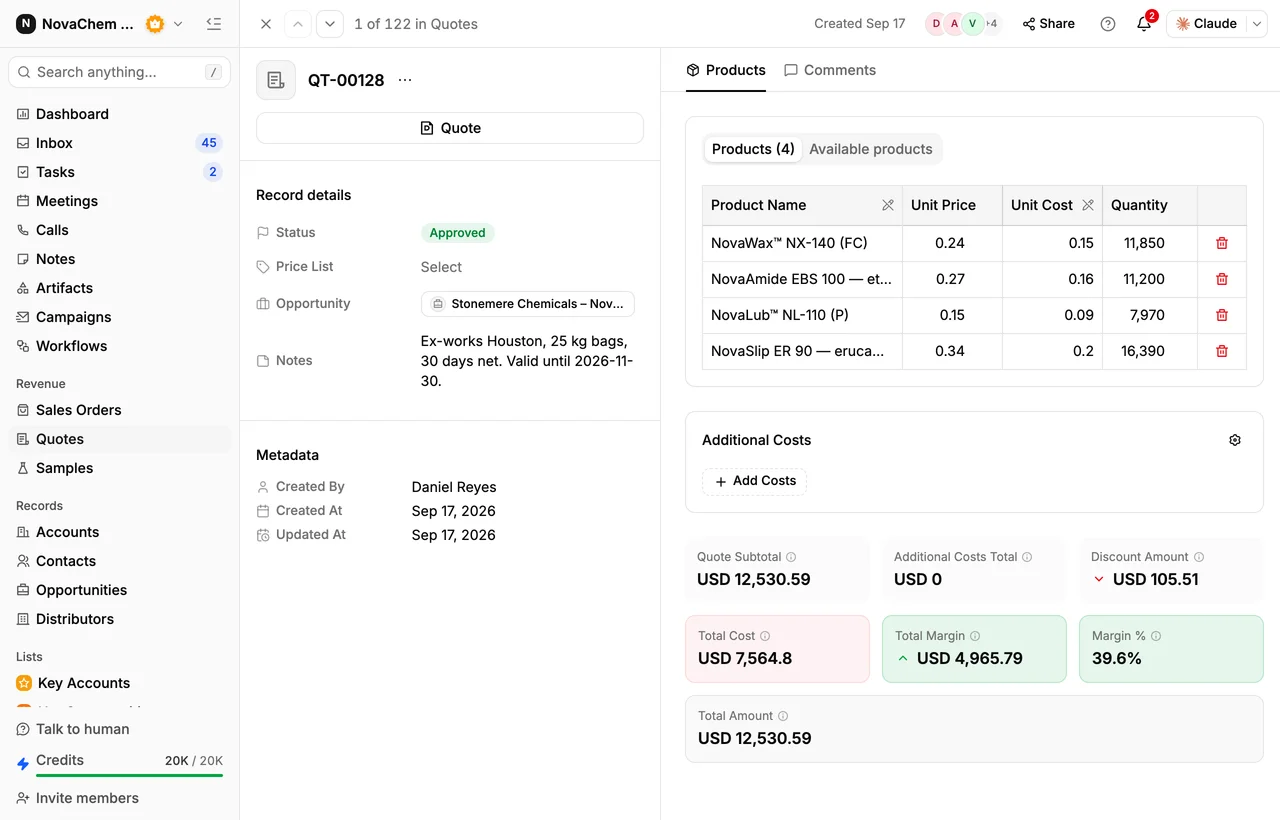
A quote linked to the customer's price list takes that list's prices. Quotes move through statuses and attach to the deal, and a workflow can create a task or post to Slack when a quote changes status, so a deadline does not slip. Samples are tracked from request to feedback, and sales orders and order history stay on the account.
Frequently asked questions
What do procurement teams look for in a supplier?
They look for a product that meets the specification, a fair total cost, reliable delivery and low risk. Paperwork matters too: certificates, data sheets and clear terms.
How do I become an approved supplier?
Ask the buyer what the process requires. It often includes a company profile, certificates, safety data and a questionnaire, and sometimes an audit. Keep a standing pack ready so you can respond within a day.
How should I respond to an RFQ?
Reply on time, answer exactly what was asked, state price, minimum order, lead time and terms, and attach the requested documents. Use the same units as the RFQ so the buyer can compare.
Should I lower my price when procurement pushes back?
Not straight away. Find out what they are comparing against, then trade: offer a better price for a larger volume, a longer contract or faster payment, rather than a plain discount.
Do I sell to procurement or to the end user?
Both. The end user decides whether the product works and procurement runs the process and the price. Winning only one leaves the other able to stop the deal.