



















How to shorten the B2B sales cycle
Cut the days between first contact and a signed order: find where deals wait, fix samples, quotes and follow-ups, and agree the next step on every call.
 By the PromptLab team29 October 20265 min read
To shorten a B2B sales cycle, find the places where deals wait, then remove the waiting. In product sales the waits are rarely the buyer's decision. They are the sample that shipped late, the quote that took four days, the follow-up nobody sent and the call with no agreed next step. Fix those and the same deals close sooner.
This guide shows how to measure your cycle by stage, the seven delays that cost the most time, and a simple routine that keeps deals moving. If you need the definition first, read what a sales cycle is.
Measure the cycle by stage first
You cannot shorten what you have not split up. Take your last ten won deals and write down the date each one entered each stage: first contact, qualified, sample sent, quote sent, negotiation, order.
Say a distributor's ten won deals took 60 days on average. When you split them, you find 8 days to qualify, 21 waiting on sample feedback, 6 to produce a quote, 18 in negotiation and 7 from approval to order. The sample wait is the biggest block, so that is where you start. Without the split you would have told the team to "close faster".
Do the same for lost deals. Deals that die slowly cost you rep time every week, so note the stage where each one stalled and its loss reason.
Seven delays that stretch a product sale
- 1
Slow first response
A buyer who asks for a price and waits two days has already asked your competitor. Reply the same day, even if only to say when the full answer will come. A shared inbox helps, because anyone on the team can see the message.
- 2
Weak qualification
Deals with no budget, no volume or no decision-maker clog the pipeline and make the average longer. Ask about volume, timing and who signs before you ship anything.
- 3
Samples with no end date
A sample sent without a test date can sit on a shelf for months. When it ships, agree when the lab will test it and what a pass looks like, then put that date in a task. See how to track product samples.
- 4
Slow quotes
If a quote takes days because a rep hunts for prices, the buyer's interest cools. Keep customer price lists current and build the quote from products and the list. How to speed up quote to order goes through it.
- 5
No next step on the call
End every call with a dated next step both sides agreed, such as "you test on the 14th, I call on the 16th". A call that ends with "let's stay in touch" adds a week to the cycle.
- 6
Missing people
Procurement, the lab and the plant manager each have a veto. If you meet them only after the quote, the deal restarts. Ask early who else has to say yes, and get them into the conversation.
- 7
Silence after the quote
Many quotes are not rejected. They are forgotten. Follow up on a schedule, not when you remember. The quote follow-up email templates give you wording for each day.
Fix them in the order of cost. Start with the longest stage in your own numbers, change one habit there, and measure again after a month. Changing everything at once makes it impossible to see what worked.
Set a target for each stage
Once you know your numbers, set a limit per stage, such as "no deal waits more than 10 days in sample sent without a task". These limits are the rules your team reviews each week. They are easier to keep than a single goal such as "shorten the cycle by a month".
Know when a long cycle is normal
Some products take long because the buyer must qualify them. A new raw material may need a technical review, a trial batch and a supplier audit. You cannot skip those, and you should not try. Your job is to make sure the time is spent on the buyer's checks, and not on your own delays.
Compare cycles within a type of deal. A repeat order from a known customer should take days. A first order from a new account, with a spec to approve, takes longer. Mixing them gives you an average that is true of neither.
How PromptLab helps
PromptLab keeps the pieces of a sale in one place. The deal sits on one pipeline with your stages and carries its quotes, the account holds its contacts, files, emails and meetings, and samples and sales orders are tracked in the same CRM. A rep can see quickly what the buyer is waiting for.
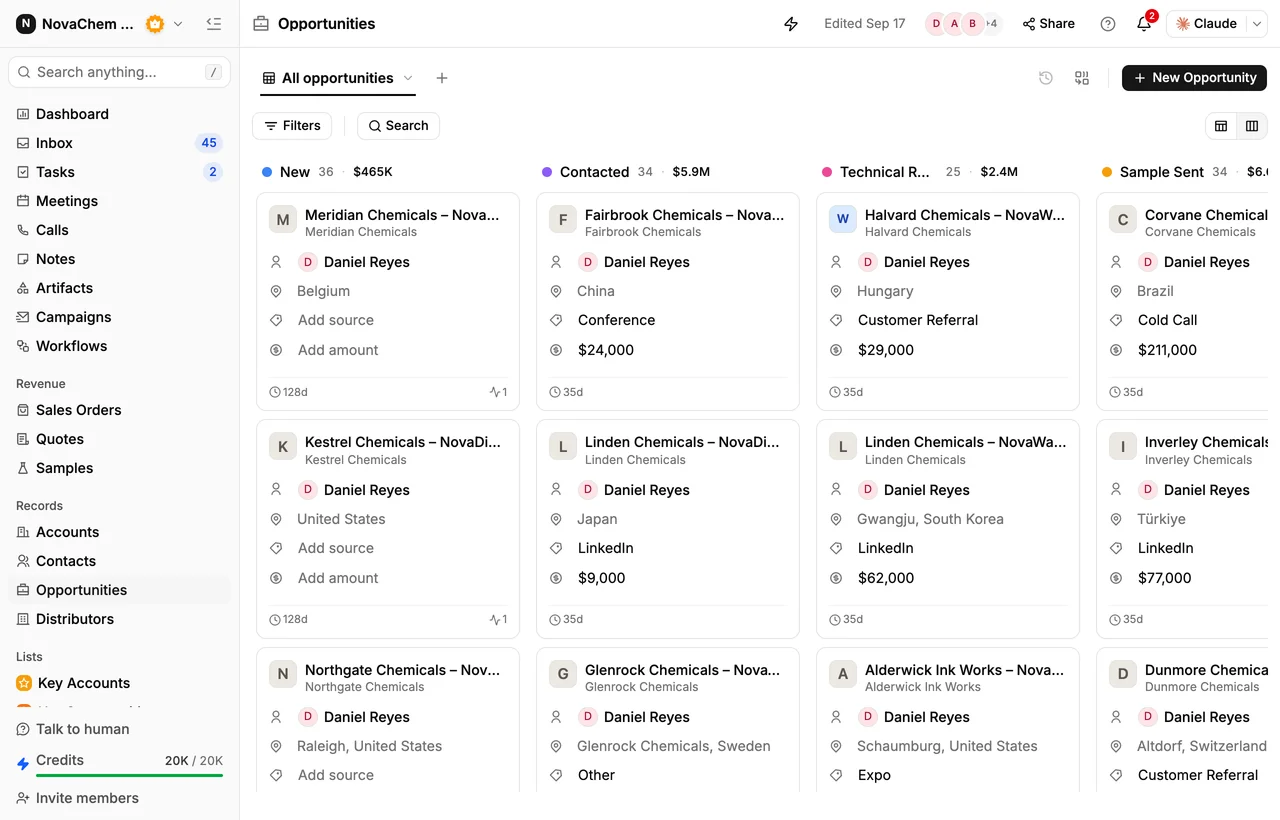
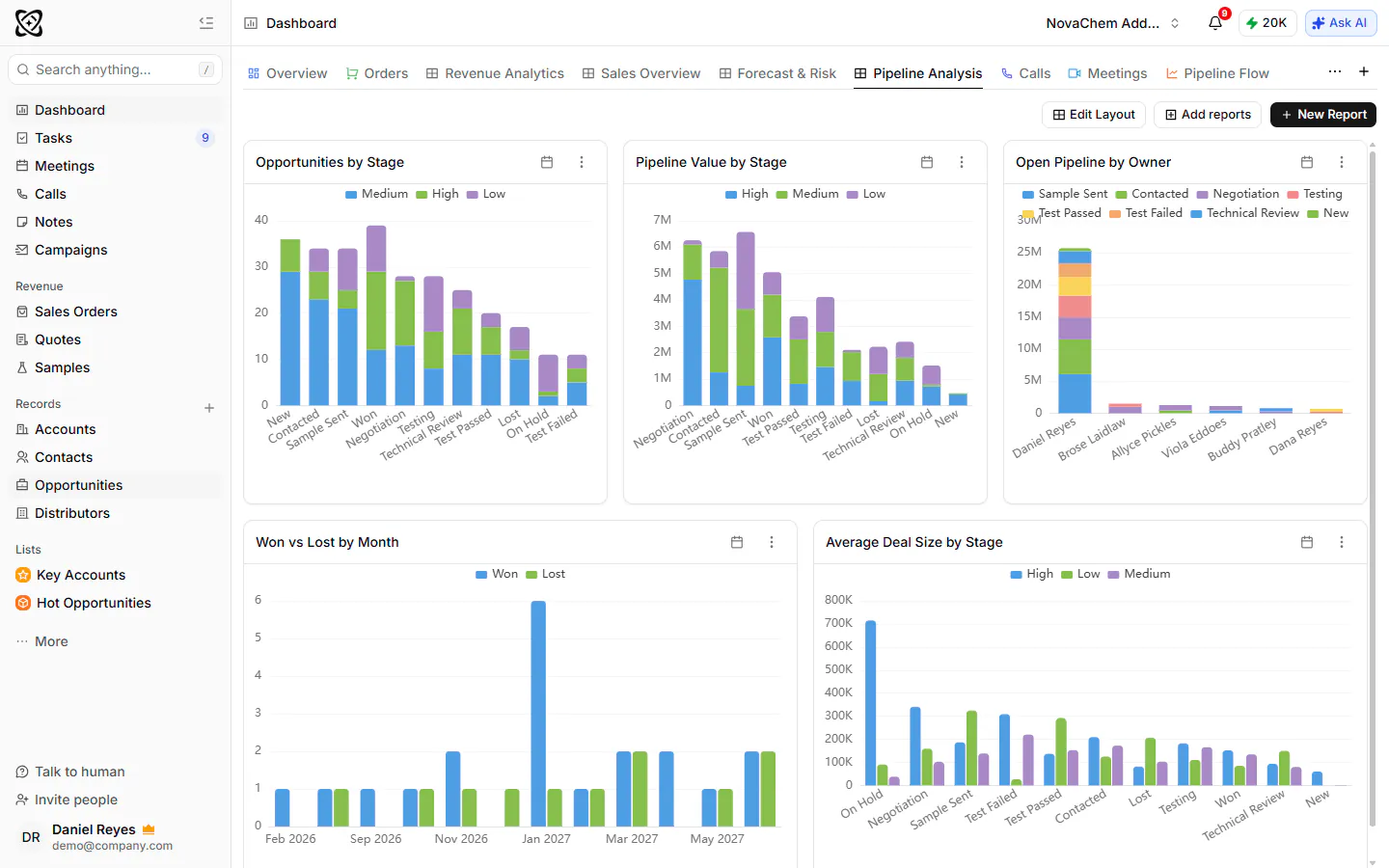
Workflows take care of the nudges. For example, when a sample changes status or a deal changes stage, a workflow can create a task or post to Slack. Reports and dashboards on pipeline and revenue show where deals pile up.
Meeting recording gives you AI summaries and follow-up email drafts, and action items become CRM tasks, so the next step agreed on the call does not depend on someone's notes. See the Workflows reference.
Frequently asked questions
What is a normal B2B sales cycle length?
It depends on the product, the order size and whether the buyer must approve a spec. Repeat orders can close in days, while a first order for a technical product can take months. Compare your own cycles by deal type, not against a general figure.
What slows down a B2B sales cycle the most?
For product sellers it is usually waiting: for sample feedback, for a quote, for a reply or for a second approver. Measure the days each stage takes and the longest one is your answer.
Can I shorten the cycle without discounting?
Yes. Most delays come from process, not price. Faster replies, dated next steps, quotes built from current price lists and scheduled follow-ups all remove days without touching the margin.
How do I stop deals stalling after the quote?
Agree the decision date when you send the quote, put a follow-up task on that date and send a short message each time. A deal that stays silent for weeks needs a clear closing question, or a recorded loss reason.
Should I shorten the cycle for every deal?
No. Large, technical first orders need the buyer's tests, and rushing them loses trust. Remove your own delays and leave the buyer's checks alone.