





What is a deal stage?
A deal stage is a step a deal passes through on its way to a sale. See example stages for product sales and how to define your own.
 By the PromptLab team6 October 20263 min read
Definition
Deal stage
A deal stage is one step in your sales process, such as "sample sent" or "quote sent". Every deal sits in exactly one stage, and moves to the next when something specific happens.
Stages turn a vague feeling ("this one looks good") into a position you can see. Put all your deals in their stages and you have a sales pipeline.
Why deal stages matter
Stages tell everyone what has happened and what comes next. A rep knows what to do with each deal. A manager can see where deals pile up. Reports can count how many deals move from one stage to the next.
Without clear stages, one rep's "proposal" is another's "early chat", and the numbers mean nothing.
How to define deal stages
Good stages follow what the buyer does, not what you do. Each one should have a clear exit rule: the event that moves the deal on.
- Keep to five to eight stages. More than that and reps stop updating them.
- Write the exit rule for each stage in one line.
- Add "closed won" and "closed lost" at the end.
- Review them once a year and change only what is not working.
Example stages for a product seller
These suit a seller of chemicals, coatings or plastics. Adjust them to your own process.
| Stage | A deal is here when |
|---|---|
| New enquiry | A buyer has asked about a product |
| Qualified | You know the use, the volume and who decides |
| Sample sent | A sample has shipped |
| Sample approved | The buyer confirms the test passed |
| Quote sent | A quote is with the buyer |
| Negotiation | Price, terms or volume are being discussed |
| Closed won | A sales order is confirmed |
| Closed lost | The buyer says no, or goes silent for good |
An example of stages at work
This example is made up.
A plastics distributor looks at last quarter. Thirty deals reached "sample sent". Twenty reached "sample approved". Only eight reached "quote sent".
The drop is between approval and quote: twelve approved samples never got a price. Reps are slow to send quotes after a good test. The fix is a rule that a quote goes out within one working day of approval, and a task that reminds the rep.
Stages and probability
Many teams give each stage a chance of closing, based on past results. That is how a stage-weighted sales forecast is built from a pipeline. Keep the percentages honest: use what actually happened, not what you hope for.
Related terms
- A sales pipeline is made of stages.
- Win rate can be measured stage by stage.
- Sample management explains the stages in the middle of a product sale.
- Lead scoring helps decide which leads enter the first stage.
How PromptLab handles it
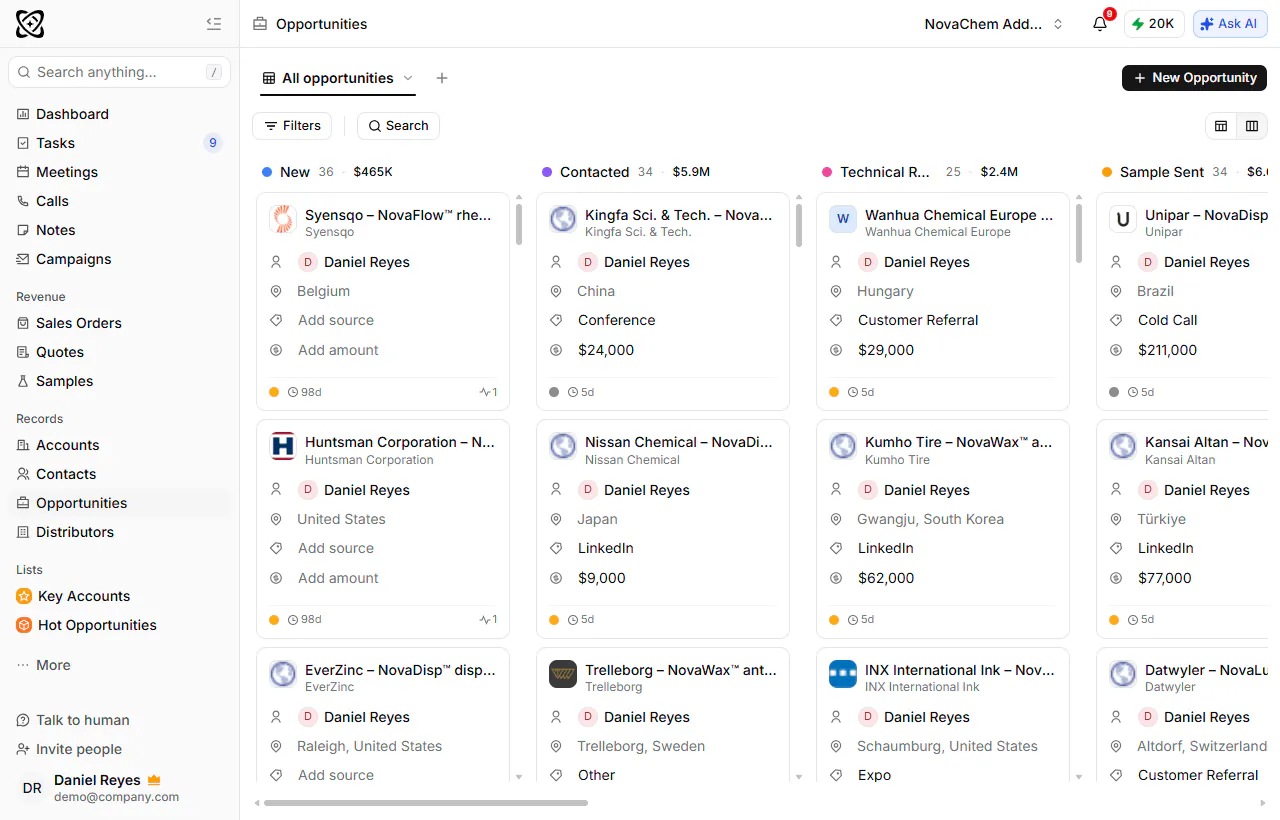
PromptLab gives you deal pipelines on every plan, shown as a board with the deals in each stage. You can build the stages around your own process, such as samples and quotes. Workflow automation can act on a change: when a deal changes stage, create a task or post to Slack.
Frequently asked questions
How many deal stages should I have?
Five to eight, counting won and lost, suits most product sellers. With fewer, you can't see where deals stall.
What is the difference between a deal stage and a pipeline?
A stage is one step. A pipeline is the full set of stages, with the deals in them.
Can a deal go backwards?
Yes. A buyer may ask for a second sample after a quote. Allow it, but record why.
Can PromptLab do something when a deal changes stage?
Yes. With workflow automation you can, for example, create a task or post to Slack when a deal changes stage.