









How to write follow-up emails that get replies
Seven principles for B2B follow-up emails, with short examples for after a meeting, a sample, a quote and silence, written for teams that sell products.
 By the PromptLab team6 October 20266 min read
A follow-up email gets a reply when it is short, specific to the last conversation and ends with one easy question. Send it within a day, mention something the buyer actually said, and ask for one thing with a date attached. Everything else in this guide is detail on those three habits.
If you want ready-made wording, the template posts below give you copyable emails for each situation. This guide covers the principles behind them, so you can write your own when the situation does not fit a template.
The principles
- 1
Send it while the conversation is warm
Aim for the same day, and within 24 hours at the latest. A buyer who spoke to you this morning remembers the details. By next week you are one of five suppliers they spoke to.
- 2
Start with their words, not yours
Open with something they said: the lead time they need, the substrate they are coating, the line they are trying to fix. It proves you listened and it is the quickest way to stand out from a generic message.
- 3
Make one ask
One email, one question. "Can we agree a test run for the week of the 14th?" beats three options and a link to your catalogue. Each extra ask makes the reply harder to write, so keep to one.
- 4
Put the date in the ask
"Let me know" gets no reply. "Could you confirm by Thursday so I can book the lab slot?" gives them a reason and a deadline that is not artificial.
- 5
Add one useful thing
Attach or link the one document that moves the deal: the technical data sheet, the quote or the test result. Do not attach everything.
- 6
Keep it to five or six lines
A buyer reads it on a phone between calls. If it needs scrolling, cut it.
- 7
Plan the second and third follow-up before you send the first
Most deals need more than one nudge. Decide the gap (three or four working days is typical) and add a different angle each time, not the same message again.
Subject lines that get opened
Use the subject to say what the email is about, in the buyer's terms.
- "Your sample of [Product] shipped today"
- "Quote [number] for [Product]: question on volumes"
- "Next step on the [Application] trial"
- "Spec sheet you asked for"
Avoid "Just checking in", "Following up" on its own and anything in capitals. A subject that names the product and the next step is the one a busy buyer opens.
Examples for four common situations
These are short on purpose. For longer copyable versions, use the template posts.
After a meeting
Hi Maria, thanks for the time today. You mentioned the line is running at 40 metres a minute and the current film is curling on the edges. I have attached the data sheet for the one we discussed. Could we book a 20-minute call with your process engineer on Wednesday?
The email repeats one fact from the call, attaches one document and asks one question. More wording is in follow-up emails after a meeting.
After a sample ships
Hi Tom, your 5 kg sample left us today and the tracking number is below. It should reach you by Thursday. Once you have tried it, could you tell me by the 20th whether it passes your viscosity check? If it does, I will send the quote for the full pallet straight away.
The deadline is tied to the buyer's own process. See sample follow-up email templates and how to track product samples.
After a quote
Hi Priya, quote 1042 is attached: 12 pallets at the price we discussed, delivered by the 28th. Is there anything in the numbers you would like me to adjust before it goes to your purchasing team? If it helps, I can call them directly.
It invites objections early, which is better than silence. More options are in quote follow-up email templates and how to write a sales quote.
When they go quiet
Hi Karl, I have not heard back on the quote and I do not want to be a nuisance. Is this still a priority this quarter? If the timing has moved, tell me and I will check back in the spring instead.
Giving the buyer an easy way to say "not now" often brings a reply from people who were simply busy. The win-back email templates cover customers who stopped ordering altogether.
Changing the channel
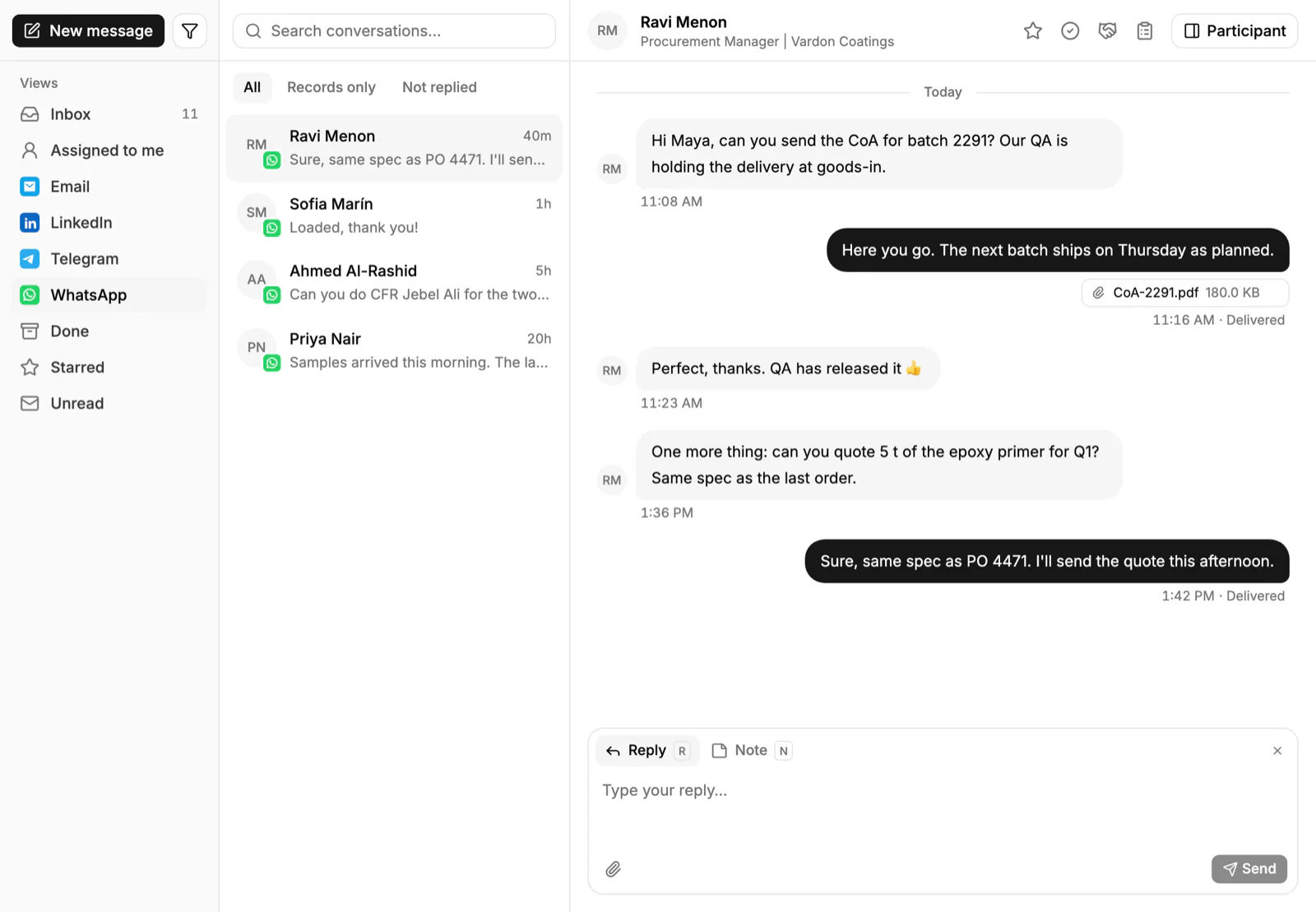
Not every buyer answers email. In many markets a WhatsApp message or a Telegram note gets read faster, and a one-line nudge there can unblock a stuck quote. Keep the same rules: short, specific, one ask. Use WhatsApp sales message templates as a starting point, and read how to sell on WhatsApp.
Checklist before you hit send
Follow-up email check
Mistakes to avoid
- Writing "Just following up" with nothing new in it.
- Sending the same message three times.
- Attaching a 20-page brochure when a one-page data sheet would do.
- Forgetting to log the email, so a colleague follows up the same buyer the same day.
How PromptLab helps
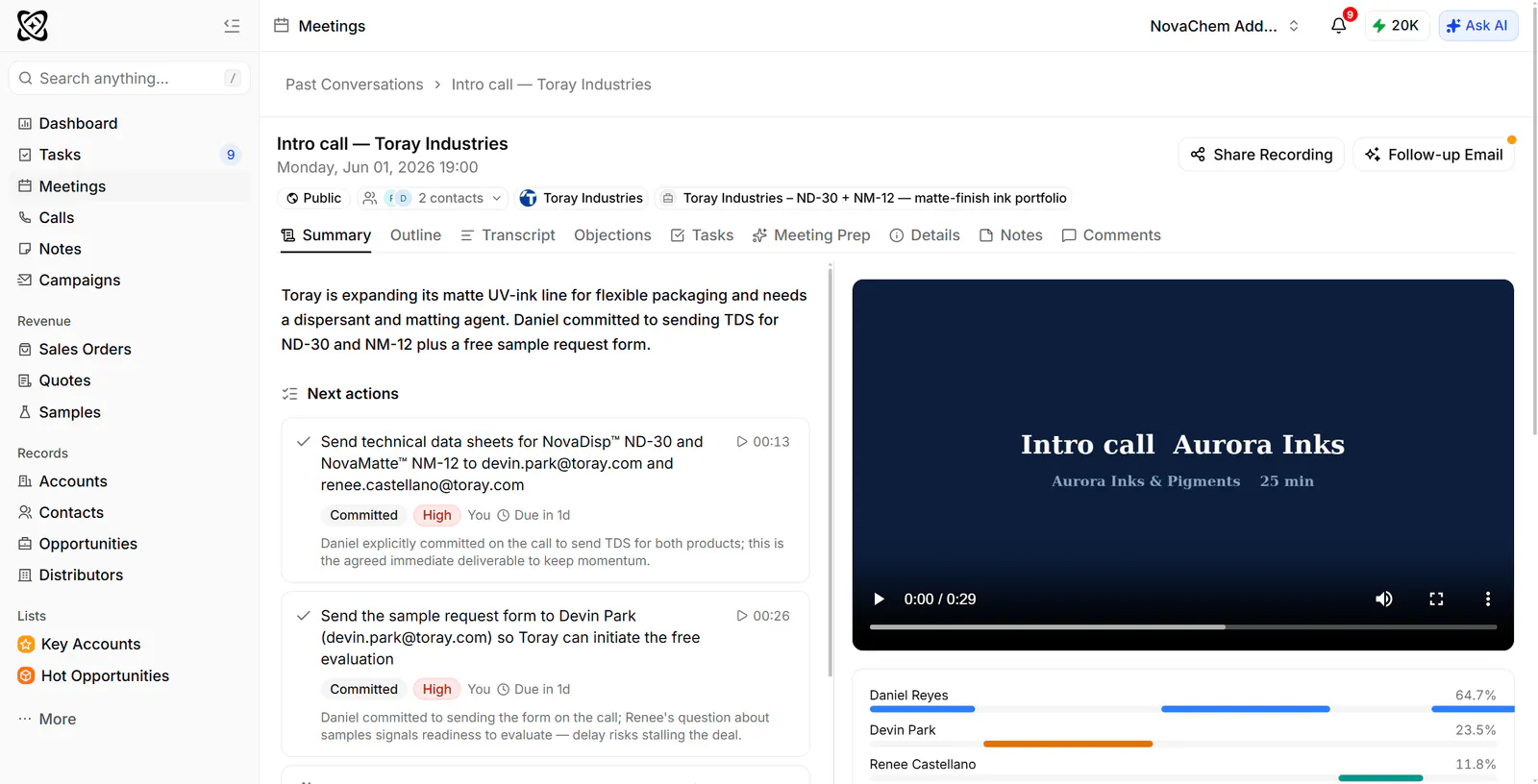
The slow part of follow-up is not the writing. It is remembering what was said and keeping track of who owes whom a reply. PromptLab records meetings in Google Meet, Zoom and Microsoft Teams, writes an AI summary and drafts the follow-up email from the call, so the "something they said" is already in front of you. Drafts are yours to edit before sending.
Email from Gmail, Outlook or your own mail server is captured onto the account, and the shared Inbox keeps email, WhatsApp and Telegram conversations in one place, so you can see whether the buyer already answered on another channel. A task can be created when a quote changes status, which means the third nudge is never forgotten.
Frequently asked questions
How soon should you send a follow-up email after a meeting?
Within 24 hours, and ideally the same day. The buyer still remembers the conversation and you can refer to specifics. A summary drafted from the recording makes this easy.
How many times should you follow up on a quote?
Plan for three or four touches over a few weeks, each with a different angle: a question on the numbers, a deadline tied to stock or price, then an easy way to say not now. Stop when the buyer asks you to, or says no.
What should a follow-up email say?
Refer to something the buyer said, attach the one document that matters, and ask a single question with a date. Keep it to five or six lines.
Is it better to follow up by email or WhatsApp?
Use the channel the buyer already uses to reply to you. Email suits quotes and documents. WhatsApp or Telegram suits quick confirmations. A shared Inbox keeps both in one place.
Can AI write my follow-up emails?
AI can draft a follow-up from a meeting recording and summary, which saves the first ten minutes. You should still read and edit it, because the value comes from the specific detail only you know.