



















How to respond to inbound leads fast
Respond to inbound B2B leads within minutes: route them to one owner, send a useful first reply, qualify on the call, and chase the ones who go quiet.
 By the PromptLab team6 November 20265 min read
To respond to inbound leads fast, make every enquiry land in one place, assign an owner the moment it arrives, send a short useful reply within minutes, and call the same day. Speed matters because a buyer who fills in a form or sends a message is usually asking two or three suppliers at once, and the first one to answer sensibly often gets the sample request.
This guide is for sales teams at manufacturers and distributors who get enquiries from a website form, email, WhatsApp or a trade show. It covers the process. For deciding which leads deserve most of your time, see how to qualify B2B leads.
Why speed wins in B2B
A buyer who needs 500 kg of a resin next month is not going to wait three days for you to reply. They have a deadline, a colleague asking for an update and a list of suppliers. If you answer in ten minutes with the right question, you look organised. If you answer on Thursday with "thanks for your interest", you look like a supplier that will be slow after the sale too.
Fast does not mean careless. A quick reply that asks the right question beats a slow reply with a brochure.
Step by step: build a fast response process
- 1
Gather every inbound channel in one place
List where leads arrive: website forms, a sales@ address, WhatsApp, Telegram, calls and trade show scans. If three people read three inboxes, leads fall between them. Bring them into one list or shared inbox so someone owns every one.
- 2
Decide who gets what
Write a routing rule: by region, by product line, by account size, or round-robin. A lead that sits "unassigned" is a lead nobody is chasing. Name a backup for holidays.
- 3
Set a response time you can keep
Choose a target such as "first reply within 15 minutes in working hours, same day at the latest". Pick one you can hit on a normal Tuesday. A promise you break is worse than a slower one you keep.
- 4
Send a first reply that moves the deal forward
Thank them in one line, confirm what you understood, and ask the one or two questions you need to quote: grade, volume, delivery location, timing. End with a proposed call time. Avoid a wall of company history.
- 5
Call the same day
If you have a phone number, call after you send the email. Say you've just written, ask the questions faster than email can, and book the next step. A five-minute call often replaces three emails.
- 6
Qualify and decide the next move
Use a short checklist: is there a real need, a buyer who can decide, a volume worth quoting and a timeline? Send a sample or a quote to the good ones, and a polite answer to the rest. The lead qualification checklist gives you the questions.
- 7
Follow up on the ones who go quiet
Set a follow-up task before you leave the lead. A second message two days later, and a third after a week, rescues many leads. See how to write follow-up emails.
A first reply you can adapt
Hi Anna, thanks for your enquiry about [product]. To send you the right quote, could you tell me the quantity per month, where it ships to and when you need the first delivery? If it's easier, I can call you at 2 pm today. Marek
It is short, it asks for what you need, and it offers a time. Change the questions to match your product.
Measure it
Pick two numbers and look at them every week: how long it takes to send the first reply, and how many leads got a reply the same day. Check them in your weekly sales meeting. The slowest leads usually show where your routing is broken, such as a form that emails an address nobody reads.
A worked example
Say a form arrives at 10:12 from a buyer at a plastics converter asking about HDPE granules. The routing rule sends it to the rep who covers that region, who gets a task. At 10:20 she replies with two questions and offers a call at noon. At noon she calls, learns the monthly volume and the first delivery date, and agrees to send a sample. She logs the sample on the deal and sets a follow-up for two days after it ships. The buyer had answered another supplier's enquiry by Thursday, but by then had a sample on the way from her.
How PromptLab helps
PromptLab web forms work on Contacts, Accounts or Opportunities. You can embed a form on your site, host it as a page, or print a QR code for a trade show stand. Each submission creates the record with a note of the answers, and it can add the person to a campaign. The shared Inbox holds email, WhatsApp (your WhatsApp Business number) and Telegram (your company's own bot, where the buyer messages first), so enquiries from different channels are in one list.
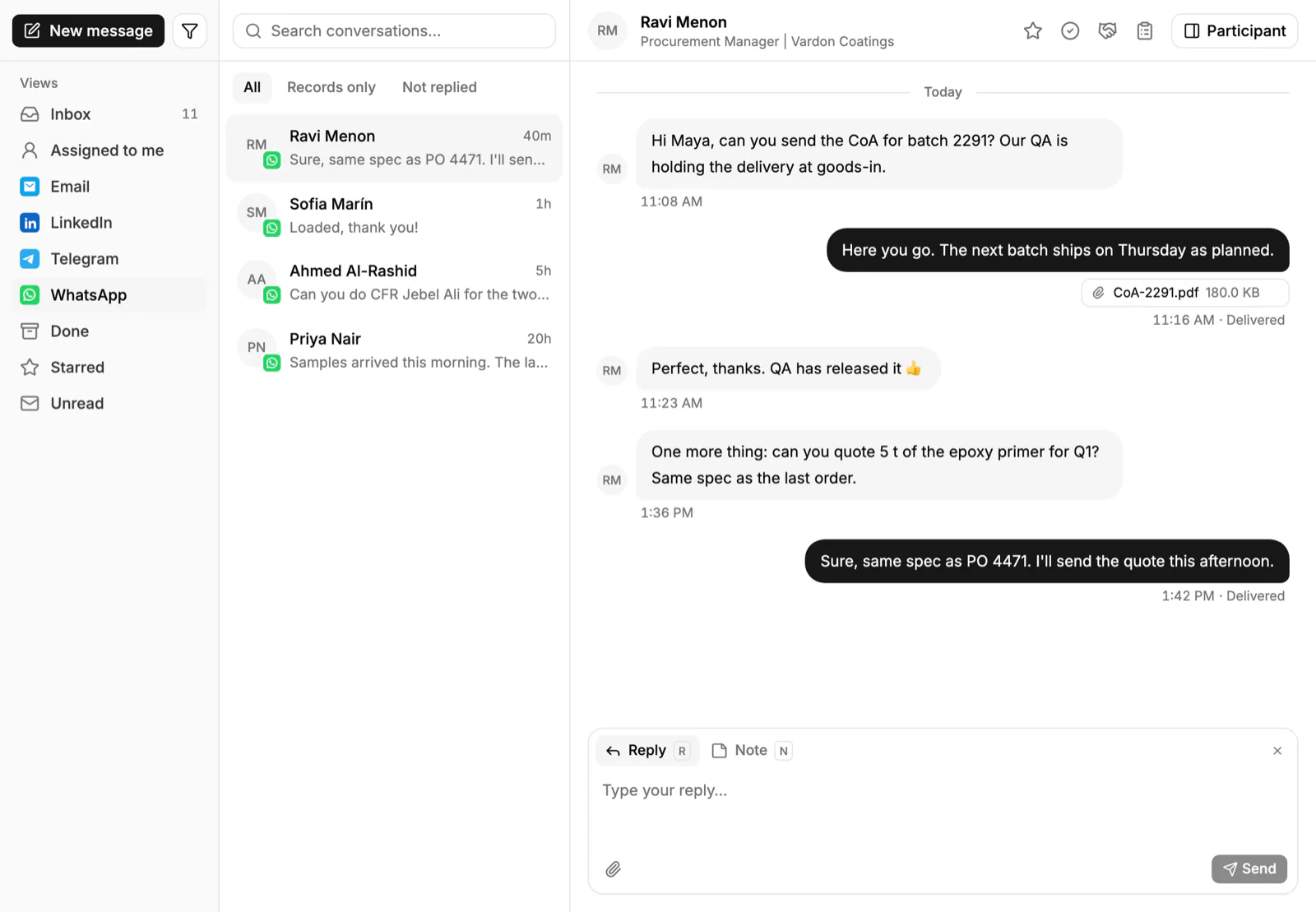
A workflow can react the moment a form is submitted: create a task, assign an owner, post to Slack, or send an email, WhatsApp or Telegram message. A daily digest in Slack, Telegram or WhatsApp lists each rep's overdue and due tasks, the deals due a follow-up, the day's meetings and the deals added in the last day. If the buyer visits your site after a campaign email, PromptLab shows the pages they read. It can't identify anonymous visitors by IP, but it names those who arrive from your campaign emails. See how to capture leads from your website.
Frequently asked questions
How fast should I respond to an inbound lead?
As fast as you can keep up consistently. Within 15 minutes in working hours is a good target for B2B product enquiries, and never later than the same working day.
Should I reply by email or call first?
Send a short email first so the buyer has your details, then call. If the lead only gave an email address, a clear email with a proposed call time is enough.
What if the lead is outside working hours?
Set an automatic acknowledgement that says when they will hear from a person, and make it the first task of the next morning. A promised time that you meet is what matters.
How do I stop leads being missed?
Give every lead one owner at the moment it arrives, route by a clear rule, and make a follow-up task part of the first reply. Check the unassigned list daily.
Should every inbound lead get a quote?
No. Qualify first with two or three questions about volume, timing and who decides. Send a quote or sample to the ones that fit, and a polite reply to the rest.