



















How to write a sales playbook
Write a sales playbook in seven steps: who you sell to, the stages, what to ask, how to quote, how to handle objections, and what to track. Short enough to use.
 By the PromptLab team6 November 20265 min read
To write a sales playbook, document what your best reps already do, in the order a deal moves: who you sell to, what each pipeline stage means, what to ask on a first call, how to run samples and quotes, how to answer the objections you hear most, and what to record in the CRM. Keep it under ten pages, give every section an owner, and review it every quarter.
This guide is for sales leaders at manufacturers and distributors who want new reps productive faster and want deals handled the same way whoever owns them. If you only need the definition, read what a sales playbook is. This post is about writing one.
What goes in a sales playbook
A playbook is a working document, not a binder. Reps open it mid-deal, so each section answers one question quickly.
| Section | The question it answers |
|---|---|
| Ideal customer | Who is worth a rep's time? |
| Stages | What has to be true before a deal moves on? |
| Discovery | What do we ask, and what must we learn? |
| Samples and quotes | How do we send them, and who approves what? |
| Objections | What do we say when the buyer pushes back? |
| Follow-up | When do we chase, and with what? |
| Records | What goes in the CRM, and when? |
Step by step: write your first playbook
- 1
Start from your last ten won deals
Pull up ten deals you won and, if you can, five you lost. Note who the buyer was, how the deal started, how many samples it took, how long the quote sat, and what finally closed it. A playbook built on what happened beats one built on what you wish happened.
- 2
Define who you sell to
Write the customer profile in plain terms: industry, size, what they buy, who decides, and the signs of a bad fit. A coatings manufacturer might write "industrial paint shops running at least two shifts, buying by the pallet, with a purchasing manager and a production lead who both sign off." See how to build an ideal customer profile.
- 3
Describe each pipeline stage with an exit rule
Name the stages and, for each one, write what must be true to leave it. "Sample sent" is not done until the buyer has a tracking number and a feedback date. "Quote sent" is not done until the buyer has the PDF and a follow-up date is set. Exit rules stop deals from sitting in a stage by habit. What is a deal stage covers the idea.
- 4
Script the first call, not the whole call
List five to eight questions a rep must get answered: current supplier, volume, spec, timing, who else is involved, what failed last time. Add one example of a good answer. Do not write a word-for-word script. Reps ignore those.
- 5
Set the rules for samples, quotes and discounts
Say who can send a sample and how it's logged, how a quote is built, what discount a rep can give alone, and who approves more. Put numbers in as your own policy, for example "up to 5% on a line is the rep's call, above that the sales manager approves". Keep your thresholds in the playbook so nobody has to ask.
- 6
Collect objections and the best replies
Ask your reps for the three objections they hear every week. For each, write what the buyer usually means, a short reply, and a question to ask back. Price is the obvious one: see how to handle price objections.
- 7
Say what to record, and when
A playbook that ignores the CRM leaves you with deals nobody can read. List the fields every deal needs before it can move on: estimated value, expected volume, next follow-up date, and for a lost deal, the reason. Then test it: give it to a new rep and watch where they get stuck.
Make it short enough to use
The playbooks that get used are short. A few rules help:
- One page per stage at most, with the exit rule at the top.
- Real examples, taken from deals the team won, with the customer name removed.
- Templates beside the advice. If the playbook says "follow up within two days of a quote", link the follow-up email from quote follow-up email templates.
- An owner and a date on every section, so stale advice gets noticed.
Keep it alive
A playbook goes out of date the day you publish it. Put a review in the calendar each quarter and bring one real deal to it: what did we do, what did the playbook say, which was better? When a rep finds a reply that works, add it. When a rule keeps being broken, either enforce it or remove it.
Your weekly sales meeting is the best place to catch this, because the same questions come up there.
How PromptLab helps
A playbook only helps if the CRM follows it. In PromptLab you set up one deal pipeline per workspace with your stages, and add custom fields on deals, accounts, quotes and samples for what your playbook says to record. Deals carry an estimated value, expected volume and a next follow-up date built in, and a lost deal needs a reason from a fixed list.
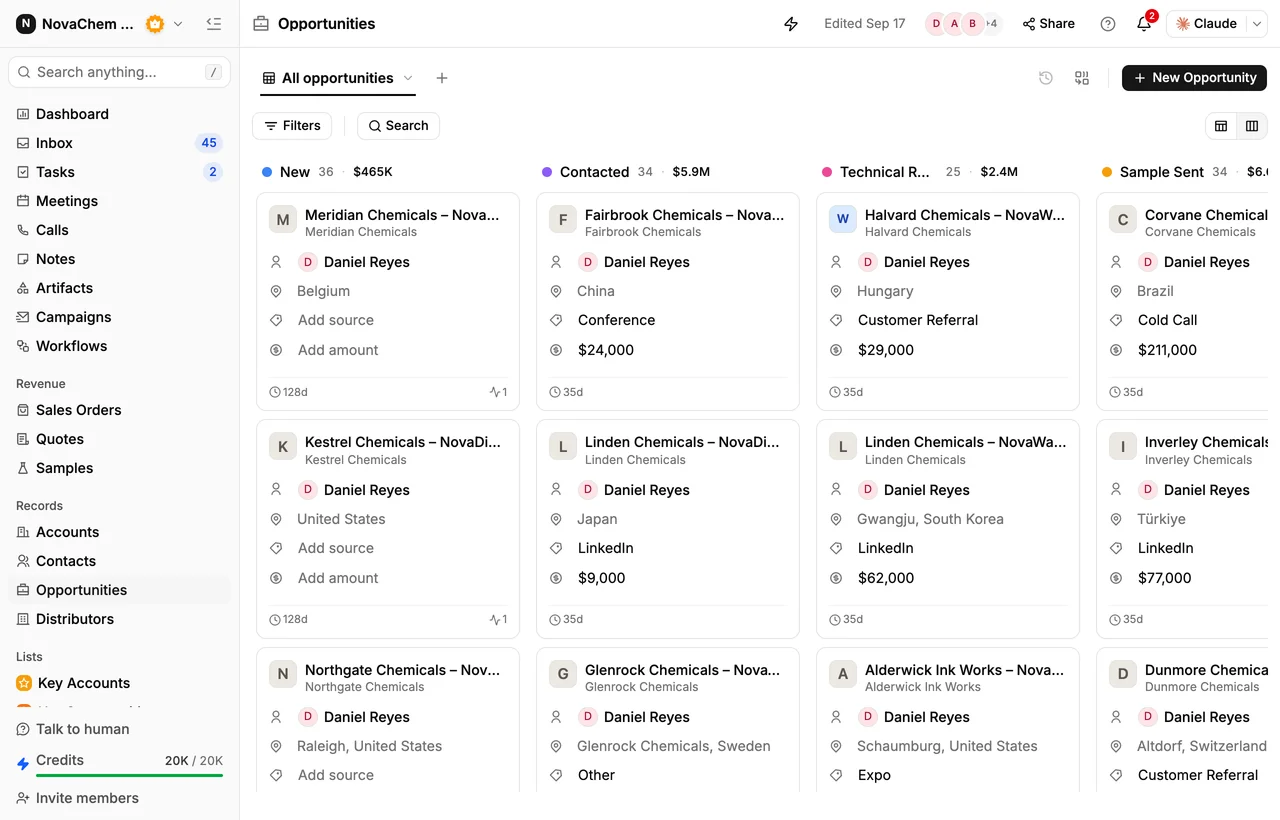
Quotes, customer price lists and sample tracking are on every plan, so the "samples and quotes" section of your playbook describes real screens. Meeting recordings and AI summaries show new reps how your best people run a call, and workflows can create a task when a deal changes stage or a quote changes status, so the follow-up rules in the playbook happen without anyone remembering them.
Frequently asked questions
How long should a sales playbook be?
Under ten pages for most product sales teams. If a section runs past a page, split it or move the detail into an attachment such as a price list or data sheet.
Who should write the sales playbook?
The sales leader owns it, but the best reps write the first draft of each section. They know what actually works, and reps follow a playbook they helped write.
What is the difference between a sales playbook and a sales process?
The process is the sequence of stages a deal moves through. The playbook is the practical guide inside each stage: what to ask, send, say and record. See how to set up a B2B sales process.
How often should I update a sales playbook?
Review it every quarter, and sooner after a change in pricing, products or the competitors you meet most. Add new replies as reps find them.
Do I need a CRM to use a sales playbook?
You can start in a document, but a playbook is easier to enforce when stages, required fields and follow-up tasks live in the CRM. Otherwise it depends on people remembering it.