Salesforce vs HubSpot: which CRM should you choose in 2026?
Salesforce is a platform you build; HubSpot is a suite you switch on. Prices, add-ons, AI and setup compared from each vendor's own pages.
Published 5 October 2026 · Prices and features from each vendor's own pages
Salesforce and HubSpot are built on different ideas. Salesforce sells a platform you shape around your sales process. HubSpot sells a suite with a free CRM and marketing at its centre.
Below, both are compared on price, setup, quoting, calls and AI, and messaging. Every figure comes from the vendors' own pricing and product pages; prices are per user a month, billed annually, unless we say otherwise.
Salesforce vs HubSpot at a glance
With PromptLab in the third column, so you can see where it fits.
| Checked on 30 September 2026 |  Salesforce Salesforce |  HubSpot HubSpot |  PromptLab PromptLab |
|---|---|---|---|
| Pricing | |||
| Paid plans, a month | $25 – $550per seat | $7 – $150per seat | $11.99 – $99per seat |
| Number of plans | 5 | 4 | 3 |
| Free trial | |||
| Billing | Billed annually | Billed annually, plus a $1,500–$3,500 onboarding fee | Billed monthly |
| Import from CSV and Excel | |||
| Sales management | |||
| Deal pipelines | |||
| Quotes | From$100/month | Add-on | |
| Sales orders | From$100/month | ||
| Sample tracking | |||
| Price lists | From$100/month | ||
| Meetings and calls | |||
| Meeting recording and transcripts | Add-on | From$90/month | |
| AI meeting summaries | Add-on | ||
| AI follow-up email drafts | Add-on | From$90/month | |
| Meeting scheduler and call dialer | Add-on | From$23.99/month | |
| AI and automation | |||
| CRM fields filled in from calls | From$195/month | From$90/month | |
| Connect Claude or ChatGPT (MCP) | From$195/month | ||
| Workflow automation | |||
| API and webhooks | From$195/month | From$23.99/month | |
| Conversations | |||
| Gmail and Outlook email sync | |||
| WhatsApp conversations | Add-on | Add-on | |
| Telegram conversations | |||
| Save LinkedIn profiles | Via marketplace | From$150/month | |
| Privacy and security | |||
| Single sign-on (SSO) | From$150/month | From$99/month | |
Pricing: where each one starts, and where it lands
HubSpot is the cheaper way in. Its Smart CRM is free, and paid Sales Hub plans start at $7 a seat a month on Starter, rising to $150 on the top plan. Salesforce Sales Cloud has five editions, from $25 to $550 a user a month.
The banner prices leave out the add-ons. HubSpot's Professional and Enterprise plans carry a one-off onboarding fee of $1,500 to $3,500, and call recording starts on Professional at $90 a seat. On Salesforce, quotes and price lists start at the $100 Pro Suite, and call recording sits in Sales Engagement, an add-on at $50 a user. Price each one at the plan you'll actually need, not the one in the headline.
Customisation versus a ready-made suite
Salesforce is the most configurable CRM there is. Custom objects, flows and AppExchange apps let it model almost any sales process, which suits a large organisation building its own platform on one vendor.
The cost is the build. A rollout usually means objects, flows and page layouts to configure, often with an admin or an implementation partner, and the sales team waits until it's done. HubSpot starts from a free CRM, and its marketing tools are ones few rivals match. If you have no admin and no partner budget, the build is the cost to weigh.
Quotes, orders and the product side of a deal
Neither treats quoting as a basic feature. HubSpot moved quotes into Revenue Hub, a separate product sold on top of Sales Hub, and has no sales orders or price lists. Salesforce has quotes, price lists and orders, from Pro Suite at $100 a user a month.
Neither models product samples. A team that sends trial batches to customers ends up building a custom object in Salesforce or keeping a spreadsheet next to HubSpot.
Calls, meetings and AI
HubSpot records and transcribes calls from Sales Hub Professional, at $90 a seat; Starter does neither. The same plan drafts follow-up emails and fills CRM fields from calls. Salesforce puts call recording, meeting summaries and follow-up drafts in the $50 Sales Engagement add-on, and filling CRM fields from calls starts at $195 a user.
Both let you connect AI assistants such as Claude or ChatGPT to the CRM over MCP. HubSpot publishes MCP servers for its platform; Salesforce supports MCP from $195 a user, next to its own Agentforce AI.
Email, messaging and security
Gmail and Outlook sync is standard on both. WhatsApp is an add-on on each, and neither supports Telegram, so conversations on either app tend to stay on a rep's phone.
Saving LinkedIn profiles takes HubSpot's $150 tier or a marketplace app on Salesforce. Single sign-on comes with Salesforce, while HubSpot keeps it for the $150 tier.
We make PromptLab, so here is where it fits.
Where PromptLab fits next to Salesforce and HubSpot
PromptLab is a CRM for B2B teams that sell products. On their entry plans, neither Salesforce nor HubSpot includes quotes, sales orders, sample tracking, price lists, meeting recording and AI follow-up drafts. PromptLab has all of them on every plan, from $11.99 a user a month.
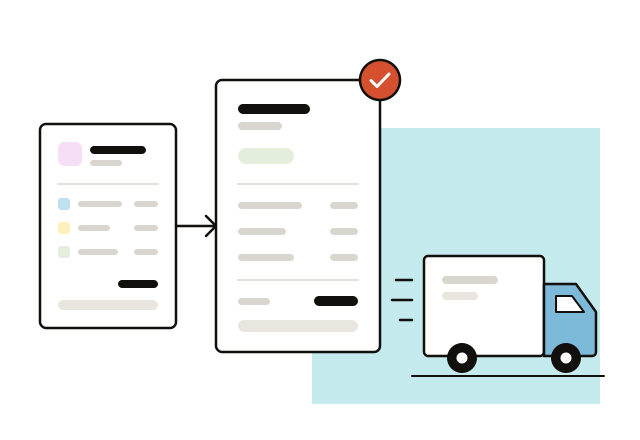
Quotes, price lists and orders on day one
PromptLab ships quotes, price lists, sales orders and sample tracking on the $11.99 Basic plan. They sit on the account and the deal, ready as soon as your customers are imported.
Salesforce vs PromptLab, in full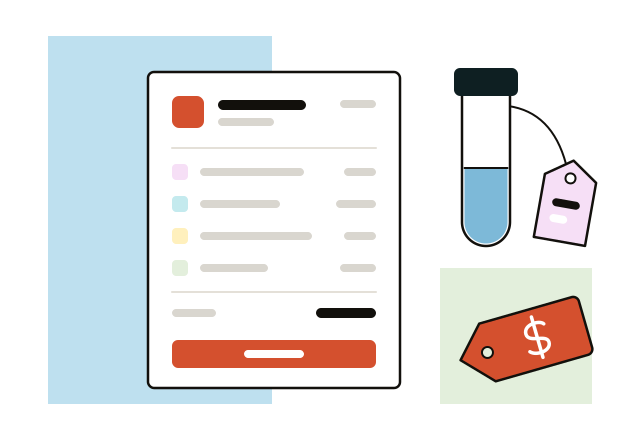
Quotes without a second hub
PromptLab keeps quotes, price lists and sales orders on the account and the deal, from the $11.99 Basic plan. There is nothing extra to buy and no custom object to build first.
HubSpot vs PromptLab, in full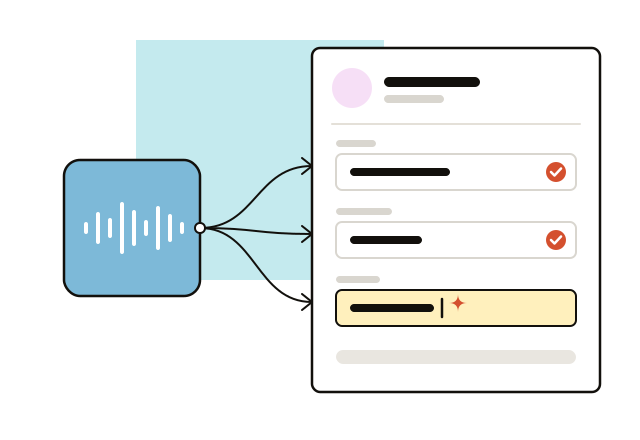
Recording and autofill without an add-on
We do all of it on every plan: we record the meeting, write the summary, draft the follow-up email and update the deal from what the customer actually said.
Salesforce vs PromptLab, in full
Which should you choose?
Choose Salesforce if…
- Your sales process needs custom objects and flows that no ready-made CRM has.
- You have an admin or an implementation partner to build and run it.
- You want one platform the whole company extends, with AppExchange for integrations.
Choose HubSpot if…
- Marketing and sales should run in one suite.
- You want to start on a free CRM and add paid hubs as you grow.
- You'd rather switch a CRM on than build one, and can buy quoting separately.
Choose PromptLab if…
- You sell products, and deals run on quotes, price lists, samples and orders.
- You want every meeting recorded, summarised and written into the CRM on every plan.
- Buyers answer on WhatsApp or Telegram as well as email.
Frequently asked questions
Is HubSpot cheaper than Salesforce?
To start, yes: HubSpot's CRM is free and Sales Hub Starter costs $7 a seat a month, against $25 for Salesforce's first edition. Higher up the gap narrows, because HubSpot Professional and Enterprise add a $1,500–$3,500 onboarding fee and both charge extra for quoting or call recording.
Which is easier to set up, Salesforce or HubSpot?
Salesforce is the heavier setup: a rollout usually means configuring objects, flows and page layouts, often with an admin or an implementation partner.
Which records sales calls?
Both, on higher plans. HubSpot records and transcribes calls from Sales Hub Professional at $90 a seat. Salesforce does it through Sales Engagement, a $50-a-user add-on on top of the Sales Cloud edition.
Do Salesforce and HubSpot support WhatsApp and Telegram?
Both sell WhatsApp as an add-on. Neither supports Telegram.
Is there an alternative to Salesforce and HubSpot for teams that sell products?
PromptLab. It is a CRM for B2B teams that sell products, with quotes, price lists, sales orders and sample tracking, recorded and summarised meetings, and email, WhatsApp and Telegram in one inbox, on every plan from $11.99 a user a month with a 14-day free trial.
Sources
- Salesforce, checked on 30 September 2026: Sales Cloud pricing, Sales Engagement pricing, Agentforce MCP support
- HubSpot, checked on 30 September 2026: Sales Hub pricing, Revenue Hub quote software, WhatsApp integration, MCP servers, Single sign-on (SSO)